
Cancer can make simple words feel heavy. When you are facing a life-threatening disease, a phrase like dose-dense chemotherapy can sound bigger and scarier than it needs to.
Here is the plain-English version: you usually get the same chemo drugs, but with less time between treatments. If you are newly diagnosed, in treatment, or living in remission, understanding how dose dense chemotherapy works can help you better picture the road ahead.
If your family has faced cancer or some other disease that turned life upside down, you know how fast medical language can pile up. Let us strip this one down until it feels human again.
Key Takeaways
- Same dose, tighter schedule: Dose-dense chemotherapy generally involves administering the same amount of medication as standard treatment but shortening the interval between sessions.
- Preventing regrowth: By reducing the time between cycles, this approach aims to hit cancer cells before they have the chance to recover and multiply.
- Supportive care is critical: Because the recovery window is shorter, patients often receive growth factor shots (G-CSF) to help their bone marrow produce blood cells and manage potential side effects.
- Patient-specific planning: While effective for certain conditions like early-stage breast cancer, this strategy is not for everyone; doctors customize schedules based on the specific type of cancer and the patient’s overall health.
The name sounds harsher than the plan
The first thing to know is simple. Dose dense chemotherapy does not usually mean a larger one-time blast of treatment.
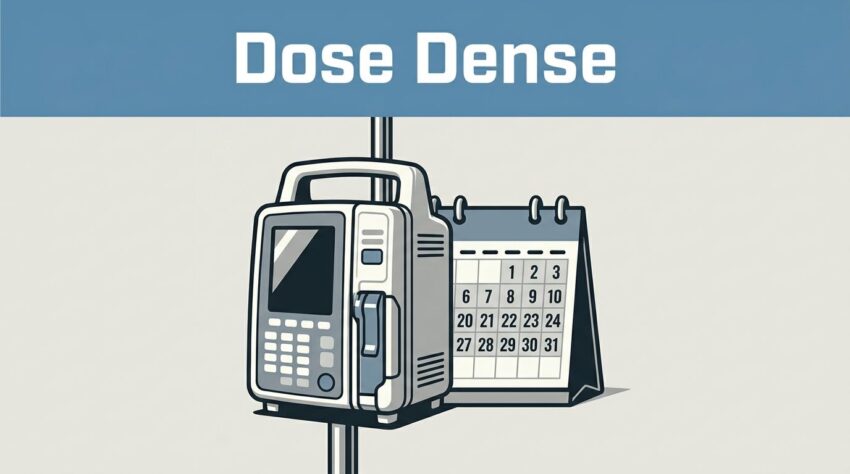
It usually means your doctor shortens the break between cycles compared to a standard chemotherapy schedule. Think of it like ringing the bell sooner, rather than hitting harder in a single moment. The medicine often stays at the standard amount for each visit, but the calendar tightens.
Dose-dense chemotherapy usually means the same dose, more often.
A common example helps explain this process. Instead of receiving treatment every three-week cycles, you might go in for two-week cycles. A plain-language explanation from Hirschfeld Oncology lays out that timing change clearly.
This quick comparison makes the idea easier to see:
| Feature | Standard schedule | Dose dense chemotherapy |
|---|---|---|
| Amount at each visit | Standard dose | Usually the same standard dose |
| Time between cycles | Often longer | Often shorter |
| Common example | Every 3 weeks | Every 2 weeks |
| Main goal | Treat the cancer | Treat the cancer with less time between hits |
That last point matters. Doctors use a shorter gap because cancer cells can recover and multiply during the wait. A tighter schedule tries to hit these cancer cells again before they regain as much ground, which helps prevent tumor regrowth. Still, this is not a one-size-fits-all plan. Cancer is not one disease with one timetable. Some cancers respond well to a dose-dense approach, while others do not. Your doctor looks at your cancer type, stage, overall health, and how strong your body is before recommending it.
Why doctors shorten the gap between treatments
Why would a medical team choose a tougher calendar? Because sometimes timing matters almost as much as the drug itself.
As OncoLink’s overview of dose dense chemotherapy explains, the goal is to administer treatment more frequently than a standard chemotherapy schedule. This strategy focuses on increasing the dose intensity to ensure more medication reaches the cancer cells over the same duration. By shortening the treatment interval, this approach aims to prevent cancer cells from regrowing between sessions.
Doctors often utilize this method for specific conditions, such as breast cancer and certain lymphomas. In the adjuvant setting, evidence from the CALGB 9741 study and other clinical trials has shown that this strategy can improve overall survival and disease-free survival for patients with early-stage breast cancer. Research into its effectiveness has also expanded to include ovarian cancer. While dose dense chemotherapy is a powerful tool, faster is not always better for every patient. It is about matching the schedule to the specific biology of the cancer.
A shorter schedule often includes extra support to help your body manage the load. You may receive growth factors, specifically G-CSF, which signal your bone marrow to produce white blood cells more rapidly. This support is essential for lowering infection risks and keeping your body on schedule.
Even with this support, real life still happens. Blood counts can drop, and fatigue can build. Side effects like a fever may require a pause in treatment. If you need delays, dose adjustments, or a change in your plan, remember that this is not a failure. It is simply your body responding to the treatment, and your medical team will adjust accordingly to prioritize your health.
What a dose-dense schedule can mean for daily life
For many people, the hardest part of dose dense chemotherapy is not the name. It is the rhythm. You may feel like you just stood up from one round when the next one knocks at the door.
Because the breaks are shorter, you may have less time to recover between treatments. Side effects often stack as the body has less time to bounce back. Nausea, bowel changes, mouth sores, body aches after shots to boost white blood cell counts, and low blood cell numbers can all feel sharper when the calendar stays tight. The single dose may not be bigger, but the recovery window is smaller.
This schedule is often chosen because it is effective at clearing out cancer cells, which is particularly important for premenopausal women diagnosed with early-stage breast cancer. By staying on a tight schedule, doctors aim to lower your overall recurrence risk. Because this approach is so targeted against breast cancer, your honesty with the medical team is vital. Tell them what changed, even if it seems small. Write down symptoms, notice patterns, and ask early for help with sleep, pain, or nausea. Small notes can prevent big problems.
If you need practical help with managing chemotherapy side effects, or you need encouragement for staying hopeful during chemotherapy, ask your clinic about supportive care to help make the days feel less jagged.
Courage during treatment rarely looks dramatic. Sometimes it looks like resting without guilt. Sometimes it looks like asking for a ride, letting someone fold the laundry, or admitting that you feel afraid. Those quiet acts count, and they play a role in your long term health by managing your recurrence risk effectively.
For plainspoken support between appointments, compassionatevoices.org offers educational material for people affected by cancer and any life-threatening disease that brings fear and questions into daily life.
Before you start a dose-dense plan, a few questions can steady you:
- How often will my treatments happen, and what could delay them?
- Will I need a white blood cell shot after each cycle?
- Which side effects mean I should call right away?
When the words make sense, the path often feels a little less dark.
Frequently Asked Questions
Does dose-dense mean a more powerful or toxic medication?
No, it typically refers to the timing rather than the strength of the drug. The dose administered at each visit usually remains the same as a standard treatment plan, but the interval between these treatments is reduced.
Why do doctors choose a tighter treatment schedule?
Cancer cells can begin to grow and multiply during the longer rest periods found in standard chemotherapy schedules. By shortening the gaps, the medical team aims to prevent the tumor from regaining strength, which can improve survival outcomes for certain cancers.
Are the side effects worse with a dose-dense schedule?
Because the recovery time between treatments is shorter, some patients may find that side effects like fatigue or low blood counts stack up more quickly. However, medical teams often provide supportive care, such as growth factor injections, to help your body recover and keep you on track safely.
Will I need extra medications to handle this schedule?
It is common to receive white blood cell growth factors, often given as injections, to support your immune system. These medications help your bone marrow produce cells faster to offset the more frequent treatment cycles and reduce the risk of infection.
Conclusion
When you hear dose dense chemotherapy, think of the phrase “same medicine, less waiting.” That one idea clears away a lot of fear.
The term sounds technical, but the meaning is human. Your medical team may shorten the gap between treatments to give cancer cells less time to recover, while watching closely for side effects and adjusting when needed. For patients undergoing treatment for breast cancer, this approach has become a standard tool because it has been shown to improve overall survival rates.
Clarity does not cure cancer. It does give you a firmer handhold, and sometimes that is where steadiness begins.