
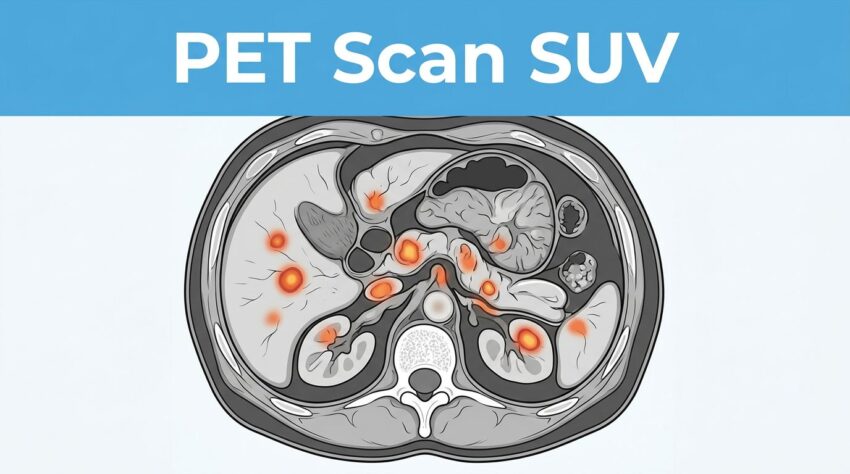
You open the report, spot a string of letters and numbers, and your stomach drops. If you are living with cancer, in treatment, or in remission, a PET scan SUV can look like a verdict. This number, officially known as the Standardized Uptake Value, is just one data point found within your PET/CT imaging results.
It is not a final diagnosis. That number tells one part of the story, not the whole story. Once you know what it measures, the report feels less like code and more like something you can talk through with your care team.
If you need calm, plain-language support between appointments, compassionatevoices.org offers education and encouragement for people facing cancer and other life-threatening disease questions. Start with what the number measures.
Key Takeaways
- SUV is not a diagnosis: The Standardized Uptake Value (SUV) measures metabolic activity based on tracer absorption; it is a single data point, not a definitive verdict on cancer presence or severity.
- Context is critical: High SUV numbers can result from non-cancerous factors like inflammation, infection, healing tissue, or even muscle tension, meaning brightness alone does not confirm malignancy.
- Trends matter more than snapshots: Doctors prioritize comparing current scan results against your historical baseline to determine if a spot is shrinking or changing, which provides a much more accurate clinical picture.
- Technology and physiology influence results: Variations in scanner calibration, patient blood glucose levels, and the timing of the scan can all impact the specific SUV number, making comparisons between different patients or facilities unreliable.
What the SUV number actually means
On most cancer PET scans, you receive a small amount of FDG, a sugar-like radiotracer. Cells that have high metabolic activity absorb more of this substance, causing those specific areas to appear as brighter spots on the scan.
Think of it like looking at a city at night from an airplane. Some places glow brighter than others. Brightness grabs your attention, but brightness alone does not tell you what kind of place you are seeing.
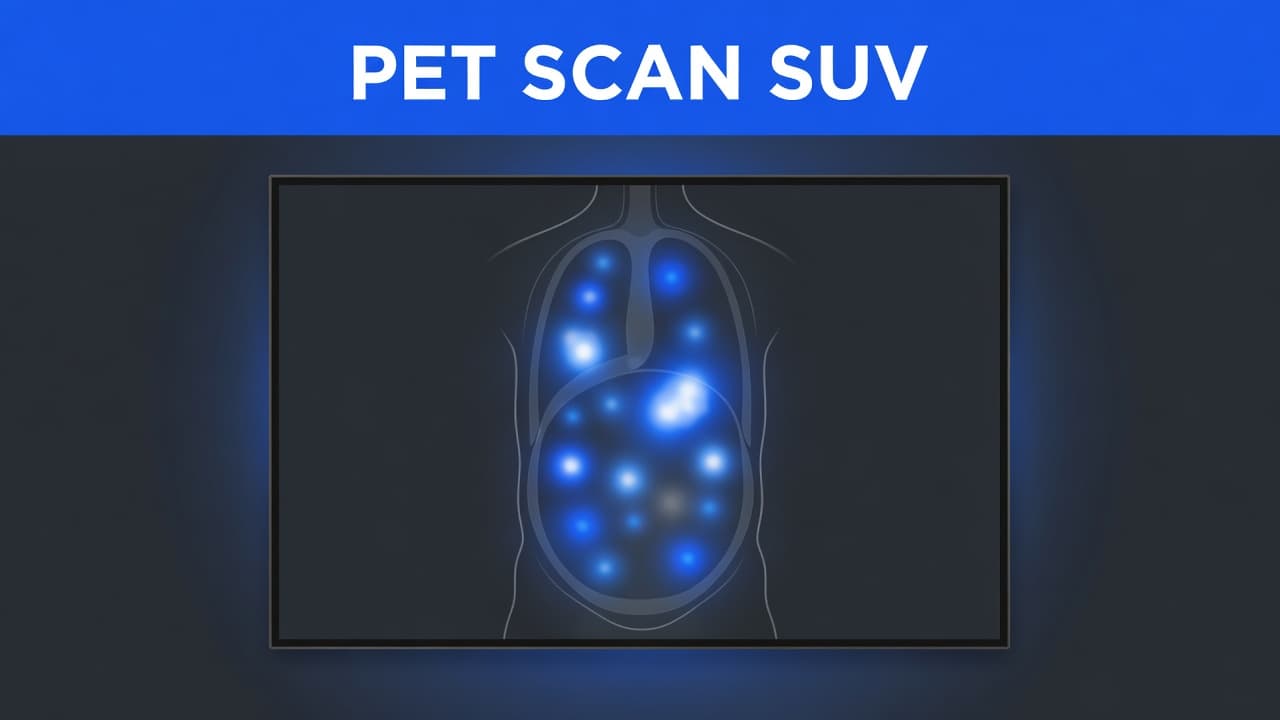
The SUV is the measurement doctors use to quantify how much tracer a spot absorbed. This Standardized Uptake Value is a mathematical calculation that accounts for your injected dose, your patient weight, and the uptake duration. Essentially, the Standardized Uptake Value provides a normalized way to measure how active an area looks after adjusting for your specific patient weight and the amount of the injected dose. Doctors often look for the SUVmax, which represents the single highest pixel value of intensity within a lesion.
So, if your report lists an SUV of 2.5 or 12, that does not mean you scored poorly on a test. It simply means that one specific area absorbed a certain amount of the tracer at the time of the scan.
That detail matters, because PET scans do not see cancer directly. They see biological activity. Cancer often shows high activity because many cancer cells burn sugar rapidly. However, the scan cannot reveal the complete clinical significance of that activity from one number alone.
When you are dealing with a serious medical condition, numbers can feel heavier than they actually are. An SUV can help your care team identify a potential problem, track the effectiveness of treatment, or compare scans over time. It cannot provide a definitive diagnosis on its own.
Why one bright spot doesn’t tell the whole story
Here is the part many people miss, a higher Standardized Uptake Value does not automatically mean worse malignancy. Even MD Anderson’s explanation of SUV numbers makes the same point. Brightness can point toward potential malignancy, but it can also come from something else entirely.
Inflammation can light up, and infection can do the same. Healing tissue after surgery, chemotherapy, or radiation often shows increased radiotracer uptake. A tense muscle, brown fat, or other underlying health conditions can also influence the PET scan SUV. These factors complicate tumor detection because they mimic the metabolic activity often associated with cancer cells.
This quick guide shows why the same kind of number can mean different things based on the FDG tracer used.
| Situation | What it can do to the SUV |
|---|---|
| Infection or inflammation | Raise the number, even when the spot is not malignancy |
| Healing after treatment | Make tissue look more active for a while |
| Recent exercise or muscle tension | Light up muscles that are working hard |
| High blood glucose levels | Change how the tracer moves through the body |
| Different scan timing or equipment | Shift the number up or down |
The opposite problem happens too. A low Standardized Uptake Value does not always mean there is nothing to worry about. Some slow-growing cancers do not absorb much tracer, and very small spots can appear less active than they truly are.
A PET scan SUV is a clue, not a verdict.
That is why two people can read the same report and feel very different things. One sees a high result and assumes the worst, while another sees a low result and assumes safety. Both reactions are human, but both can miss the truth. The number needs context, and your doctor builds that context by looking at the whole scan, your medical history, your symptoms, and the presence of any underlying inflammation or changes since the last test.
What your doctor reads besides the PET scan SUV
Would you judge a whole song by one note? That is what it would be like to judge a scan by one Standardized Uptake Value.
Your doctor looks at where the bright area sits, how it looks on the CT portion of the PET/CT imaging, whether it has clear borders, and whether it matches your symptoms. They also examine specific quantitative metrics, such as the SUVmax for the highest point of activity or the SUVmean to understand the average intensity within a defined region of interest. To ensure accuracy, they evaluate this against the background activity of the surrounding tissues or reference points like the normal liver parenchyma.
They also compare these findings with older scans. A spot that shrinks and shows a falling number often brings more reassurance than a single snapshot ever could.
This is one reason you should not compare your number with someone else’s. One person may scan on a different machine where scanner calibration varies. Another may have a different blood sugar level, body makeup, or time gap between tracer injection and imaging. A clinical review of PET SUVs explains that doctors use these numbers to help compare findings for disease staging, but scan methods and timing can still move the number around.
Trends matter. Context matters. Tissue diagnosis matters when PET/CT imaging raises a real question. If the team worries about a spot, they may order another scan, a biopsy, blood tests, or short-term follow-up rather than make a call from the PET scan SUV alone.
This is why plain questions help so much. Ask, “How does this compare with my last scan?” Ask, “Could treatment, infection, or healing explain this?” Ask, “Do you need more information before you call this cancer?” Those questions move the conversation from fear to facts.
If your report uses words like “mild,” “moderate,” or “intense” uptake, the same rule applies. Those words describe activity. They do not replace judgment. They do not erase uncertainty. They do not tell your future.
PET scan SUV during treatment and after remission
A PET scan SUV often matters most when doctors watch for change. At initial cancer staging, the scan helps map where active disease sits and identifies potential metastasis. During the process of monitoring treatment, the medical team looks for a decrease in activity to gauge the patient’s response to therapy. After treatment concludes, the scan serves as a vital tool to check for recurrence or confirm remission.
That sounds clean on paper, but real life rarely feels so simple. One number can steal sleep, shake hope, and pull your mind into dark places. If you have lived through a diagnosis, you already know how fast questions about your results can turn into fears about a potential metastasis.
When you talk with your team, keep your questions simple to better understand your response to therapy:
- How does this PET scan SUV result compare with my last scan?
- Does the PET/CT imaging support what the FDG uptake shows?
- Could treatment effects, infection, or healing explain this finding rather than residual disease?
- What is the next step, such as watch and wait, repeat imaging, or a biopsy?
- Were there any specific factors during my patient preparation that might have influenced these numbers?
If the answer still feels foggy, ask your clinician to show you the images and point to the area in question. Seeing the spot on the screen often turns an abstract Standardized Uptake Value into something you can understand. You can also bring a loved one to the visit and write down the plan before you leave.
If you have finished treatment, ask how the result fits into a survivorship care plan. Structure helps after remission, especially when relief and fear sit side by side.
Money stress matters too. Repeated scans, visits, and missed work can wear you down. If that pressure feels familiar, this guidance on managing financial toxicity during cancer names the problem plainly and offers practical next steps.
Frequently Asked Questions
Does a high SUV number always mean cancer is growing?
No, a high SUV only indicates that a specific area is metabolically active and absorbing more tracer. This activity can just as easily be caused by inflammation, infection, or the natural healing process following surgery or radiation.
Can I compare my SUV number with someone else’s scan?
It is not helpful or accurate to compare your results with others. Factors such as the specific PET scanner used, your blood glucose levels, your weight, and the exact timing of the imaging all influence the final number, making each result unique to the individual.
Why might my doctor order a biopsy if the SUV is low?
Even if an SUV is low, your doctor may still order further testing if the visual findings on the CT portion of the scan or your clinical symptoms remain concerning. A low number does not automatically rule out disease, as some slow-growing or very small spots do not absorb significant amounts of the tracer.
Conclusion
The next time you see a PET scan SUV on a report, remember what the number actually says. This Standardized Uptake Value is a quantitative measurement of tracer activity at a specific moment, but it does not hand down a final medical verdict.
Ultimately, the PET scan SUV is simply a way to gauge metabolic activity within the body. By tracking how radioactive tracers like FDG accumulate in tissues, the scan provides a quantitative measurement of glucose metabolism. Because elevated glucose metabolism can occur in various scenarios, it is important to remember that these numbers only reflect metabolic activity at the time of the scan.
The fuller truth lives in the overall pattern, the visual comparison to previous scans, the accompanying CT images, your current symptoms, and the clinical judgment of the team who knows your case. Hold on to that wider view. A single number can feel loud, but context always speaks louder.