
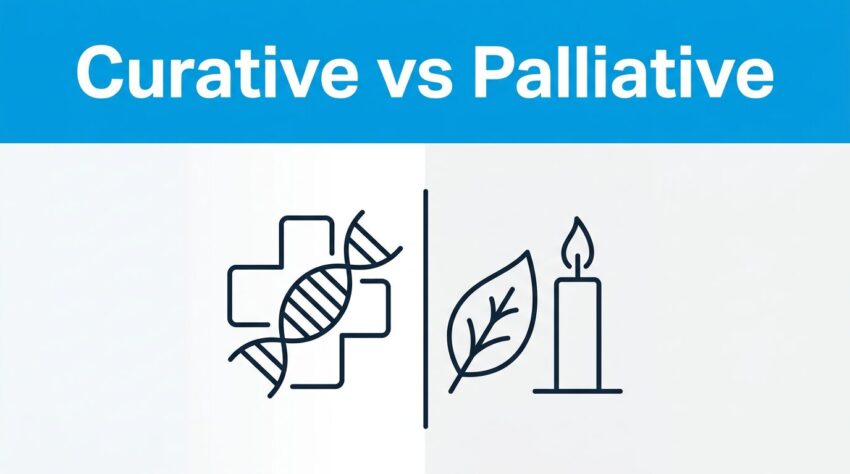
A diagnosis can change the air in a room. Then come the medical words, fast and heavy, and two of them often land hard: curative and palliative.
If you have heard these terms while navigating a serious illness or a terminal illness, you might wonder what they say about your future. Do they mean hope or no hope? Fight or comfort? The truth is simpler, and kinder, than the words often sound.
Once you understand the goal behind the treatment, the plan starts to make more sense. That is where these two ideas begin.
Key Takeaways
- Intent is everything: The distinction between curative and palliative care lies in the primary goal of your treatment—either to eliminate a disease or to enhance your daily quality of life.
- Not mutually exclusive: Palliative care is not just for the end of life; it can be integrated into your treatment plan from the moment of diagnosis, even while you are receiving aggressive curative therapies.
- Focus on symptom management: Palliative care provides a vital layer of support by addressing physical side effects like pain and nausea, as well as the emotional and spiritual strains of living with a serious illness.
- Clear communication matters: Because curative and palliative goals can shift as a disease progresses, it is important to ask your healthcare team direct questions about the intent behind every procedure or medication.
The goal of treatment matters more than the label
When doctors discuss the intent behind a treatment plan, they are simply defining the primary objective of your care. Intent is the core reason guiding every medical decision made by your healthcare team.
With curative care, the team hopes to remove, destroy, or fully control the disease. In the context of cancer, this approach may involve surgery, chemotherapy, radiation, immunotherapy, or a mix of treatments intended to bring the disease into remission. Remission is a major focus here, though it is distinct from a cure. Remission means the signs of cancer are gone or significantly reduced, while a cure implies the disease is not expected to return.
With palliative care, the primary goal shifts to focus on symptom management and enhancing your daily experience. This approach prioritizes easing discomfort and supporting your physical and emotional well-being to ensure the best possible quality of life. Palliative care addresses issues such as pain, shortness of breath, nausea, fatigue, anxiety, and the side effects of other treatments.
This is where many people experience confusion. Palliative care does not mean that nothing else can be done, and it does not automatically equate to end-of-life care. As the Mayo Clinic explains, palliative care can begin at any stage of a serious illness and can be provided alongside treatment meant to cure the disease.
Think of it this way. The treatment itself is the tool, but the intent is the reason you are using it. A surgery might aim to remove all visible cancer, or it might aim to stop bleeding and relieve pain. It is the same tool, but with a different goal.
That distinction is relevant for any life-threatening condition, not just cancer. You will hear this same language when managing advanced heart failure, lung disease, or other conditions. The words are clinical, but the question underneath is deeply human: What are we trying to achieve right now?
When care has curative intent
Curative intent usually means your medical team believes there is a realistic chance to eliminate the disease or control it long enough to achieve lasting remission. This approach often involves aggressive curative treatments, such as intensive chemotherapy, that can be difficult to endure. These paths are chosen not because anyone wants you to suffer, but because the potential for a long-term recovery is significant.
In plain English, the thinking goes like this: if a medical strategy could cure the cancer, patients and doctors may accept side effects that would not be considered acceptable for a smaller benefit. Hair loss, fatigue, infections, nerve pain, and long weeks of recovery may all be part of the road.
However, it is important to remember that curative care is a goal, not a guarantee. A team may pursue these curative treatments and still find that the cancer does not respond as expected. That is a difficult reality to face, yet it helps to understand the distinction. Intent defines the aim, not the ultimate outcome.
There is another vital component that people often overlook: palliative care and comfort care can and should be integrated into your plan from the very beginning. If you are receiving chemotherapy meant to eradicate disease, you still deserve robust pain relief, nausea management, sleep assistance, and professional emotional support. You should also have access to honest conversations about your fears. Comfort care is not a backup plan reserved for the end; it is a necessary layer of support that belongs in your treatment plan right now.
That emotional piece matters. Some days you may feel resilient, while other days you may feel worn thin by scans, blood draws, waiting rooms, and the endless hum of uncertainty. If your journey has been long, these tips for managing cancer treatment stress can help you navigate the day-to-day strain.
Curative intent often sounds like the stronger path, and people sometimes use battle language to describe it. Still, strength is not the primary goal. The point is finding the right fit. You must ask if the chosen treatment is well-matched to what the disease is doing and to what your body can realistically bear.
When care has palliative intent
Palliative intent can sound frightening at first. Many people hear it and think the team has stopped trying, but that is not what the term means.
When treatment has palliative intent, the medical team still actively treats the illness. They may use chemotherapy, radiation, surgery, or medicines that slow the disease, shrink tumors, or relieve symptoms. The difference lies in the expected result. The plan is not likely to cure the cancer, but it is designed to help you feel better, function better, or gain more time that still feels like your life. Palliative care is essential here, as it focuses on comprehensive symptom management and comfort.

One person may get radiation for pain relief, while another may have a procedure to make breathing easier. Someone else may take a lower-dose treatment to keep the cancer stable with fewer side effects. These are active, intentional choices rather than signs of defeat.
Palliative intent does not mean the care team has given up. It means the goal has changed, and the goal still matters.
It also helps to separate palliative care from hospice care. They are not the same. MedlinePlus explains the difference clearly: palliative care can start at diagnosis and can happen during treatment, after treatment, or at any stage of a life-limiting illness. Hospice care is intended for a different stage, typically when a doctor determines a patient has a terminal illness with a prognosis of six months or less, and treatment is no longer aimed at controlling the disease.
The whole-person approach matters here. Pain is real, but so are fear, grief, financial stress, family strain, and the spiritual support needed when facing a serious condition. The World Health Organization describes this wider view well, emphasizing that high-quality care addresses suffering in many forms. This is a critical component of end-of-life care, ensuring that dignity remains a priority.
Some people live with palliative-intent treatment for a long time, sometimes for months or years. Life may look different, but it can still hold birthdays, ordinary mornings, laughter, and plans worth making.
How curative and palliative care can overlap, and what to ask next
This is the part that surprises many people: curative care and palliative care are not always opposite lanes. They often overlap throughout your journey.
You can have a curative care plan and still receive palliative care for symptom management and stress. You can also have a treatment plan with palliative intent and still pursue active medical procedures. While these paths are distinct from hospice care, which is specifically focused on end-of-life care, palliative care is often a helpful layer at any stage of a serious illness. It is important to note that while hospice care is a specific type of benefit, palliative care is not restricted to the same requirements. Many patients find that their health insurance or Medicare benefit covers these supportive services as part of a comprehensive strategy.
This quick comparison can help clarify the differences:
| Question | Curative Care | Palliative Care |
|---|---|---|
| Main goal | Cure the disease or reach lasting remission | Relieve symptoms, protect function, and improve quality of life |
| How success is judged | Scans and labs move toward a cure | Comfort care and symptom management improve daily life |
| Side effects | Harder effects may be accepted if a cure is possible | Side effects are weighed against comfort and function |
| Role of the team | Focused on disease eradication | Focused on a multidisciplinary team approach |
A professional healthcare team, including social workers and those focused on care coordination, can help you navigate these options. If you feel unsure which path you are on, ask direct questions. You are not being difficult. You are asking for plain speech in a moment that asks a lot from you.
- What is the main goal of this treatment right now?
- Are we trying to cure the disease, control it, or focus on comfort care?
- What would tell us this plan is working?
- Should we update my advance directive to reflect my current goals?
- How does my health insurance or Medicare benefit support this multidisciplinary team?
- If the treatment becomes too hard, what are the alternatives, such as transitioning to hospice care?
Those questions can change a visit. They pull the conversation out of medical fog and back into real life. Your healthcare team is there to support you, and clear communication is the best way to ensure your needs are met.
And if you need steady information between appointments, compassionatevoices.org offers education for people facing cancer and other life threatening diseases. For stories that remind you you are not the only one carrying these questions, you can also explore stories of resilience and hope.
Frequently Asked Questions
Does choosing palliative care mean I have to stop my curative treatments?
No, palliative care can be provided alongside curative treatments. It is designed to support your physical and emotional well-being throughout your entire journey, regardless of whether you are still pursuing a cure.
What is the primary difference between palliative care and hospice care?
Palliative care is available at any stage of a serious illness and can occur concurrently with disease-directed treatment. Hospice care is specifically reserved for when a patient has a terminal diagnosis and is no longer seeking curative treatments.
If my doctor suggests palliative intent, have they given up on me?
Absolutely not. Palliative intent simply means the goal of your care has shifted to prioritize your comfort and function rather than disease eradication. Your medical team remains fully engaged in actively managing your symptoms to help you live as well as possible.
Will my insurance cover these different types of care?
Many health insurance plans and Medicare provide coverage for palliative services as part of a comprehensive medical approach. It is always best to speak with your care team or a financial counselor to understand how your specific policy covers multidisciplinary support services.
What this means for you
The biggest difference in curative vs palliative care is not how much your team cares. It is the core goal of your treatment plan. Curative care is designed to eliminate a disease or achieve long-term remission, while palliative care focuses on relieving symptoms, improving function, and ensuring you have the best quality of life possible.
Navigating a chronic illness requires a team that understands your personal priorities. Whether your path involves aggressive medical interventions or a holistic approach centered on comfort, the goal is always to provide the right level of support. This includes specialized nursing care to manage daily challenges and dedicated bereavement support for families, ensuring that the care continuum addresses both physical and emotional needs.
Neither path measures your courage, and neither label tells the whole story of your life. When you understand the intent behind your treatment, you can ask better questions, weigh trade-offs more clearly, and make choices that honor the life you want to protect. By understanding the distinction between curative vs palliative care, you gain the confidence to participate actively in decisions that prioritize your comfort and personal values.