
Mouth sores can feel like a small problem, until every sip, bite, and word starts to hurt. If you searched for oral thrush cancer treatment, you’re probably looking for two things at once, relief and reassurance.
Oral thrush (oral candidiasis) is common during cancer treatment, and it can happen during chemotherapy, radiation, steroid use, or after antibiotics. The good news is that it’s usually treatable. Still, it shouldn’t be brushed off, especially if eating or drinking becomes hard. Even if you’re in remission, a new mouth infection still deserves attention.
Why oral thrush shows up during cancer treatment
Oral thrush is a yeast infection in the mouth, usually caused by Candida albicans. That yeast normally lives in the body in small amounts. During treatment, the balance can shift. Your immune system may be weakened. Your mouth may be drier, a condition known as xerostomia. Tiny mouth sores can also give yeast a place to grow.
That’s why thrush often appears when life already feels full. It isn’t a sign that you did something wrong. It’s one more side effect in a season that asks a lot from the body.
Radiotherapy for head and neck cancer raises the risk. So do chemotherapy, stem cell transplant, inhaled or oral steroids, antibiotics, and dentures that don’t fit well. Dry mouth matters too, because saliva helps protect the tissues of the mouth. The National Cancer Institute’s guide to mouth and throat problems explains how treatment can affect comfort, taste, and swallowing.
Sometimes thrush starts quietly. A coated tongue. A cottony feeling. Food that tastes “off.” Other times it shows up like a spark on dry grass, burning, redness, cracks at the corners of the mouth, or white patches that wipe away and leave raw skin underneath. Macmillan’s mouth problem support page also covers the overlap between soreness, dry mouth, ulcers, oral mucositis, and infection.
That overlap matters, because thrush can hide inside symptoms you may already expect from treatment.
What oral thrush feels like, and what relief may look like
The signs can be plain, but they’re easy to second-guess. Is it dry mouth? Is it irritation? Is it one more thing to “wait out”? Sometimes the mouth sends a clearer message than we want to hear.
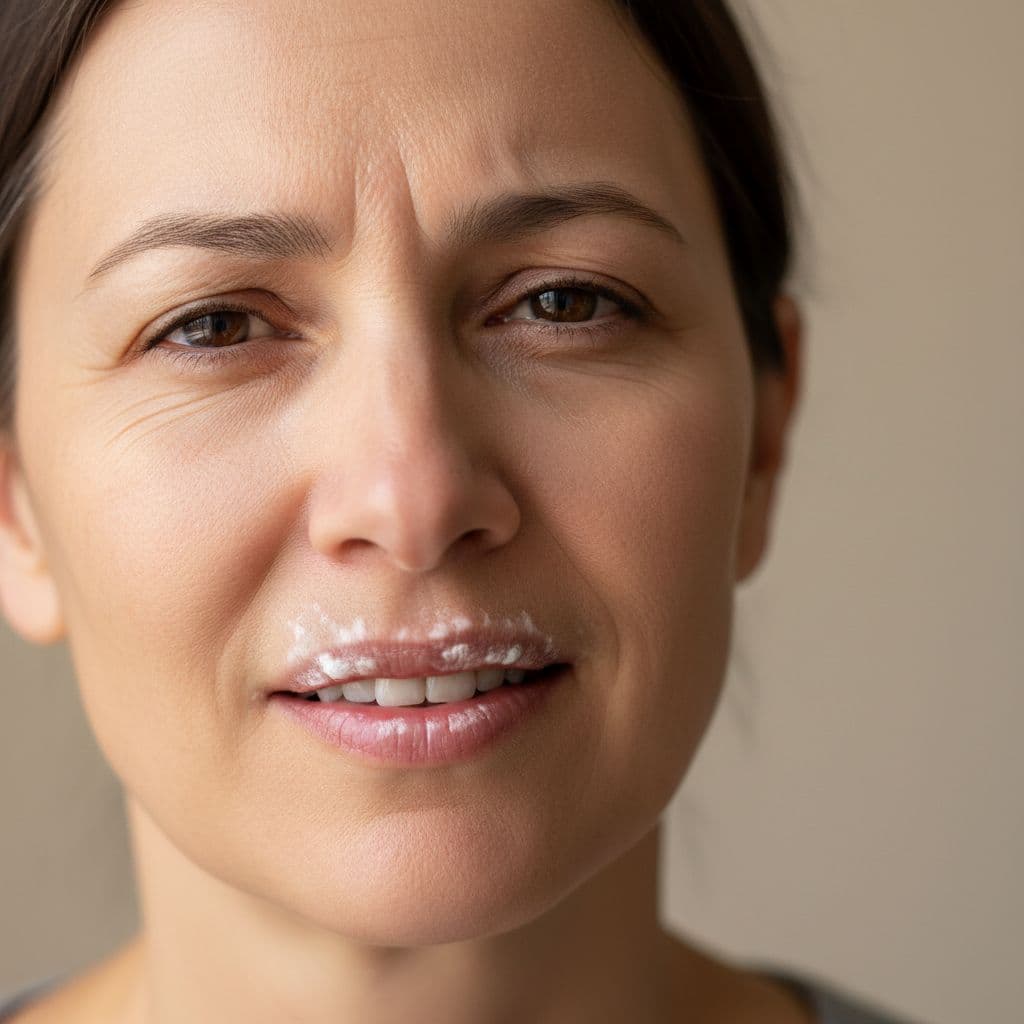
Common signs include white patches, redness, a burning tongue, pain with swallowing, and a bad or metallic taste. Some people also notice dry mouth, thick saliva, or a feeling like their tongue has been scraped with sandpaper. If that sounds familiar, this guide to dry mouth and thick saliva management during cancer treatment may help, since those problems often travel together.
Gentle steps that may ease discomfort
Start with simple oral hygiene. A soft toothbrush helps. Alcohol-based mouthwashes usually sting, so skip them. Many care teams suggest frequent salt water rinses with baking soda in water, but check first if your team has given you a different mouth care plan.
Here are a few habits that often help:
- Rinse often: Gentle rinses can calm the mouth and clear debris.
- Choose soft, moist foods: Yogurt, soup, oatmeal, eggs, and smoothies are often easier to tolerate.
- Avoid irritants: Tobacco, alcohol, and spicy or acidic foods can make the burn worse.
- Clean dentures well: If you wear them, remove and clean them as directed, especially at night.

When medicine is needed
Home care can soothe, but it usually doesn’t clear thrush on its own. Mild cases are often treated with antifungal drugs such as topical medications like nystatin rinse or clotrimazole lozenges. More painful or wider-spread cases may need systemic medications like fluconazole. Current guidance summarized in NCBI’s overview of oral thrush fungal infection prevention during cancer treatment supports topical medications for mild cases and stronger prescription medicine for more severe ones.
If symptoms return after treatment, tell your team. Recurrence can happen, especially when dry mouth or immune changes continue.
When to call your care team, and when not to wait
There’s a difference between “bring it up at the next visit” and “call today.” With oral thrush, the line depends on how much it is affecting daily life.
If mouth pain is stopping you from drinking, swallowing pills, or getting enough food, call the same day.
Reach out promptly if you have:
- swallowing difficulties
- Bleeding, spreading redness, or severe pain
- Fever or chills
- Symptoms that don’t improve after a few days of treatment
- Weight loss because eating hurts
- A white patch, mouth ulcer, or sore that doesn’t improve and doesn’t seem typical for thrush
That last point matters. Thrush is common, but not every mouth change is thrush. A stubborn lesion may need a closer look, especially during treatment or after it. You don’t have to sort that out on your own.
Also call if you’re in remission and mouth symptoms suddenly come back. Relief still matters. Comfort still matters. Being “done with treatment” doesn’t mean you should live with pain in silence.
Sometimes courage looks loud. Other times it looks like making one phone call, because your mouth hurts and you need help.
A steadier next step
Oral thrush can make an already heavy season of cancer treatment feel heavier, but it’s not something you have to just endure. Most cases improve with antifungal treatment, gentle mouth care, prevention measures, and quick attention when symptoms grow. Listen to what your mouth is telling you, and let your team help early for better long-term management. Relief often starts with naming the problem and making the call.