A genetics report can feel like someone handed you a page in a language you never asked to learn. Two words often stop people cold: germline and somatic.
If you are living with cancer, going through treatment, or trying to breathe again in remission, that difference matters. One kind of mutation is present in the DNA you were born with, which is the primary factor in cases of hereditary cancer. The other kind happens later, occurring only in certain cells as life unfolds.
Once that idea clicks, many hard conversations get less foggy.
Key Takeaways
- Germline mutations are present from birth in every cell of the body because they are inherited from biological parents.
- Somatic mutations occur later in life within specific cells or tissues and are generally not passed down to future generations.
- Tumor sequencing primarily detects somatic mutations to help doctors identify specific biological weaknesses and tailor cancer treatment.
- Genetic testing for germline mutations can guide long-term health screenings and inform family members about their own potential risks.
- A mutation is not a verdict; it is simply a change in DNA that provides information for better decision-making regarding treatment and follow-up care.
First, what “mutation” actually means
Let’s start with the word that scares almost everyone.
A mutation is a change in DNA. That is it. Think of DNA as the body’s instruction book. A mutation is like a spelling change in one sentence. These changes often occur during cell division when the body copies its genetic code, or they may arise when the natural process of DNA repair fails to fix an error. Some spelling changes matter a lot. Some do not matter at all. Some sit quietly for years and never cause trouble.
That matters because the word mutation can sound like a verdict. It is not. A mutation simply tells you that a change exists. It serves as a biomarker that can be identified through genetic testing, but it does not tell you, by itself, whether that change caused your cancer, whether it affects treatment, or whether your family members face the same risk.
For a simple medical overview, Cleveland Clinic’s explanation of germline and somatic mutations breaks down the basics in patient-friendly language.
Germline means you were born with the change. Somatic means the change happened later in certain cells.
That one distinction carries a lot of weight. It can shape treatment choices. It can point to inherited risk. It can also bring up fear, guilt, and questions you never expected to ask. Did I inherit this? Could I pass it on? Does this change what remission means for me?
Those are real questions. They deserve real answers, not a blur of technical words.
Germline mutations start at the beginning
A germline mutation begins before you take your first breath. It occurs in the germ cells, specifically the egg or sperm, which results in germline variants being present in almost every cell throughout your body from the very start. Because these germline mutations are incorporated into your genetic makeup at conception, they exist in your healthy tissue, not just within a tumor.
Here is the plain-English version: if a mutation is germline, you were born with it, and you may pass it to your children.
That does not mean a germline mutation guarantees cancer. Not even close. It means your risk may rise, sometimes a little and sometimes a lot, depending on the gene and your personal history. Inherited mutations do not always result in a diagnosis; many people who carry them never get cancer, while many people diagnosed with cancer have no such genetic predisposition at all.
This is why family history matters, even if it does not tell the whole story. Some families carry a clear pattern, such as the presence of BRCA1 and BRCA2 genes, which are well-known for increasing the risk of breast and ovarian cancer. However, other people learn about a mutation even with little or no known family history. Families can be small, relatives may have died young from other causes, or people may simply not know their exact diagnosis. Sometimes the clue stays hidden until one person undergoes genetic testing.
If you want more background on inherited risk, the role of genetic predisposition in cancer gives helpful context.
This kind of result matters beyond one moment in treatment. It can affect screening plans, surgery decisions, and important family conversations. Cancer is a life-threatening disease where these results matter a great deal, but the same idea applies to other medical conditions as well. DNA does not confine itself to just one chapter of medicine.
Understanding somatic mutations and how they develop
Somatic mutations are different from germline changes. You do not inherit them from a parent, and your children generally will not inherit them from you. Because they are not present in your reproductive cells, they are not passed down to the next generation.
These changes happen after conception within your somatic cells. During DNA replication, a cell may copy its genetic code and allow a small error to slip in. While some of these changes are merely harmless somatic variants, others become driver mutations that fuel uncontrolled cancer cell growth. These acquired mutations are often influenced by environmental factors, such as sun exposure, smoking, or chronic inflammation, though sometimes they occur simply by chance. In cases of mosaicism, these mutations only affect specific tissues or parts of the body, rather than every cell in your system.
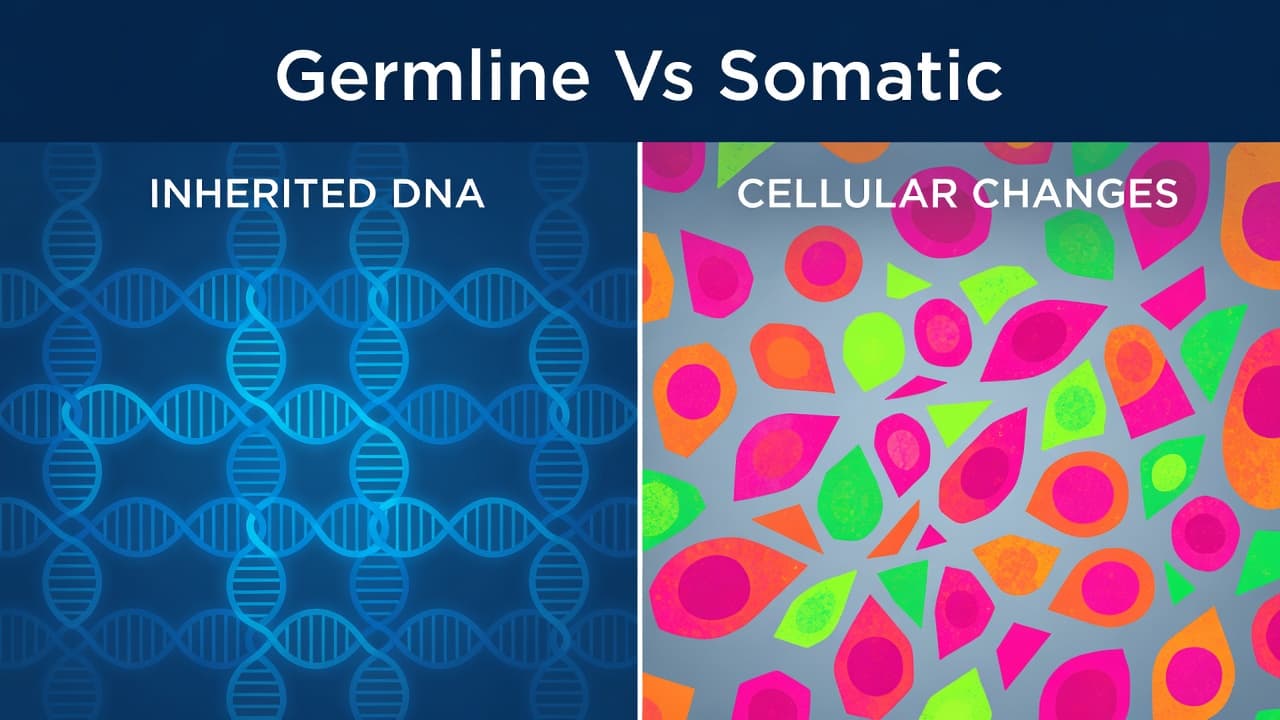
When doctors discuss tumor mutations, they are usually referring to somatic mutations. These changes exist primarily within the cancer cells rather than in every cell of your body. This is the reason a tumor can carry a specific mutation that a standard blood or saliva test does not detect.
This simple comparison helps:
| Question | Germline mutation | Somatic mutation |
|---|---|---|
| When did it start? | Before birth | Later in life |
| Where is it found? | In almost all cells | In certain cells or tissues |
| Can children inherit it? | Yes, sometimes | Usually no |
| How do doctors test for it? | Blood or saliva testing | Tumor sequencing |
The biggest takeaway is this: where the mutation lives changes what the clinical result means.
Patient resources from Genomics Education explain this point by separating inherited variants from tumor-only variants. That distinction is vital because tumor testing answers one set of questions, while inherited testing answers another.
Finally, a somatic mutation does not mean you caused your cancer. It is natural to look for reasons when life turns upside down, but the body does not work that way. Cells change over time; some of these changes are harmless, while others require medical intervention.
Why the difference matters in cancer care
So why do doctors care so much about germline vs somatic mutations?
Because the answer can change what happens next.
Somatic mutations are the changes that occur only within your cancer cells. During tumor sequencing, doctors look for these changes, including those affecting tumor suppressor genes that are no longer working correctly. In plain terms, doctors look for a weak spot in the tumor biology. If they find one, they may match it with a drug that works better for that kind of cancer. Not every tumor has a target, and not every target has a drug. Still, when the match exists, it can shape real decisions.
A germline mutation raises a different set of questions. Should you meet with a genetic counselor to discuss your family history? Do relatives need testing? Should you start screening earlier or more often? Could the result affect surgery choices or the watchfulness you need after treatment? If you are navigating a diagnosis like ovarian cancer, this type of genetic counseling is essential for understanding your risks for hereditary cancer.
This part often surprises people: one test does not always answer both questions. A tumor test can find a mutation that points toward inherited risk, but only precision testing, usually from blood or saliva, can confirm whether you were born with it. Genomic testing helps clarify this distinction, and OCRA’s guide to germline and somatic testing explains that testing split clearly.
The difference still matters when treatment ends. If you are in remission, you may want to close the binder, mute the medical language, and rest. That is understandable. Yet some genetic findings stay important long after active treatment ends. They can shape follow-up care and help family members decide whether they want testing.
There is also an emotional layer here. Somatic results often bring treatment questions. Germline results can bring family questions, and family questions cut deeper. Parents worry about children. Brothers and sisters think about each other. Adult children look back at the people they lost and wonder what no one knew then.
A mutation is not a family failure. It is not punishment. It is information, and information can guide the next step.
Questions worth bringing to your next appointment
You do not need to master genetics while you are tired, scared, or healing. You simply need a few steady questions to guide your conversation.
Ask whether the mutation showed up in the tumor, in your blood or saliva, or in both. Ask whether the results from your genetic testing change your current treatment plan or future screening needs. Ask whether your relatives should seek genetic counseling to understand their own risks. Most importantly, ask what the result means for your specific diagnosis, such as ovarian cancer, rather than for cancer in general.
If you want help getting ready, these important questions to ask your oncologist can help you walk into the room with something solid in your hands.
It also helps to ask one simple question when the report feels overwhelming: “Is this inherited, or is it only in the tumor?” That sentence can bring the whole conversation back into focus.
And if the genetics talk stirs up fear, sadness, or guilt, you are not overreacting. Many people need support for that part, too. Coping with the emotional impact of a cancer diagnosis can help put words around feelings that often hit hard and late.
For more plain-language support, compassionatevoices.org offers educational resources for people facing cancer and other life-threatening diseases.
Frequently Asked Questions
If I have a somatic mutation, could I have passed it to my children?
Generally, no. Somatic mutations occur only in specific cells, such as those within a tumor, and are not present in your reproductive cells (eggs or sperm). Because of this, they cannot be inherited by your children.
Does having a germline mutation mean I will definitely get cancer?
No. A germline mutation indicates an increased predisposition to certain types of cancer, but it does not guarantee that a cancer diagnosis will occur. Many people who carry inherited mutations live their entire lives without developing the disease.
Why do doctors test both the blood and the tumor?
Testing the blood or saliva helps identify germline mutations that were present from birth, while testing the tumor helps identify somatic mutations that fueled the cancer’s growth. Comparing these results allows your medical team to differentiate between inherited risks and acquired genetic changes.
Are all mutations harmful?
Not at all. DNA is constantly copying itself, and many genetic changes are neutral or harmless. A mutation only becomes a primary concern when it interferes with the body’s normal instructions or fuels uncontrollable cell growth.
The part to remember
When people compare germline vs somatic mutations, they are asking one main question: Did this DNA change start with me, or did it start in the tumor later?
Germline mutations are inherited and present from the beginning of life in every cell. In contrast, somatic mutations happen later in specific cells, often as the result of environmental factors or errors during cell division. Understanding that difference is essential because it guides treatment options, cancer screening protocols, and important family health decisions.
When the medical terminology feels overwhelming, come back to that one simple idea. It may not answer every question, but it provides a steady foundation for the next conversation with your care team.