Advances in cancer research change the sound of ordinary words. “Clinical trial” can suddenly feel heavy, even frightening, especially when you’re already carrying enough, but these clinical trial facts can help.
Still, many cancer clinical trials are less mysterious than they seem. They are not a secret world for someone else. They are one possible part of care, and they come with rules, safety checks, and a lot of questions you have every right to ask.
Key Takeaways
- Cancer clinical trials are structured research studies testing new treatments, doses, or approaches safely—not just a last resort, but options for newly diagnosed patients, those in remission, or prevention.
- Trials progress through phases: Phase I for safety and dosing, Phase II for early effectiveness, Phase III for comparisons to standard care, and Phase IV for long-term monitoring.
- Benefits include access to cutting-edge care and close monitoring, but trade-offs involve unknowns, extra tests, and logistics—always ask about side effects, costs, and next steps.
- No blind leaps: Informed consent, IRB oversight, and clear questions ensure trials fit your life and cancer stage.
- Joining helps future patients while prioritizing your care—courage means one informed choice at a time.
What a cancer clinical trials actually is
Cancer clinical trials are research studies with patients, not lab animals. In cancer care, they test whether a new treatment, new treatments like a new drug combination, a new dose, or a new way of using standard treatment is safe and helpful.
Some treatment trials are for people with advanced disease. Others are for people newly diagnosed. Some are for people in remission who want to lower the risk of the cancer coming back. That range matters, because treatment trials are not only a “last resort.” Cancer research also includes screening trials, prevention trials, and supportive care trials, which broaden options beyond just drugs.
Doctors use trials to answer clear questions. Does this treatment shrink tumors? Does it help people live longer? Does it cause fewer side effects? Sometimes the study compares a new option with today’s standard treatment. Sometimes everyone gets the new treatment, especially in earlier phases.
For a trusted patient guide, the National Cancer Institute’s clinical trials overview is clear and practical.
In cancer care, a trial is a structured option, not a blind leap.
That may not erase fear. But it can replace some fog with facts, and that is its own form of courage.
Why people choose a trial, and what the trade-offs are
People join trials for different reasons. Some hope for access to an experimental treatment not widely available yet. Others want another option when standard treatment has stopped working. Many also want to help future patients, even while caring for themselves now.
There can be benefits to participating in a clinical trial. You may get close follow-up, more frequent check-ins, and a treatment plan built around a specific question. Dana-Farber offers a helpful page on why patients join cancer clinical trials.
But no honest doctor will promise a trial will work better. That is the whole point of the study, no one knows yet. A new treatment, such as immunotherapy, may help, or it may not. You may also face extra scans, more blood work, longer visits, or side effects that are still being studied. The safety of these approaches, including their side effects, is part of what the trial evaluates. Cancer Research UK gives a balanced look at the pros and cons of taking part in a clinical trial.
As of April 2026, new trials continue to open in pancreatic cancer, breast cancer, myeloma, and prostate cancer. Consider using a clinical trial finder to explore options for specific conditions like myeloma or breast cancer. That steady movement brings hope. It also reminds us to stay grounded. A promising headline is not the same as a proven answer for your body, your stage, or your life.
Cancer clinical trial phases, without the medical fog
The word “phase” sounds technical, but the idea is simple. Each phase asks a different question.
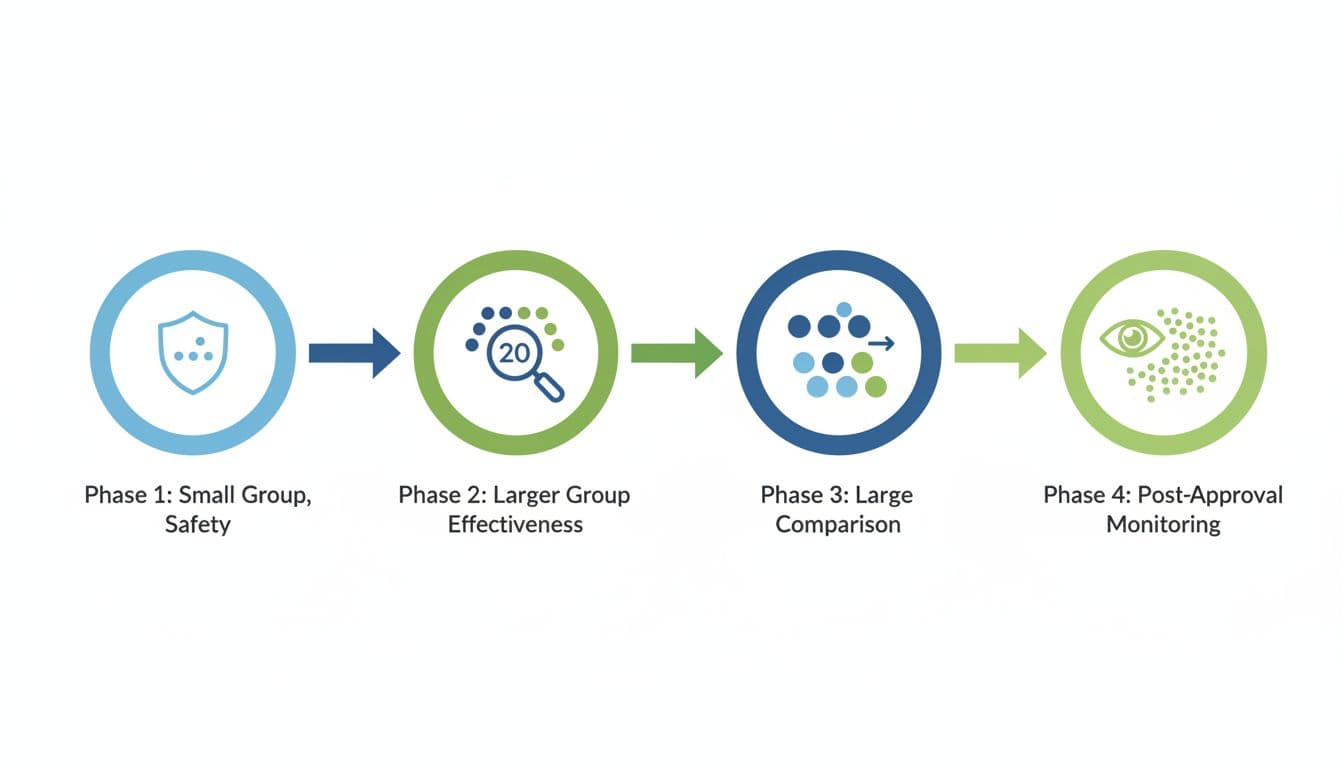
This quick table shows what each phase is trying to learn:
| Phase | Main question | What it means for you |
|---|---|---|
| Phase I clinical trials | Is it safe, and what dose makes sense? | Small groups, close monitoring |
| Phase II trials | Does it seem to work for this cancer? | More patients, stronger early signals |
| Phase III trials | Is it better than, or as good as, the standard of care? | Larger groups, direct comparison |
| 4 | What happens over time after FDA approval? | Long-term safety and follow-up |
Many people worry about getting placebos and no treatment. In cancer trials, that fear is often larger than the reality. Patients usually receive the standard of care, or the standard of care plus something new, unless the situation makes a placebo comparison ethical and safe. If that part is unclear, ask until it is plain.
Also ask whether the trial is randomized. That means a computer, not your doctor, assigns the treatment group. It can feel strange. Yet randomization is one way researchers learn what truly helps.
How to decide if a trial fits your life
A good trial is not only about the science. It also has to fit your real life, starting with the eligibility criteria. Can you travel there? How often are visits? Who pays for routine care, and what financial assistance does the study offer? Will you need extra scans or biopsy samples? These often come with medical monitoring that prioritizes patient safety.
Before you join, you should receive informed consent papers. That sounds formal, but the idea is simple. You deserve a full explanation, in plain language, before saying yes. The study will also be approved by an institutional review board to ensure oversight and protection. The NCI guide on what to expect during a clinical trial walks through that process.
A few questions can make the conversation easier:
- What is the goal of this trial for my cancer right now?
- What are the likely side effects, and how will you manage them?
- If this does not help, what are my next options?
- How will this affect work, family life, and daily energy?
If you are in remission, the questions may shift. You may care more about keeping the cancer away, watching late effects, or protecting quality of life. That emotional stretch is real, and life beyond cancer remission can bring its own hard decisions.
For some people, it also helps to read stories of hope after cancer treatment. Facts guide the mind; human stories steady the heart. Ready to explore options? Learn how to find clinical trials that match your needs.
Frequently Asked Questions
What is a cancer clinical trial?
Cancer clinical trials are research studies with patients testing if new treatments, drug combinations, doses, or uses of standard care are safe and effective. They answer specific questions like tumor shrinkage, survival, or fewer side effects, and include types beyond treatment, such as screening, prevention, and supportive care. They’re a structured part of care, not a mystery.
Are clinical trials only for people with advanced cancer?
No, trials suit various stages—from newly diagnosed to advanced disease or remission to prevent recurrence. They’re not solely a last resort; many compare new options to standards or test prevention. Check eligibility to see if one fits your situation.
Do cancer trials use placebos or leave people without treatment?
Rarely—cancer trials usually provide standard care, or standard plus something new, unless ethics allow a safe placebo comparison. Randomization by computer ensures fair groups, but ask your doctor to clarify. Patient safety drives every design.
What are the phases of a clinical trial?
Phase I tests safety and dosing in small groups with close watch. Phase II checks effectiveness in larger groups. Phase III compares to standard care in big studies. Phase IV monitors long-term after approval. Each builds knowledge step by step.
How do I know if a trial is right for me?
Consider eligibility, travel, visit frequency, costs, and side effects—plus informed consent explaining everything plainly. Ask: goals for your cancer, side effect management, next options, and life impact. IRB approval adds protection; use trial finders for matches.
A choice you can make with open eyes
You do not need to be fearless to ask about a trial. You only need space to ask clear questions and hear honest answers.
For many people, that is what courage looks like during cancer care, especially with diversity in research making cancer clinical trials open to everyone. It is not a grand speech. It is one careful decision at a time, such as participating in a clinical trial, whether you are newly diagnosed, in treatment, or living in remission and weighing what comes next.