
You rise from a church pew, turn in a work hallway, or lower yourself into a chair at a family dinner, and suddenly the room feels brighter. Not because the lights changed, but because you can feel eyes on you.
Parkinson’s often gets described in medical terms. Yet one of its hardest parts can be painfully ordinary, those small transitions that no longer feel small. When standing up, turning around, or sitting down starts to take more time, more focus, and more courage, the social weight can hit as hard as the movement itself.
Why standing up, turning, and sitting down can suddenly become hard to hide
Walking gets most of the attention, but transitions can be just as hard. Standing up asks your body to shift weight, steady itself, and move with timing. Turning asks your feet, trunk, and balance to work together. Sitting down sounds simple, yet it can feel like landing a plane in a tight space.
Parkinson’s can slow these steps. It can also make you stiff, less steady, or briefly “stuck.” Some people freeze for a moment. Others move in a way that looks jerky or rushed. Stress often makes it worse. So do narrow spaces, crowded rooms, and moments when you feel hurried.
That is why church aisles, office meetings, and busy family rooms can feel so exposing. These places don’t give you much room, and they rarely give you much time. In 2026, awareness efforts like the Sit-to-Stand Challenge have helped show that these are not tiny issues. They are real movement tasks that take strength and practice.
These are not small movements, they are some of the hardest ones
Changing position is a chain of actions. First you lean, then shift weight, then rise or turn, then steady yourself. If one link falters, the whole movement can look awkward or unsafe.
Turning to sit can be the hardest part. Your feet may feel glued down while your upper body keeps going. Or your body may hesitate right before the chair. Many people describe that mismatch as one of the most unsettling parts of Parkinson’s. It also fits with what many people report about freezing of gait in Parkinson’s disease, especially when turning or moving through tight spaces.
Why other people notice, and often misunderstand, what they see
To someone else, you may look unsure, weak, distracted, or off balance. They might see swaying, stopping mid-step, twisting, or dropping into a seat faster than you meant to. Some may mistake it for anxiety. Others may think you’re tired, intoxicated, or not paying attention.
Most people aren’t trying to be cruel. They simply don’t know what they are seeing. Still, misunderstanding can sting.
The part people rarely talk about, embarrassment, hyperawareness, and wanting to disappear
The movement is one thing. The spotlight is another. Once you’ve been watched during one awkward moment, you may start planning every next one. You scan for sturdy chairs. You think about aisle space. You notice who is standing nearby. You rehearse how you’ll get up before anyone asks you to.
That constant self-monitoring is exhausting. It can shrink your world without anyone noticing. You may skip a service, avoid a work lunch, or dread the moment at a family table when everyone rises at once.
At church, the quiet room can make every movement feel louder
Church can be comforting, but it can also sharpen your self-awareness. Silence has a way of magnifying small sounds and small delays. Standing during prayer, turning into a pew, or sitting a beat later than everyone else can feel like it echoes.
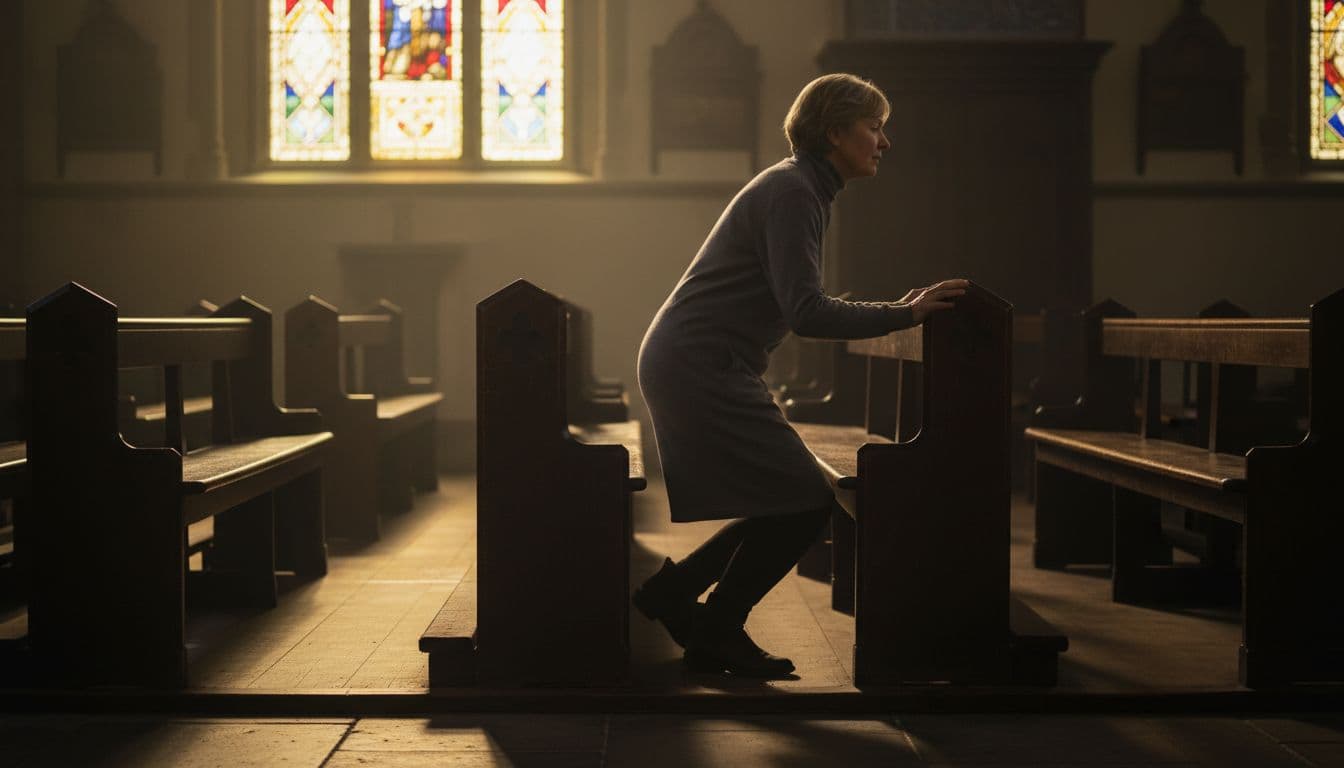
Narrow rows don’t help. Ritual timing doesn’t either. When the room moves together and you can’t, you may feel set apart even while surrounded by community.
At work, being watched can feel like being judged
At work, the fear often runs deeper. You stand from a chair in a meeting, and it takes longer than it used to. Someone calls your name in a hallway, and your turn looks stiff. You pause before sitting, and now you wonder what everyone thinks.
That moment can feel less like being seen and more like being measured. Will they question your health, your stamina, or your skill? If you want a broader reflection on the movement symptoms in public with Parkinson’s, that perspective can help put words to what you may already feel.
At family events, love and attention can still feel overwhelming
Family can be the safest place, and still the hardest. People love you, so they look. They rush in. They offer a hand three times in one minute. Sometimes they joke because they feel scared.
Support matters, but too much attention can make you want to vanish. That tension is real. You can be grateful and uncomfortable at the same time. Stories from people describing embarrassing symptoms of Parkinson’s disease show how common that mix of love, shame, and fatigue can be.
Needing more time does not mean you are making things difficult. It means your body needs a different pace.
What helps you protect your dignity and move through these moments with less stress
You may not control every symptom, but you can lower the pressure around them. Small changes often help more than big speeches.
Small adjustments in the room can make a big difference
At church, an aisle seat can give you room to rise and turn. At work, a stable chair and a little extra space behind you can ease the strain. At family events, arriving early helps you choose a seat that doesn’t trap you between knees, bags, and chair legs.
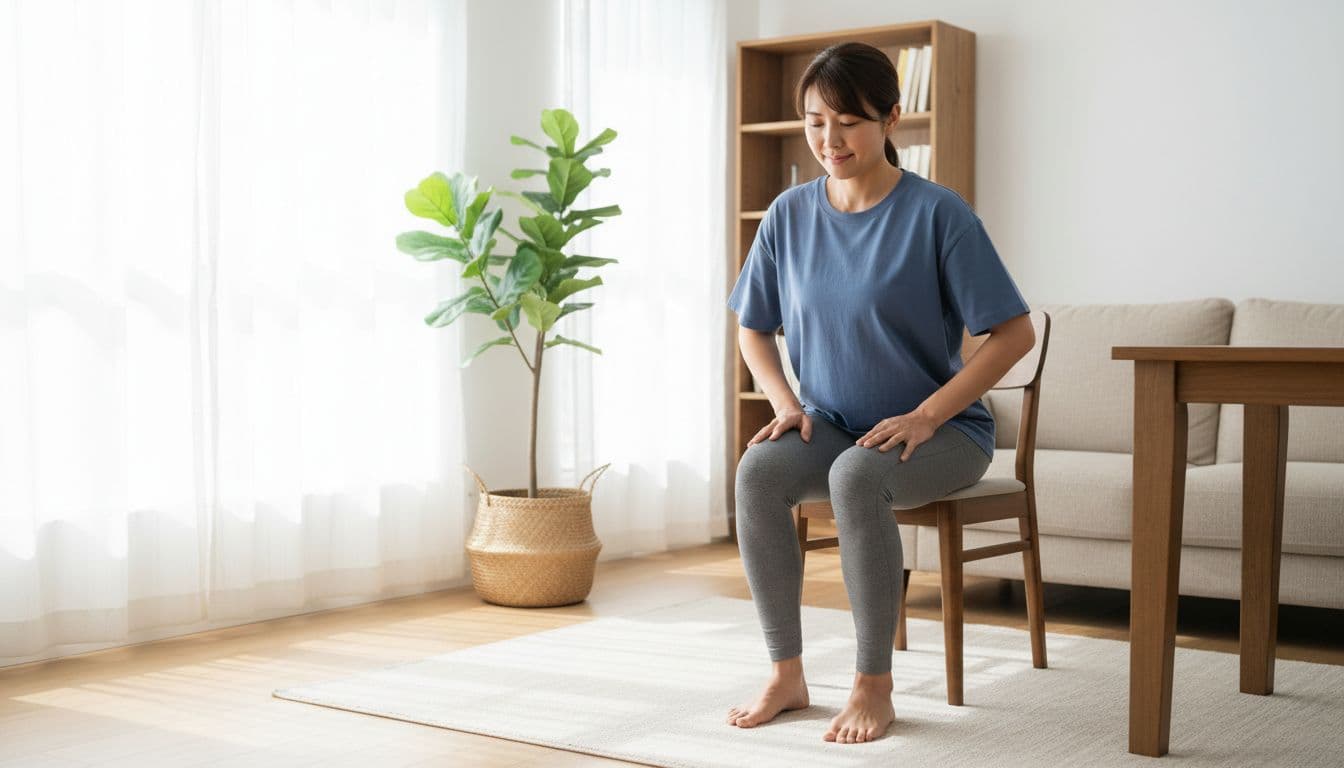
Practice matters too. Rehearsing turns and sit-to-stand moves at home can build confidence for public moments. In 2026, public awareness campaigns have highlighted these exact motions because they affect daily life so deeply. If symptoms are changing, bring that up with your doctor or movement specialist.
A short explanation can reduce awkwardness without telling your whole story
You don’t owe everyone a full account. Still, one calm sentence can ease a room and ease your mind. You might say, “I move a little slower getting up,” or, “Give me a second to turn.” That’s enough. Clear, brief words can stop confusion before it grows.
You can also ask one trusted person to stay close without hovering. That might be a spouse at church, a coworker in meetings, or a sibling at family gatherings. The goal isn’t to make you dependent. It’s to help you feel less alone.
The social weight of Parkinson’s is real, even when other people can’t see it. Those ordinary moments, standing, turning, sitting, can carry fear, shame, and effort that never show on the surface.
Still, you are not weak, awkward, or difficult because you need more space or time. You are adapting. That is its own kind of courage.
So when the room feels too watchful, remember this: your worth is not measured by how smoothly you rise from a chair. Ask for what helps, keep what protects your dignity, and let yourself move at the pace your body needs.