
If the words “just think positive” have ever made you feel smaller instead of stronger, you’re not alone.
When you’re living with cancer, fear isn’t a flaw. Uncertainty isn’t weakness. Some days you need room to feel scared, tired, angry, or numb without being pushed into a smile that doesn’t fit. The healthier path isn’t forced cheer. It’s a gentler kind of hope that makes room for what’s hard.
When “Just Think Positive” Lands Wrong
Picture a clinical waiting room. People sit quietly, each carrying a private storm. Then someone says, with bright certainty, “Just think positive.”
For many people, that doesn’t feel comforting. It feels like a door closing.
The problem isn’t hope. The problem is pressure. When you’re told to stay upbeat no matter what, your real feelings get pushed aside. Fear has nowhere to go. Grief gets treated like a bad attitude. You start to wonder if being honest will make other people uncomfortable.
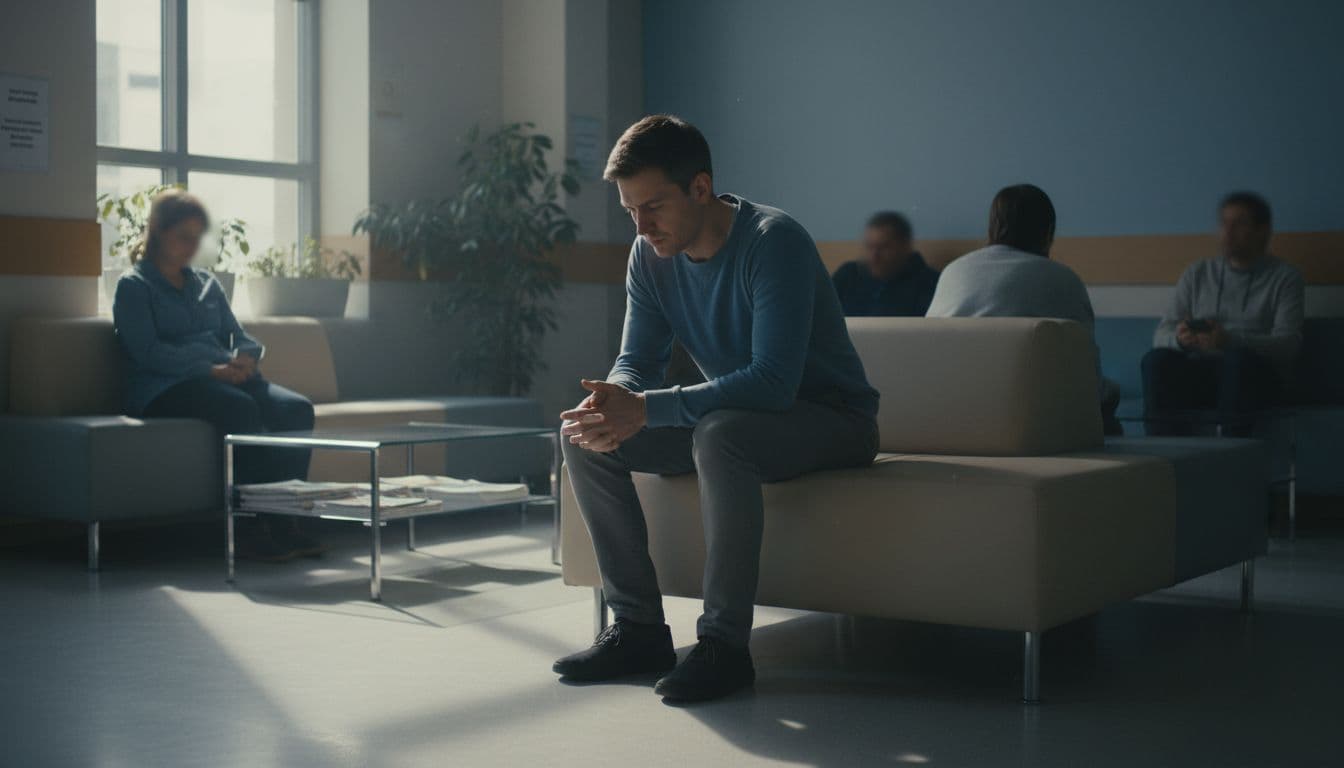
That’s why it’s helpful to separate toxic positivity from gentle optimism. They may sound similar on the surface, but they feel very different in the body.
Here’s a quick side-by-side view:
| Approach | What it sounds like | What it does |
|---|---|---|
| Toxic positivity | “Don’t think that way. Stay positive.” | Shuts down fear, sadness, and doubt |
| Gentle optimism | “This is hard, and there may still be one good thing today.” | Makes room for pain and hope together |
The second approach doesn’t ask you to lie. It asks you to stay open.
That difference matters, especially in cancer care. You already carry enough. You don’t need the extra weight of performing happiness for other people. Sometimes the bravest thing you can say is, “I’m scared.” Sometimes the next bravest thing is, “I’m still here.”
What “And Thinking” Sounds Like in Real Life
A healthier form of hope starts with what you might call and thinking. It means holding two true things at once.
You can say, “This hurts, and I’m going to notice one small comfort today.” You can say, “I’m frightened, and I’m stronger than I knew.” You can say, “This day is awful, and someone cares about me.”
That small word, “and,” changes everything. It doesn’t erase the first half of the sentence. It lets the second half sit beside it.
Here are a few examples of what that can sound like:
- “This is tough, but I’m going to find something small and pretty to appreciate today.”
- “I’m scared, and I’m stronger than I knew.”
- “This really hurts, but there are folks who care about me.”
The point isn’t grammar. The point is emotional truth.
Many people think hope means choosing one side. Either you’re honest about how bad this is, or you’re hopeful about what’s ahead. Yet that isn’t how real life works, especially during illness. Real life is mixed. It holds tears and laughter in the same hour. It holds scan anxiety and a warm cup of coffee in the same morning.
You don’t have to choose between being real and having hope.
That’s why holding fear and appreciation together can be such a powerful shift. It gives you permission to stop arguing with your own feelings. You don’t have to sugarcoat the hard parts. You only need to leave a little room for something else to exist beside them.
That isn’t denial. It’s courage with its sleeves rolled up.
Why Thinking Positive Fails, and What Research Says Instead
Many people sense this already. Forced positivity doesn’t calm them. It makes them tense.
Research backs that up. A grounded, hopeful outlook tends to help more than either extreme, expecting the worst at all times or pretending everything is fine. In other words, hope works best when it stays honest.
Barbara Fredrickson’s work on positive emotions helps explain why. Her broaden-and-build theory of positive emotions suggests that real moments of warmth, gratitude, interest, or calm can widen how we think and help us recover after stress. Her UNC Lineberger profile also reflects her long-standing work on the study of positive emotions. These moments do not need to be big. A kind text, a brief laugh, sunlight on the table, those small experiences can matter.
Still, the key word is real.
If positivity is forced, it can backfire. When you tell yourself “I’m fine” while your whole body knows you’re not, the strain grows. You end up fighting two battles, the hard thing itself, and the effort to hide your true response to it. That’s one reason Cancer Today’s look at the downside of too much upside speaks to so many people with cancer.
So yes, thinking positive fails when it demands that you deny fear. It fails when it turns pain into a personal failure. It fails when it makes sadness feel shameful.
Gentle optimism works differently. It says, “This is rough, and there may still be a next step.” It stays close to the facts. It doesn’t ask you to grin through suffering. It asks you to keep a small window open.
A three-step way to start with self-compassion
Before hope can feel steady, it often needs a softer place to land. That’s where self-compassion comes in.
You can try this simple three-step practice when things feel heavy:
- Start by naming the moment. Say to yourself, “This is a hard time.” Keep it plain. Don’t dress it up.
- Next, remind yourself that struggle is part of being human. A hard day doesn’t mean you’re failing. It means you’re in pain.
- Then offer yourself some kindness. Say, “I need a little care right now.” That care might be rest, quiet, a blanket, water, or a break from talking.
Only after that, and only when you’re ready, ask a gentle question: “Is there one tiny bit of hope I can see right now?”
Some days the answer will be no. That’s okay.
Other days, the answer may be small. Maybe your coffee tasted right. Maybe your dog looked at you in that way that softens your whole chest. Maybe you made it through one more day that felt impossible at breakfast.
If you need more grounded support for days like these, coping strategies beyond forced positivity can help you stay honest without spiraling.
Try This Tonight, the Three Good Things Practice
If you want a simple exercise that doesn’t feel fake, try this before bed.
It comes down to noticing three good things from your day. Not amazing things. Not life-changing things. Only good things.

You can keep it simple:
- Write down three good things that happened today.
- Let them be small. Morning light on the kitchen table counts. A friend checking in counts. Making it through the day counts.
- After each one, add a short note about why it happened.
That last step matters. It helps your mind do more than collect bright spots. It helps you see patterns, care, and your own part in what went right.
For example, you might write that the room looked beautiful this morning because you left the curtains open. Or that a friend texted because you’ve been honest with them, and honesty built closeness. Or that you got through the day because you rested when your body asked you to.
This practice isn’t about pretending your day was lovely. It’s about teaching your mind not to miss the small things that still belong to you.
Cancer changes what good looks like. Sometimes “good” is not dramatic. It may be a nurse who remembers your name, a meal that tastes normal, or a stretch of time when your mind finally quiets down. That still counts. In fact, it may count more now than it ever did before.
If this idea speaks to you, you may also connect with seeing good on the cancer journey. The heart of it is the same, you don’t have to ignore pain to notice what is still good.
You Can Feel Scared and Grateful at the Same Time
One of the hardest lessons in cancer is also one of the kindest. Two opposite-seeming feelings can live in the same day.
You can be scared before a scan and still smile at a funny text. You can hate what cancer has taken and still love the way your child laughs in the next room. You can have a bad day and still find one small thing worth keeping.
This is where many people get stuck. They think gratitude cancels pain, or pain cancels gratitude. It doesn’t. Human feelings are not a courtroom. They don’t need one winner.
That’s why gentle optimism feels more solid than forced positivity. It doesn’t ask you to choose a side. It says your fear is real, your sadness is real, and your hope can be real too. All of them can sit at the same table.
For many people, this shift changes daily life. You stop grading your emotions. You stop asking whether you’re being “good” at cancer. You stop acting like a hard day means you’ve lost your way. Instead, you start paying attention to what helps. A softer thought. A true sentence. A person who stays. A moment of beauty you didn’t plan.
There is freedom in that.
There is also a quieter strength in letting life be mixed. That’s part of living fully with cancer. Not perfectly. Not cheerfully all the time. Fully, as in honestly, with room for fear, love, fatigue, humor, and hope to share the same space.
The strongest takeaway is simple: hope works better when it’s honest.
You don’t need to force bright thoughts to prove you’re trying. You don’t need to hide the hard parts to make other people comfortable. A truer kind of hope says, “This is painful, and there is still one small thing I can hold onto.”
If you’d like, take that into the rest of today. Then, before bed, write down one good thing that happened this week. Keep it light. Keep it real.
You may be doing better than you think.