
A peripherally inserted central catheter (PICC) line, placed in the upper arm, can feel like a lifeline and a source of worry at the same time. Cancer changes the rhythm of a home, and suddenly a shower, a shirt sleeve, or a quick errand can feel like something to plan around.
That feeling makes sense. A PICC is a type of central venous catheter. Still, PICC line care does not have to rule your day. With a few steady habits, you can protect the line, lower infection risk, and feel more grounded in your own space.
Build a simple PICC line care routine
Good PICC line care doesn’t ask for perfection. It asks for repeatable habits.
Keep the site clean and dry
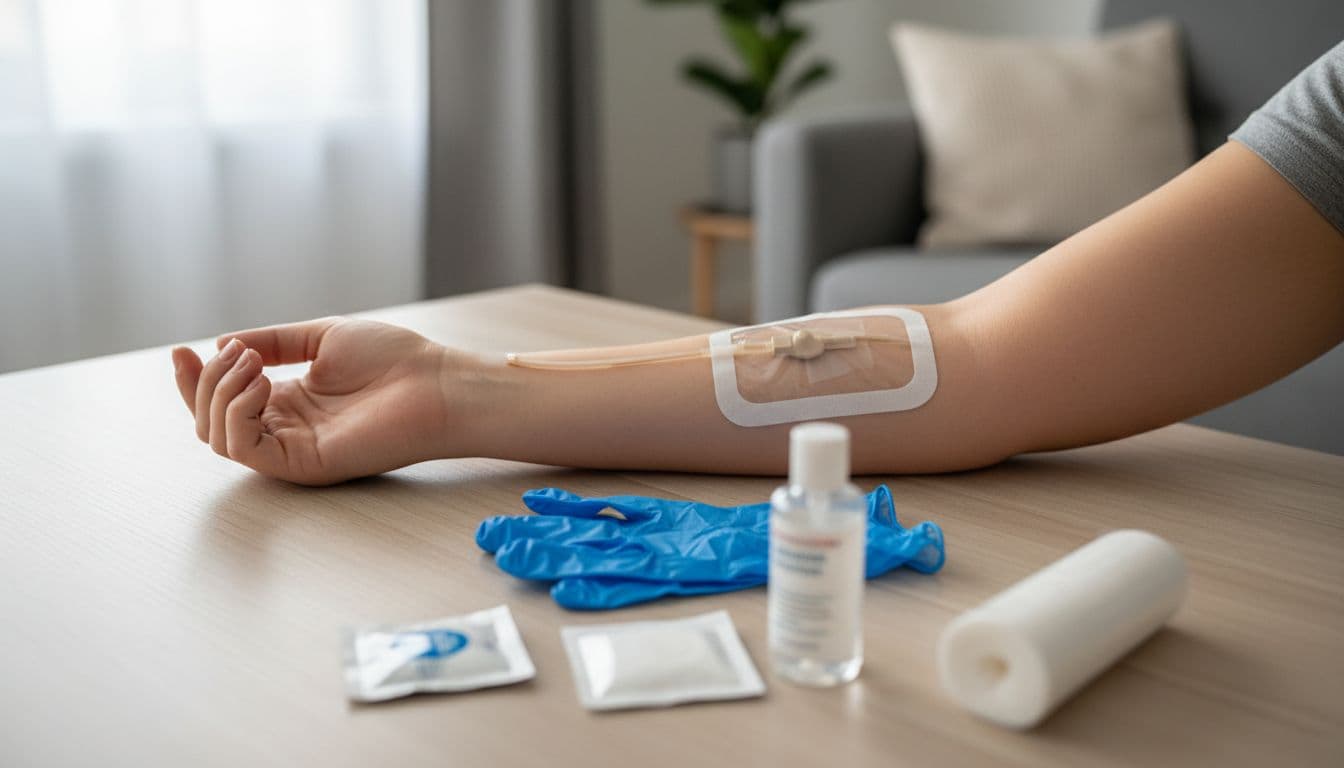
Start with the basics your body can count on. Practice good hand hygiene before you touch the line or supplies. Check the insertion site and exit site each day. The Tegaderm dressing should stay clean, flat, and dry.
Many cancer centers also teach patients to avoid soaking the arm. Showers are often fine if you protect the dressing with a waterproof cover, but baths, hot tubs, and swimming are usually not. Kaiser Permanente’s PICC care instructions give a clear overview of those daily precautions.
Your line is not made of glass. But it does need respect, the way a cast or a fresh wound does. A small shortcut today can become a bigger problem tomorrow.
Follow your own care plan, not someone else’s
This part matters more than people think. One patient may flush the line daily with saline solution (and heparin as directed). Another may flush less often. One dressing may need weekly dressing changes. Another plan may differ because of the type of line, treatment such as receiving IV medications, or clinic routine.
So let your nurse’s instructions lead. Keep your supplies in one clean spot. Use the flushes, needleless connector, disinfection cap, and dressings your team gave you. Clean the hub with alcohol pads before accessing it. Never force a flush if it resists, and never trim tubing or use scissors near the line.
A notebook helps more than memory when treatment days blur together. Write down dressing dates, flush dates, and any changes you notice. Small records can bring a lot of calm.
Know the warning signs before they grow
Signs of infection often start quietly. A little redness. A sore spot. A dressing corner that lifts. A strange tug when you move your arm. These small signs deserve attention.
If something feels off, call sooner. Waiting rarely makes PICC problems smaller.
Do a quick check each day in good light. Contact your healthcare provider immediately if you notice any of these:
- Fever or chills
- Swelling and redness, warmth, or drainage at the site
- Pain or swelling in the arm (which could indicate a blood clot), shoulder, neck, or chest
- Leaking, cracking, or trouble flushing the line
- A wet, loose, or dirty dressing
- The line looks longer than before or seems to have moved
Shortness of breath, sudden chest pain, or major swelling need urgent help right away.
The VA’s guide to caring for a PICC covers many of the same warning signs in plain language and notes how the catheter allows for easy blood samples without multiple needle sticks. It can be useful to review when you want a calm refresher, especially on tired days.
If your white blood cell counts are low, infection risk rises. In that season, these tips on managing infection risks with central lines at home can help you think about germs without turning your home into a place of fear.
Most of all, trust the pause in your chest when something doesn’t seem right. Monitor for signs of infection like swelling and redness, and contact your healthcare provider right away. That instinct is not weakness. During Cancer treatment, it can be wisdom.
Make PICC line care fit real life
A PICC line lives in the middle of ordinary life. You still sleep, cook, fold laundry, answer texts, and try to feel like yourself. So the goal is not to make every hour medical. The goal is to build a routine that protects you without stealing all your energy.
Let daily habits do some of the work
Loose sleeves help. Securing the tubing helps too, because less pulling means less irritation. Ask your team what movements or lifting limits apply to you, like avoiding heavy lifting and repetitive motion to protect the central vein. Also make sure the blood pressure cuff is never used on the arm with the PICC line, since advice can differ.
Keep a small rhythm around the line. Check it in the morning. Protect it before a shower. Look at the dressing again before bed. When care becomes part of the day, it often feels less like a threat and more like a steady practice.
And if you’re in remission but still healing or finishing treatment, that daily attention still matters. The line may stay for a while, even after the hardest stretch has passed.
Let other people carry part of the weight
You do not have to hold this alone. A partner, friend, or caregiver can learn your routine, help set up supplies, assist with a dressing change using sterile gloves and chlorhexidine gluconate for cleaning, or notice changes you miss when you’re worn down.

Some people also feel calmer after reading a step-by-step handout like City of Hope’s PICC home care guide with a loved one beside them. The steps feel less lonely when another person understands them too.
The emotional side is real. A PICC line can be a daily reminder that treatment is still here. If that weight starts to build, support for managing stress during long-term cancer treatment may help you steady the fear that comes with all this routine.
The line in your arm asks for attention, but it does not get to become your whole identity. Check the lumens for integrity as part of PICC line care, which works best when it is calm, consistent, and personal to your care plan.
Today, check that your supplies are ready, keep your medical alert card in your wallet at all times, post your clinic number where you can see it, and tell one trusted person what signs mean “call now.” Small acts like these may look ordinary, yet they are a quiet kind of courage for managing your central venous catheter with effective PICC line care.