
“What do I tell the kids?” can feel like the hardest question in the room. A cancer diagnosis already takes so much, sleep, appetite, certainty. Then it asks for words you never wanted to practice.
Still, talking to kids about cancer doesn’t require perfect sentences. It requires steadiness, honesty, and a kind of courage that looks small from the outside. The kind that sits on the edge of a bed and tells the truth, gently.
This guide walks through what children tend to understand by age, what to say in simple language, and how to keep the conversation going through treatment, treatment side effects, and even remission.
Before you talk: a few ground rules that protect trust
Kids don’t need every detail, but they do need a story that makes sense. When details are missing, children fill gaps with imagination, and imagination often runs toward feelings of guilt or fear.
Start with three anchors of honest communication:
- Name it: Use the word cancer. It reduces mystery.
- Make it their-safe: Say clearly, “You didn’t cause this.”
- Promise presence, not outcomes: “I’ll keep you updated” lands better than “Everything will be fine.”
Tone matters as much as content when talking about a loved one with cancer. If you can, pick a calm moment, not a rushed hallway. Sit low, eye level helps. Then speak like you’re holding a flashlight in a dark room. You’re not changing what’s there, you’re making it less frightening to see.
If you want a clinician-backed overview before you begin, Memorial Sloan Kettering’s Talking with Children about Cancer FAQs offers clear, parent-friendly guidance.
A helpful test is simple: if your child repeats your words to a friend, would the meaning still be true?
Here’s a quick reference for age-appropriate information at different ages:
| Age | What kids need most | What to keep simple |
|---|---|---|
| 0–2 | Safety, routine, closeness | Short phrases, steady care |
| 3–5 | Clear cause and effect | Avoid confusing metaphors |
| 6–8 | Concrete facts, reassurance | Basic body and treatment info |
| 9–12 | More detail, some control | Plans, schedules, who helps |
| 13+ | Respect, honesty, agency | Options, feelings, privacy |
The takeaway: truth stays, detail changes.
How to explain cancer by age (with words you can borrow)
Talking to toddlers (ages 0–2): comfort is the message
Young children won’t grasp cancer. They will notice changes, your smell after the hospital, the way a scarf replaces hair, the new fatigue in your steps. For them, the talk is less about meaning and more about felt safety.
Use short lines and repeat them often: “Mom is sick.” “Dad is getting medicine.” “You are safe.” Keep everyday routines when possible, and when you can’t, label the change ahead of time. A simple warning prevents a big shock. Maintaining everyday routines helps provide stability for young children.
Also, keep goodbyes calm and predictable. A toddler reads your face the way you read a weather report.

Explaining to preschoolers (ages 3–5): clear, literal, and brief
Preschoolers think in pictures. They also think illness can be “caught” like a cold, or caused by anger, bad behavior, or a scary thought. These misconceptions about cancer make it important to address them clearly. Say the basics with a steady voice:
“Cancer is a sickness inside my body. Cancer is not contagious. The doctors are giving me strong medicine to fight it. You can’t catch cancer. You didn’t cause it.”
Skip vague phrases like “Mom has a boo-boo inside” or “Dad is sleeping a lot.” Those can confuse. If you need a metaphor, keep it simple and true, like “The medicine is like a helper that’s working hard.”
For more age-by-age phrasing ideas, Alex’s Lemonade Stand Foundation shares a practical age-by-age guide for talking with kids.

Approaching school-age kids (ages 6–8): facts, body basics, and a plan
Children in this range want things to “add up.” Give them a simple body explanation: where the cancer is, what treatment is called, and what physical changes they might see. Concrete details often lower fear.
Try: “The cancer is in my breast (or blood, lung, colon). The treatment is called chemotherapy (or surgery, radiation treatment). It may make me tired and might make my hair loss happen, but the doctors will watch me closely.”
Then offer a small job as part of the cancer treatment plan, not a big burden. Let them pick a bedtime story, choose a cozy blanket for you, or draw a “medicine-day” card. Small help can turn helplessness into courage.

Supporting preteens (ages 9–12): more detail, more feelings, more “what ifs”
Preteens can handle more truth, and they’ll often search for it anyway. If you don’t speak first, the internet might. So name the hard parts, then hold the frame. Focus on answering children’s questions openly.
Share your treatment timeline in broad strokes. Tell them who will do school pickup, meals, and bedtime when you can’t. Invite questions, and don’t punish their honesty if anger shows up. Anger often covers fear, so reassuring children in these moments builds trust. Keep answering children’s questions as they arise.
You can also add a gentle reminder: “You don’t have to take care of my emotions. Adults are helping me, and your job is to be a kid.”
If you want another reliable reference for developmental needs, St. Jude’s Together site offers age-appropriate information that matches what many families experience.

Connecting with teenagers (ages 13+): respect, autonomy, and real talk
Teenagers can smell spin from a mile away. They may also protect you by acting “fine,” then falling apart later. Treat teenagers like informed partners while keeping adult boundaries, including respect for their autonomy in expressing emotions.
Offer choices where you can: “Do you want updates after appointments, or a weekly check-in?” Ask what teenagers want shared with teachers, coaches, or friends. Also, talk about practical realities, money stress, schedule changes, and ride plans, without making them the fixer.
Many teenagers worry about genetics, recurrence, and death, even if they don’t say it. Answer what you can. When you can’t, say so plainly: “I don’t know yet, and I’ll tell you when I do.”
Memorial Sloan Kettering also offers a helpful audio discussion for parents in their podcast on talking to children about cancer.
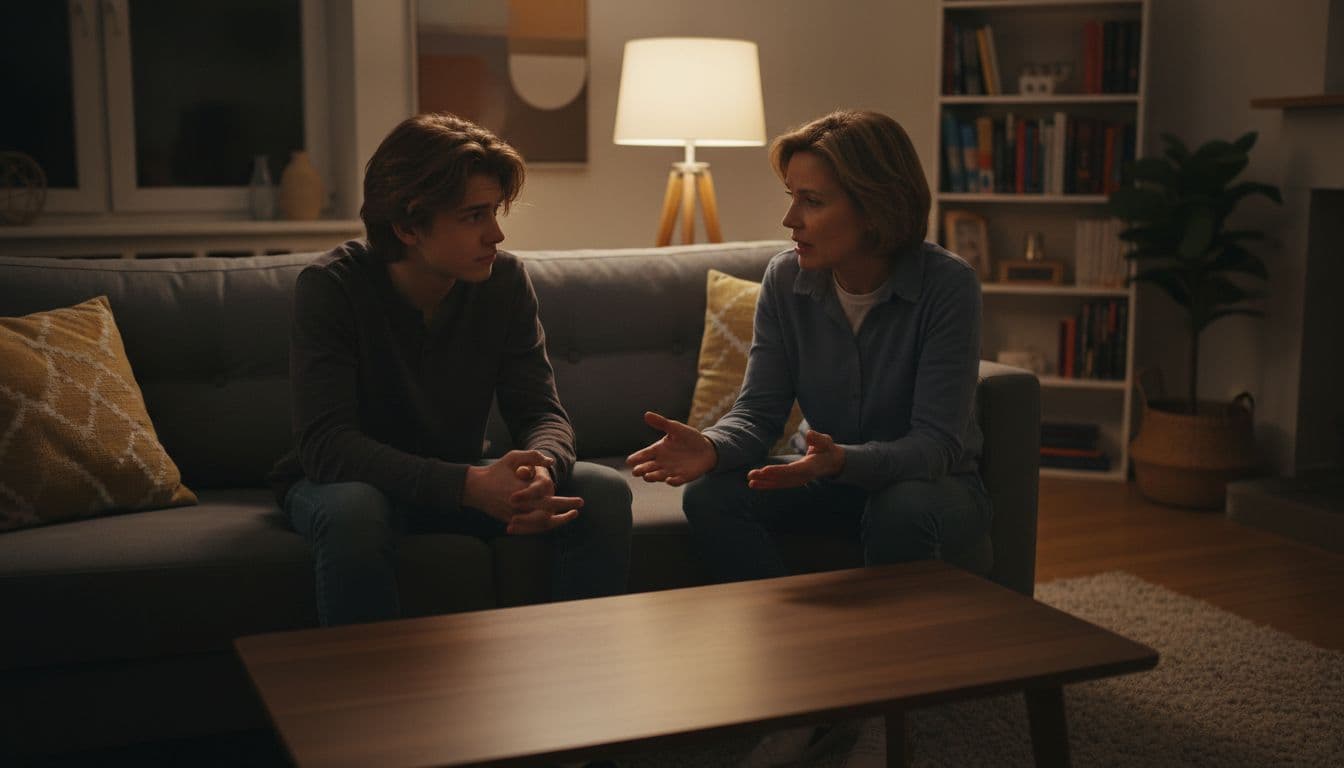
Answering Children’s Questions: Death, Recurrence, and Remission
Some questions land like a dropped plate when answering children’s questions. “Are you going to die?” “Will it come back?” “What does remission mean?”
Start with reassuring children by addressing the feeling under the question. “That sounds scary to wonder about.” Then give the clearest truth you have. If your doctor has shared prognosis details you trust, translate them into plain language. If not, don’t invent certainty to calm the moment.
When remission becomes part of your story, explain it with care. Remission often means there’s no sign of cancer right now, and the medical team will keep watching. It’s hope with follow-up, not a magic erase button. Kids do well with emotional support when you say, “We’re still paying attention, and we’re also living our lives.”
For additional caregiver guidance and wording ideas, Cancer Council SA has a grounded page on talking to kids about cancer.
Keeping the conversation going (without making cancer the only topic)
One big talk rarely holds. Instead, aim for small updates, like chapter breaks. After an appointment, offer a two-minute summary, then return to everyday routines like dinner, homework, music, and the dog needing a walk. This approach supports maintaining normalcy.
Watch for children’s reactions that show sideways: stomachaches, sleep trouble, clinginess, a sudden drop in grades, or acting out. Those children’s reactions don’t mean you “did it wrong.” They mean your child is carrying something heavy related to coping with illness.
If you can, loop in your support network early, such as a school counselor, a child therapist, oncology social workers, or social workers through your cancer center. Seek professional help to strengthen family communication around the parent’s health and coping with illness. This article is general information, not medical advice, and your care team can help you find the right local resources.
Conclusion: courage is telling the truth with love
A cancer diagnosis impacting a parent’s health can make a home feel shaky, but honest words can rebuild footing. Keep explanations simple, match detail to age, focus on reassuring children when a loved one with cancer is in the home, and return to the same promises: they didn’t cause it, they’re not alone, and adults are helping.
If you’re worn out, start small. One clear sentence today can open a door for the next talk tomorrow. In the end, courage is often just that, telling the truth with love while coping with illness, then staying close.