
Hair can feel like a small thing until it starts collecting on your pillow, your sweater, the drain. Then it becomes a daily reminder that cancer treatment is asking a lot of you, not only in appointments and lab results, but in the mirror too.
The good news is that hair loss often follows a rough pattern, even when the details vary. And while you can’t always control shedding, you can often reduce scalp tenderness with calm, consistent care.
This is general information, not medical advice. Your oncology care team knows your treatment best, so bring them your questions early.
A realistic chemotherapy hair loss timeline (and what might surprise you)
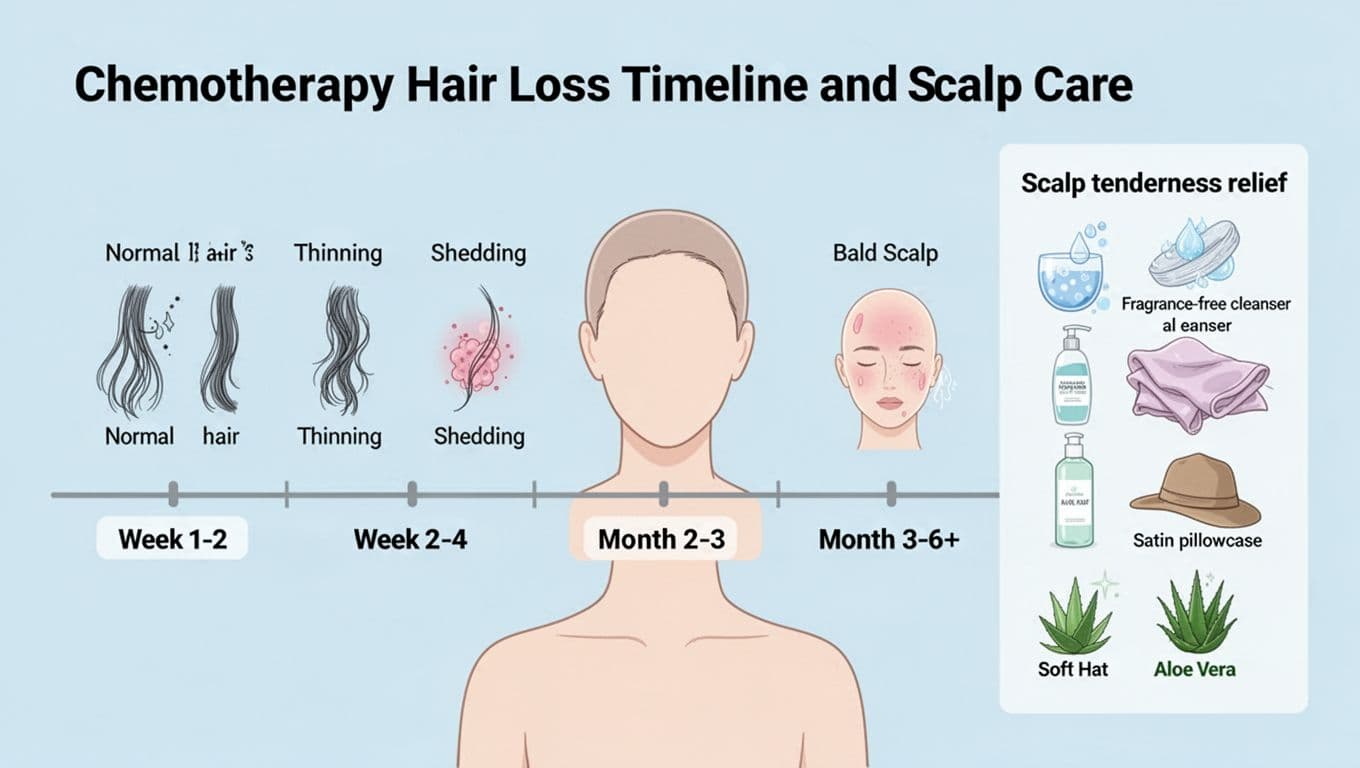
People often want one exact date for when chemotherapy-induced alopecia starts. “Will it start after my first infusion?” “Will I wake up bald?” The honest answer is that timing depends on the drug, dose, schedule, and your body. The effects of drugs like taxanes and anthracyclines often become noticeable within 2 to 4 weeks. Still, many people experience a similar arc, which can make the unknown feel a bit more livable. For a clinical overview of what to expect, see Mayo Clinic’s guide to chemotherapy-related hair loss.
Here’s a practical chemotherapy hair loss timeline you can use as a gentle reference point:
| Timeframe | What you might notice | What helps right now |
|---|---|---|
| Weeks 1 to 2 | Scalp feels “different,” tender, or tingly | Switch to gentle, fragrance-free products |
| 2 to 4 weeks | Shedding starts, hair comes out in the shower or brush | Shorter haircut, satin pillowcase, soft cap |
| 2 to 3 months | Thinning becomes obvious, patchy loss possible | Keep scalp clean, moisturized, and protected |
| 3 to 6 months | Many reach their thinnest point during ongoing cycles | Reduce friction, protect from sun and cold |
A few surprises are common. First, eyelashes and eyebrows can thin later than scalp hair. Second, shedding can keep going for a bit, even between cycles. Third, your scalp may feel sore before hair actually falls. That tenderness isn’t your imagination. It’s your body reacting in real time.
If you’re using scalp cooling caps (also known as cold caps) for hair loss prevention, your timeline may look different. Some people keep more hair, while others still thin. Either way, you deserve comfort.
Why chemo can make your scalp tender (and when to call your team)
Tenderness, or scalp sensitivity, can feel like a bruise that no one can see. Sometimes it’s mild, like a tight ponytail feeling (even with no ponytail). Other times it’s sharp, itchy, or burning.
Chemo targets fast-growing cells, including those in the hair follicles. Hair follicles grow quickly, so they can become inflamed and sensitive, causing weakness in the hair shaft before shedding occurs. Meanwhile, your skin may get drier, and dryness makes nerve endings louder. Add friction from pillowcases, hats, or even a shower stream, and your scalp can start to protest.
Emotions play a part too. Stress tightens muscles, changes sleep, and turns volume up on pain. That doesn’t mean tenderness is “just stress.” It means your whole system is carrying a heavy load.
For a broader look at hair loss during treatment and support options, MD Anderson shares helpful context in their chemotherapy and hair loss resource.
Scalp tenderness is common during shedding, but you still deserve relief. Comfort care counts as real care.
Call your clinic right away if you notice signs that look like infection or a reaction, such as fever, spreading redness, pus, open sores, or severe pain that’s getting worse. Also reach out if you have new blisters, a fast-spreading rash, or swelling around the eyes or scalp. Those “don’t wait” moments are part of being brave too.
Scalp care that reduces tenderness (a simple routine that holds up)
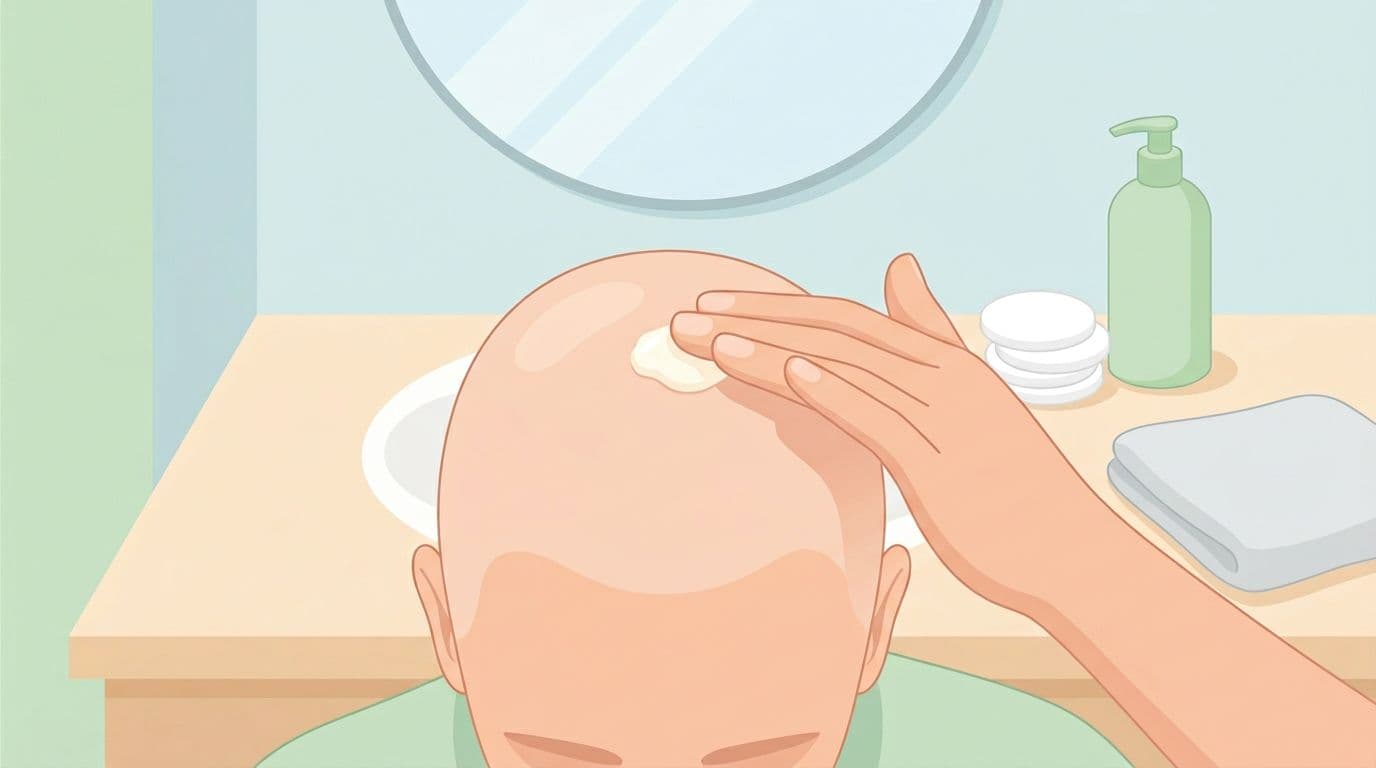
When your scalp hurts, “do less” is often the smart move. Think of scalp care like caring for chapped hands in winter. You clean softly, you seal in moisture, and you stop anything that scrapes. While some pursue hair loss prevention via cooling technology, others find comfort in simplified routines.
A low-effort routine can look like this:
- Cleanse gently 2 to 3 times a week (or as needed). Use lukewarm water and a gentle shampoo. Let water run over your scalp instead of blasting it.
- Pat dry, don’t rub. Rubbing can trigger tenderness fast.
- Moisturize while skin is slightly damp. Choose a bland, fragrance-free lotion. If you’re unsure, ask your nurse what they recommend.
- Cool it down when it throbs. Try a cool compress for 5 to 10 minutes. Wrap it in a soft cloth so it’s not too cold.
- Reduce friction at night. A satin pillowcase or soft sleep cap can mean fewer painful wake-ups.
If you shave your head, consider switching from a traditional razor to an electric trimmer, or pause shaving altogether. Tiny nicks can sting more during chemo, and healing can be slower.
Itching is common as follicles shut down or restart. Scratching can break skin, so try tapping lightly, adding moisture, or using cool compresses first. If you need more ideas for sensitivity, this gentle scalp sensitivity care guide offers additional approaches you can discuss with your care team.
Two often-missed comfort basics also matter:
- Sun protection: A bare scalp burns quickly. Use wigs and scarves or other soft head coverings, or sunscreen your team approves.
- Fabric choices: Soft cotton or bamboo caps can feel kinder than scratchy seams.
If a product stings, stop using it. Comfort is a valid measure of “working.”
Hair Regrowth after Chemo, and the Everyday Courage It Takes

For many people, hair regrowth starts about 1 to 3 months after chemo ends, although timing varies. Factors like hormone blockers can sometimes influence the pace of new hair growth. The first signs often appear as soft “peach fuzz.” Then hair regrowth may come in uneven, with chemo curls, hair color changes, or shifts in hair texture. Those changes can feel strange, yet they are also a sign of your body rebuilding.
Scalp tenderness often improves once heavy shedding slows. Still, keep your routine gentle. New hair growth can be delicate, and your skin may stay dry for a while. Some patients discuss using minoxidil with their doctors to support hair regrowth.
If you’re in remission, hair changes can still stir old fear. A bad hair day can bring back hospital smells in your memory. When that happens, it may help to name what’s real: you’re safe in this moment, and your body is still healing.
When you’re ready, ask your team about timing for coloring, heat styling, or stronger hair products. Going slow isn’t vanity. It’s respect for skin that has been through a lot.
Conclusion
The chemotherapy hair loss timeline can feel personal, because it shows up on your body and often leads to complete hair loss. Still, you’re not powerless. Gentle cleansing, steady moisture, less friction, and cool compresses can reduce tenderness and help you rest. Keep your oncology care team in the loop, especially if you see rash, fever, or worsening pain. Above all, treat your scalp, and yourself, with gentleness, because your oncology care team stands ready to support you through all stages of cancer treatment; courage often looks like showing up for one more ordinary day.