
Taking chemotherapy at home can feel like a strange mix of comfort and worry. Comfort because you’re in your own space, with your own blanket, your own cup, your own quiet. Worry because these pills are still chemotherapy, and oral chemotherapy safety suddenly becomes part of daily life.
If you have Cancer, you’ve already learned this truth: courage is often made of small actions. Wash hands before touching medication bottles. Reading labels twice. Moving a bottle to a higher shelf. Choosing calm when you want to panic.
This guide covers safe handling practices, storage, and what to do after a spill, including how to protect children and pets, and your laundry routine.
Safe handling of oral chemotherapy (the “small habits” that matter)
Oral chemo, a form of systemic anti cancer therapy, is designed to damage cancer cells. That’s the point. But that strength also explains why you’re asked to handle it with care, even at home.
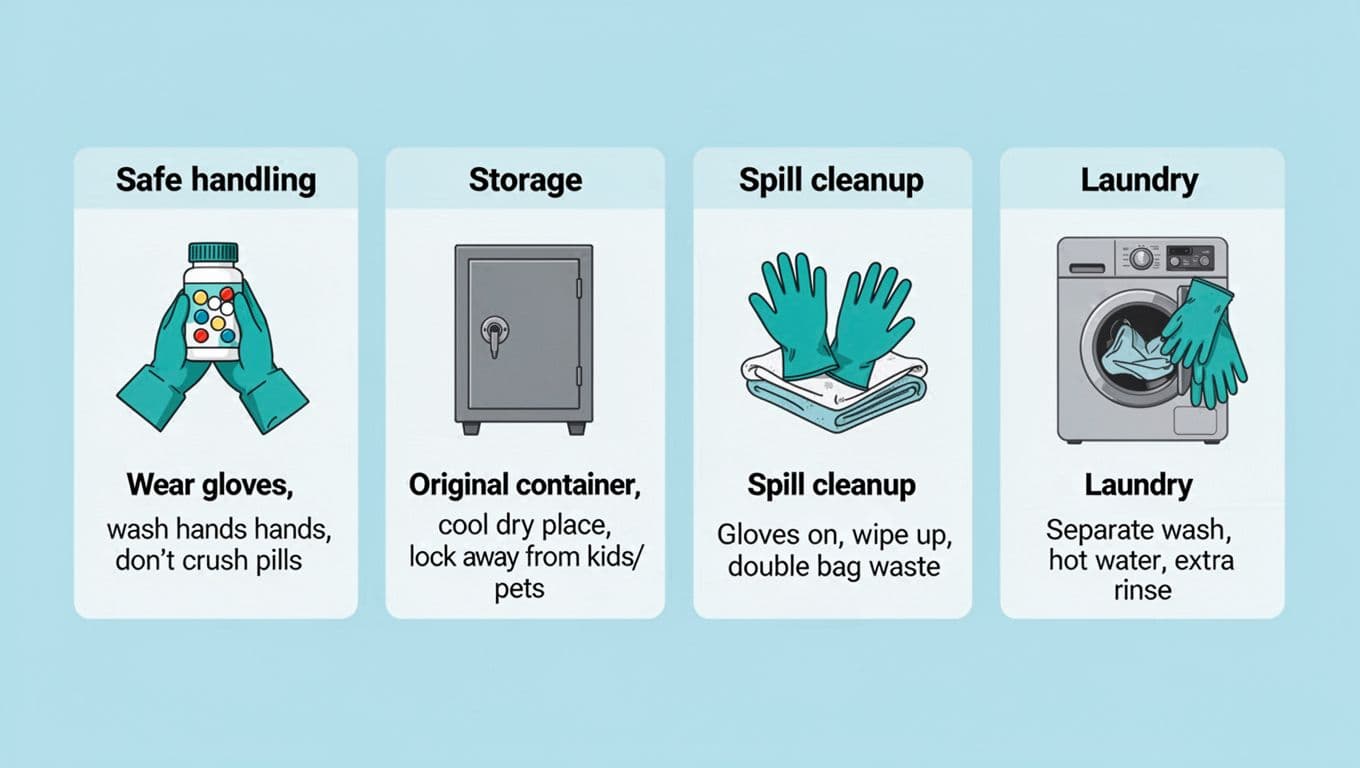
Start with safe handling habits like washing hands before and after you take the medicine. Many cancer centers advise wash hands as a foundational step, along with using disposable nitrile gloves when you touch pills, capsules, or the bottle. In some situations, you might even need to wear two pairs of gloves for maximum protection. It can feel formal, like you’re turning your kitchen into a clinic. Think of it another way: gloves are just an umbrella. You might not need them every day, but you’re glad you have them when it rains.
A few handling rules show up again and again:
- Swallow pills whole unless your oncology team tells you it’s okay to crush or break them.
- Do not use tablet cutters unless specifically directed by your care team.
- Keep pills away from food prep areas, shared snack bowls, and places where crumbs collect.
- For caregiver safety, if a caregiver is pregnant or breastfeeding, ask your care team about avoiding contact with the medicine.
If you want a clear, patient-friendly checklist, Memorial Sloan Kettering has a solid resource on how to safely handle oral chemotherapy.
One more quiet part of safety is timing. Take the exact dose, at the time you were given. A missed dose can cause worry, and an extra dose can cause harm. If you’re unsure what happened, don’t guess. Call your oncology team.
Oral chemo storage at home: keeping kids, pets, and mix-ups away
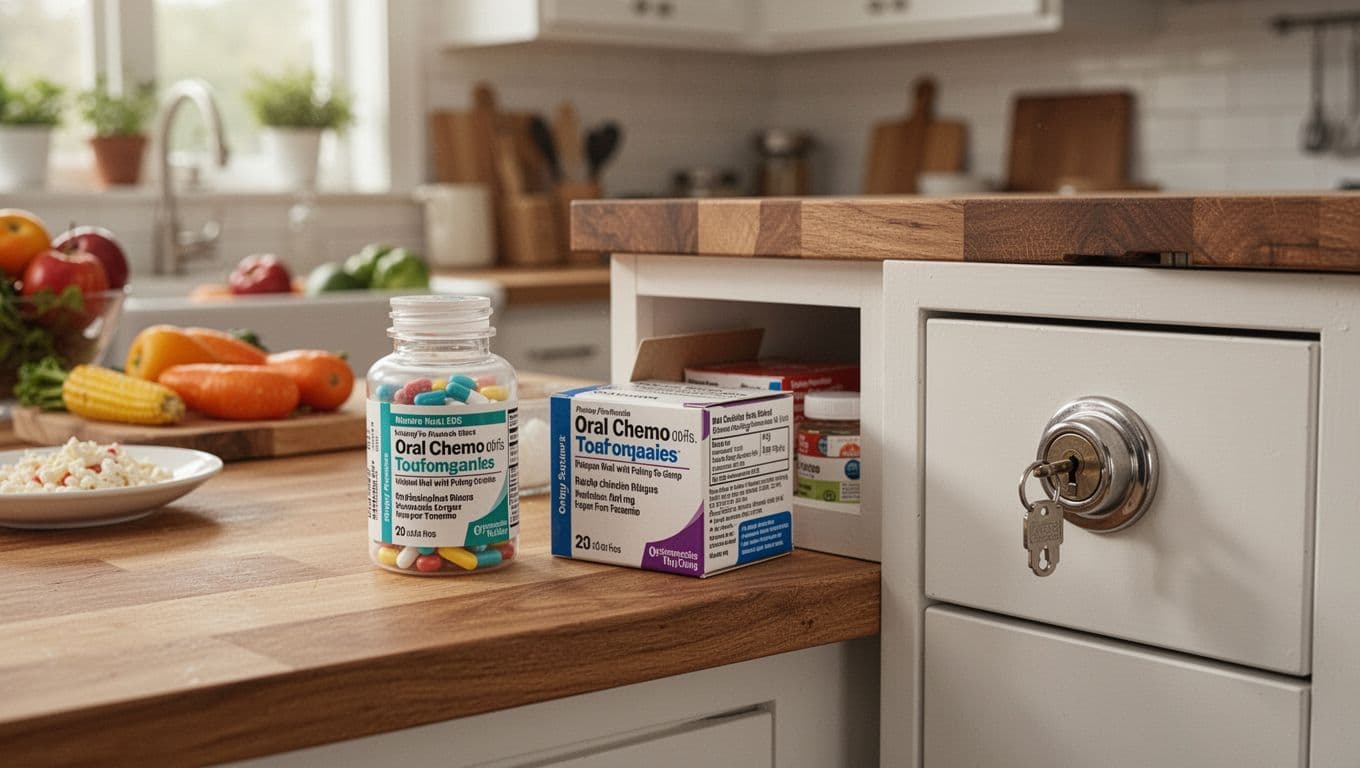
Storage is where home life and safety bump into each other. You want these hazardous medicines close enough that you won’t forget them, but not so accessible that a child’s curiosity or a pet’s nose can reach them.
Keep oral chemotherapy in the original pill bottle with the child-resistant cap, and store it exactly as directed by checking the medicine labels. Some drugs need room temperature, some need a refrigerator, and some must be protected from moisture or light. Opt for a cool dry place, and if your instructions say “don’t store in the bathroom,” take that seriously. Bathrooms swing hot and humid, and pills can degrade.
A safe storage routine often looks like this:
- Put the container in a locked cabinet or a high shelf in a secured area.
- Store it separate from other meds to reduce mix-ups, especially in homes with multiple prescriptions.
- Avoid pill organizers unless your pharmacist says it’s safe for your specific medication and packaging.
- Properly dispose of unused medicines per guidelines, and use a sharps container if needles or lancets are involved alongside the oral regimen.
If you have kids in the home, or grandkids who visit, or pets nearby, it helps to think like a toddler or a curious animal for a moment. What can children and pets reach if they drag over a chair? What can they open if they find it in a purse? What looks like candy?
For family-focused guidance that takes home life seriously, Children’s Minnesota offers helpful tips on safe handling of chemotherapy medicine at home. Even if you’re an adult patient, the safety logic transfers well to any household with children.
And if you’re in remission and still taking a maintenance therapy, don’t let “things are calmer now” turn into “I can be casual.” Calm is good. Carelessness isn’t.
After a spill: cleanup steps, laundry, and protecting kids and pets
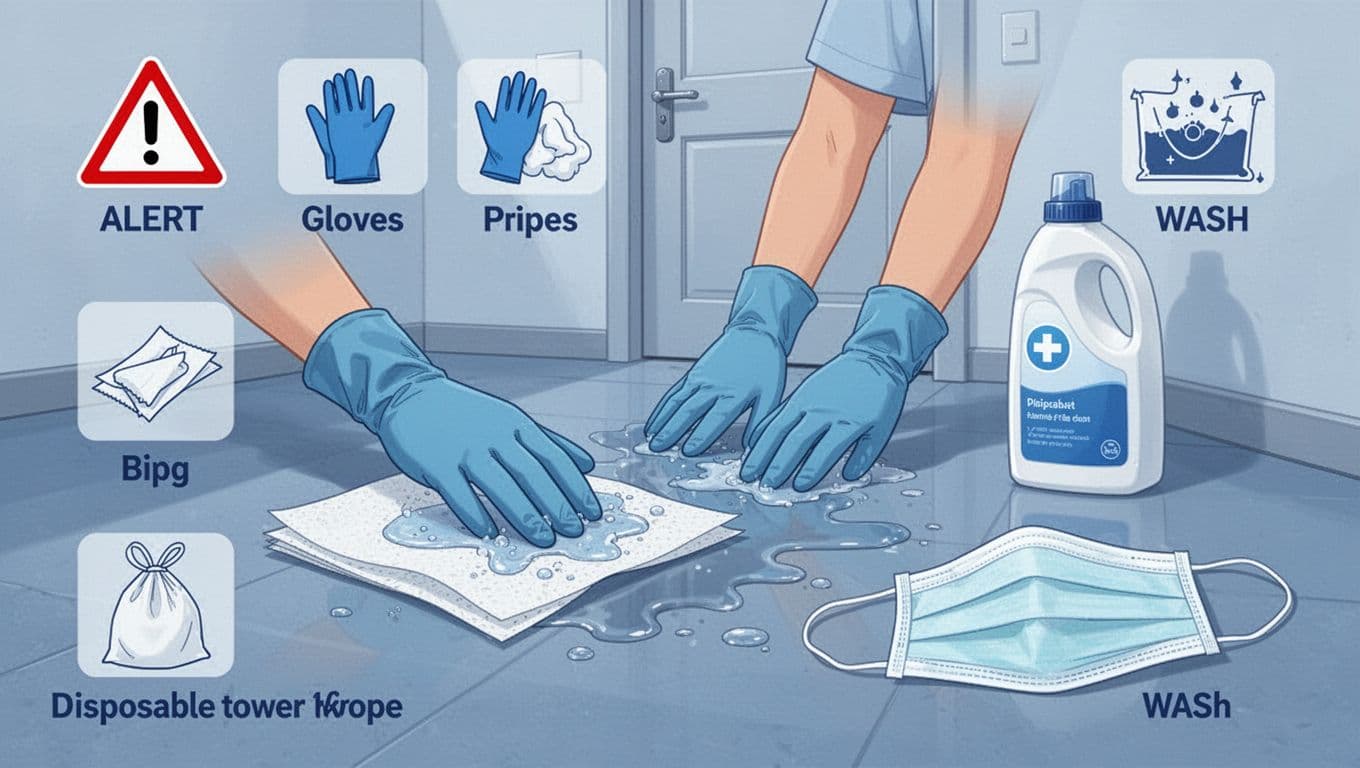
Spills happen in real homes. A cap sticks. A pill drops and cracks. A child runs through the hallway at the exact wrong moment. Keep a spill kit ready with essentials like disposable gloves and paper towels. If it happens, your job is to slow things down and protect the people and animals you love.
First, create distance. Keep kids and pets out of the area. Close a door if you can. Open a window if the spill involves powder or dust.
Then follow a simple sequence:
- Put on disposable nitrile gloves (and a face mask if there’s powder). For serious spills, add a disposable gown.
- Pick up whole tablets or capsules carefully. Don’t crush them further.
- For liquid or residue, use disposable paper towels to absorb and wipe, working from the outside toward the center.
- Clean the area with soap and water, then clean it again.
- Put all used towels, gloves, and other waste into plastic bags, seal them, then double-bag by placing the sealed bags into another plastic bag before placing it in the trash (follow your clinic’s instructions). Wash hands with soap and water.
If the drug gets on skin or eyes, wash right away with soap and water. For eyes, rinse with water and call your care team urgently.
Now the part many people forget: chemotherapy can pass into urine, stool, vomit, and other body fluids for at least 48 hours (or longer, depending on the medicine and your plan). Ask your team what window applies to you. During that time, wear gloves when cleaning any body fluids, close the toilet lid before flushing and flush the toilet twice, and consider sitting to urinate to reduce splashes.
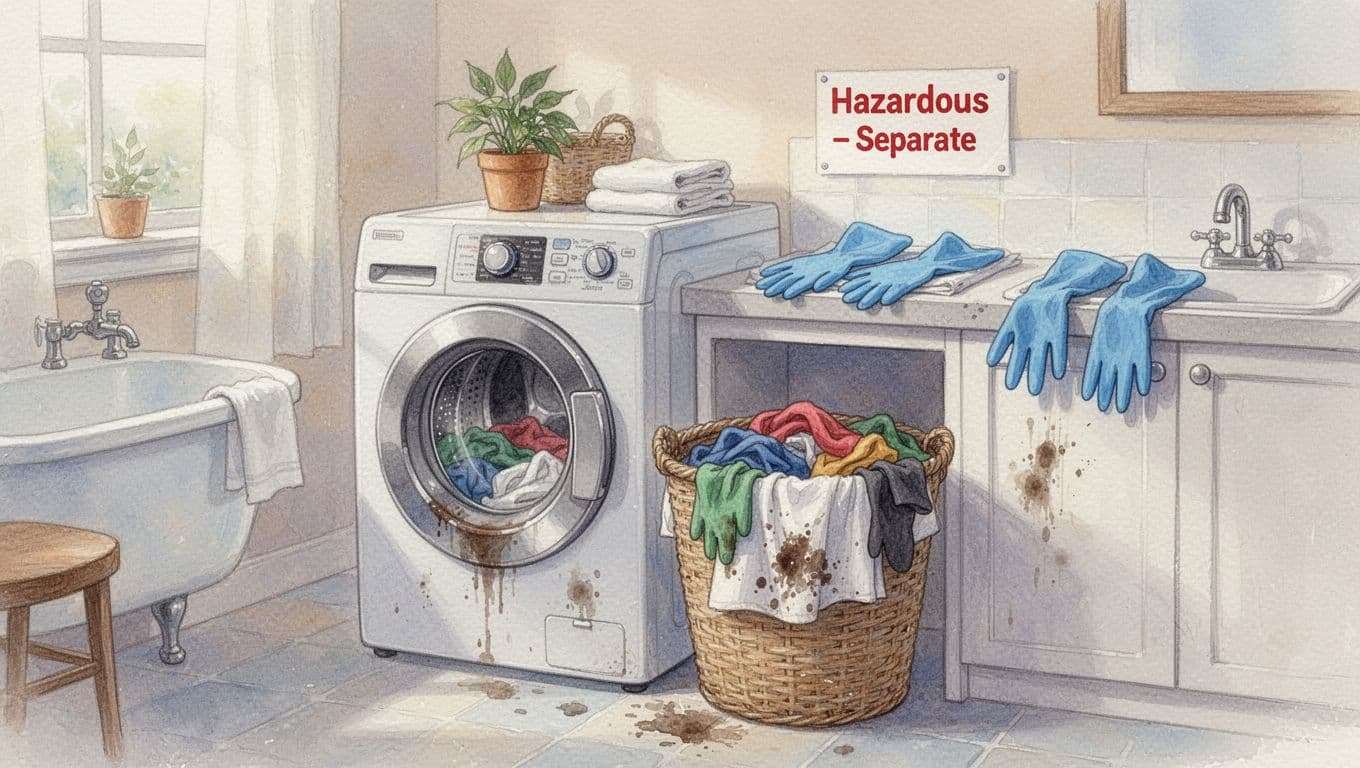
For laundry (clothes, towels, bedding) soiled with body fluids, handle separate laundry from other items using detergent. Use hot water if the fabric allows, add an extra rinse if you can, then wash hands with soap and water. Afterward, wipe down the hamper or any surface that touched the soiled items.
For more context on home exposure and caregiver safety, see the American Cancer Society’s chemotherapy safety guidance.
If a child or pet may have touched or swallowed a pill, treat it as urgent. In the US, you can call Poison Control at 1-800-222-1222, and contact your oncology team right away. For pets, call your veterinarian or an emergency vet.
A gentle ending, and a practical next step
Home is where healing tries to grow, even in the middle of treatment. Safe handling, smart storage, and calm spill cleanup don’t make you “paranoid.” They make you prepared, and safe handling is a form of courage.
If you take one next step today, make it small: set up a single, secure spot for your medicine and assemble a simple “spill kit” (gloves, paper towels, and a trash bag). Remember to use soap and water for general hygiene. Then breathe. You’re doing hard things, and you’re doing them with care.