
Life before Cancer had a rhythm. You woke up, moved through the day, and most things made sense. Then treatment started, and the ground seemed to move under your feet.
When pain, appointments, and side effects change from week to week, even simple things like showering or answering a text can feel huge. In the middle of all that, a cancer treatment daily routine can sound impossible or even silly. Yet a gentle routine can act like a railing on a steep staircase, something solid to hold as you climb.
This is about small, honest structure in a shaky time. It is about courage in tiny actions, and about finding a pattern that respects your body, your limits, and your hope.
Why Routine Matters When Life Feels Unsteady
Uncertainty drains energy. When you never quite know how you will feel, your mind works overtime, and your body tenses for the next surprise. A simple routine can calm that storm a little. It tells your brain, “Here are a few things we still do. We’re not lost.”
Research and patient stories show that keeping some daily rhythm can support mood and coping. The National Cancer Institute offers practical ideas on keeping up with your daily routine during cancer treatment, and many people say even one or two steady habits help them feel more like themselves.
Routine in this season is not about productivity. It is about strength, comfort, and predictability. It is about creating tiny islands of control in a sea of medical forms, test results, and waiting rooms.
Start With Your Energy, Not The Clock
Old routines often follow the clock. Wake up at 6, work till 5, dinner at 7. Cancer treatment laughs at that kind of order.
A kinder way starts with this question: When do I usually have the most and least energy right now? Not last year, not before diagnosis, but this week.
For a few days, simply notice:
- Morning: Do you wake foggy, or a bit clear before fatigue hits?
- Afternoon: Do you crash after lunch, or does your body wake up a little?
- Evening: Do you feel wired and anxious, or heavy and spent?
You can jot this down on paper or in your phone. That simple awareness turns chaos into a pattern you can work with. Then you can place your key activities where your energy has the best chance to support them.
A Gentle Framework You Can Shape
Think of your day as four soft anchor points, not a strict schedule.
1. Wake-up check-in
When you first wake, pause. Before reaching for your phone, ask:
- How does my body feel today?
- What feels possible?
- What absolutely must happen?
This two-minute scan sets a realistic tone. Some days, “shower and call the doctor” is a full, brave list.
2. Body care moments
These are small acts that remind you your body is more than a diagnosis:
- Washing your face
- Stretching for three minutes in bed
- Sipping water before coffee or tea
Each one says, “I still care for this body, even when it hurts.”
3. Connection touchpoints
Treatment can feel lonely, even with people around. Try one or two daily habits of connection:
- Sending a short message to one person
- Sharing a quick update in a family group chat
- Sitting with a loved one for five quiet minutes
These don’t need deep talk. Your presence already holds courage.
4. Wind-down ritual
End your day on purpose, even if it is simple:
- Listening to soft music
- Reading a page or two
- Writing three words about the day
The point is not to “finish strong”. It is to tell your mind, “We can rest now.”
Building Your Cancer Treatment Daily Routine, Step By Step
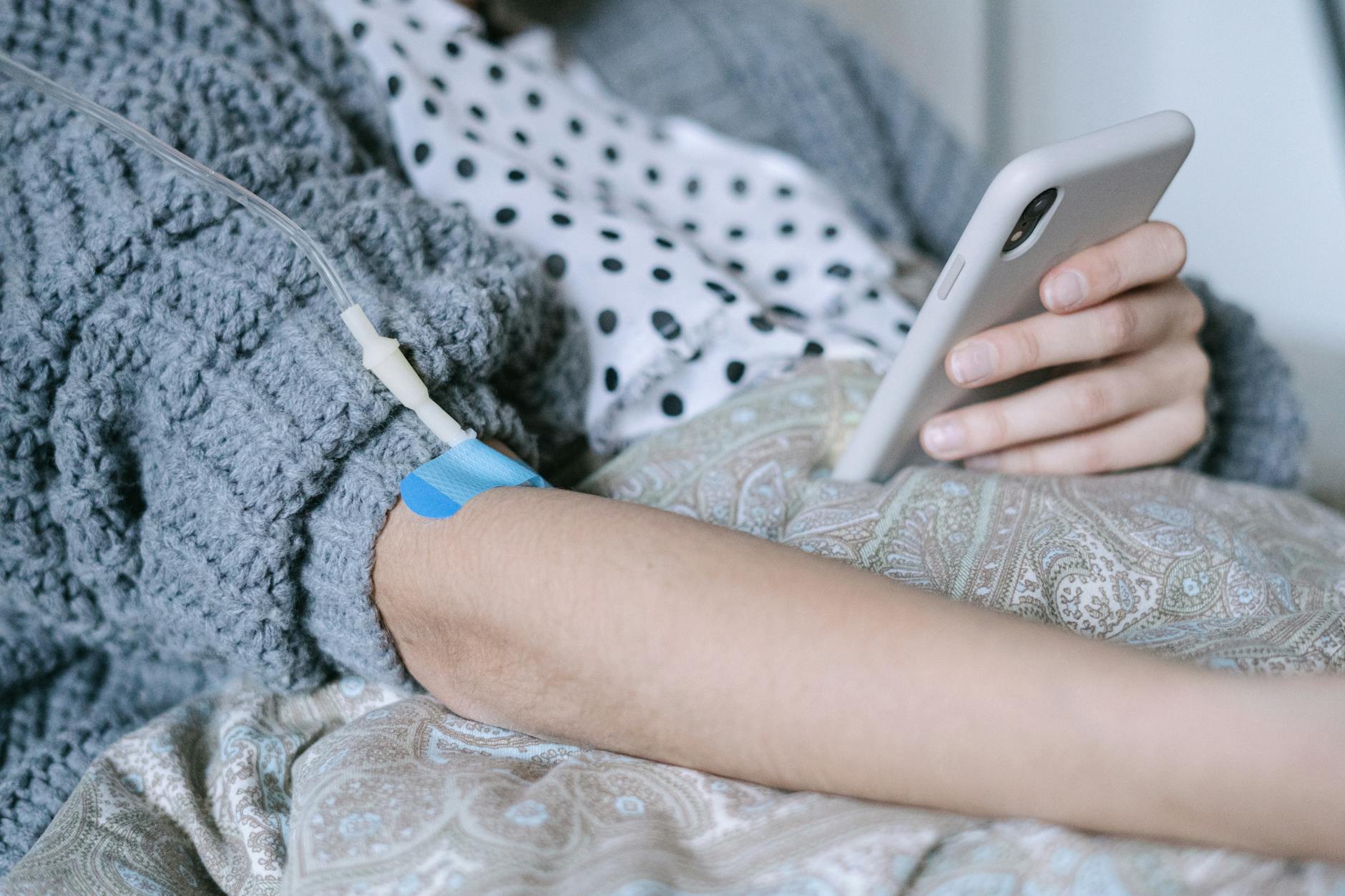
Photo by Ivan S
Your routine does not have to look the same on treatment days and non-treatment days. In fact, it probably should not.
On treatment days, think in very small units:
- A steady morning: light breakfast, meds, a shower if it feels safe
- A “go bag” that you pack the night before, with snacks, water, a charger, and something comforting
- A simple plan for afterward: maybe straight to the couch, one favorite show, then rest
On non-treatment days, you might stretch a little more, but still stay gentle:
- One small “body” task: a short walk, light stretching, or breathing exercises
- One “home” task: paying a bill, folding a few clothes, or sorting mail
- One “joy” task: sitting in the sun, drawing, or listening to a funny podcast
Health systems also stress balance in this season. For more ideas on pacing your roles at home, you can look at guidance on living a balanced life during cancer treatment.
Sample Day During A Treatment Week
Here is a soft example you can adjust:
| Time of day | Simple anchor idea |
|---|---|
| Morning | Wake-up check-in, wash face, light snack |
| Midday | Appointment or rest, drink water often |
| Afternoon | One short connection (text or call) |
| Evening | Gentle stretch, wind-down ritual |
If all you manage in a day is “wake, treatment, nap, brush teeth, sleep”, that still counts as a routine. You showed up. That matters.
Weaving In Strength, Courage, And Rest
People often think strength during Cancer treatment means staying upbeat or never complaining. Real strength looks different. It looks like asking for a ride when you feel dizzy. It looks like saying “I cannot host guests today” even when you feel guilty.
Your daily routine can protect that strength. For example:
- Set a “no new plans” rule on the day after chemo.
- Keep a standing time each week to review your calendar with a friend or caregiver.
- Build in rest before big scans or doctor visits.
Other people have walked this road and shared hard-won advice. You may find comfort in reading tips from chemotherapy patients who have been through it and then folding one or two ideas into your own day.
Your routine also needs resilience, the flexibility to bend without breaking. Some days the plan works. Some days nausea or fear wipes it out. Both days still carry your courage.
Staying Connected To Your Medical Team And To Yourself
Your routine can help you stay in tune with your care team, not just your calendar.
You might:
- Keep a small notebook by your bed for symptoms, questions, and side effects.
- Add a five-minute “question review” to your evening wind-down before each appointment week.
- Set reminders to take meds or drink water.
Public health experts highlight habits like eating what you can, moving gently, and staying on top of medications during treatment. The CDC offers practical advice on staying healthy during cancer treatment that you can discuss with your doctors.
Always check with your care team before changing your activity level, diet, or supplements. Your routine should fit your treatment, not fight it.
At the same time, stay connected to your inner voice. If your routine starts to feel like a test you keep failing, it may need to shrink. A kinder plan almost always works better.
When The Day Falls Apart
Some days ignore every plan you make. A sudden fever, a harsh reaction, a wave of sadness. On those days, the goal shifts.
Instead of “keeping the routine”, you can ask, What is one small thing I can still hold onto?
That might be:
- Taking your meds on time
- Whispering one short prayer or intention
- Asking someone to sit with you for 10 quiet minutes
This is where your resilience shines. Not in the tidy days, but in the messy ones where you still choose one small act of care.
You can also borrow ideas from others facing uncertainty. Many cancer centers talk about the benefits of keeping a daily routine during uncertain times, not as a rulebook, but as a toolbox. Take what fits. Leave the rest.
Closing Thoughts: Your Routine As A Quiet Act Of Courage
When life feels unsteady, every gentle habit you keep becomes a quiet flag of courage. Washing your face, making your bed, sending that one text, showing up for treatment, resting when your body begs for it, all of these are part of your routine of survival.
You do not need a perfect schedule to have a meaningful day. You only need a few anchors that help you feel a little safer inside your own life. Maybe tonight you choose just one: a wake-up check-in, a glass of water with each meal, or a three-word journal before sleep.
Start there. Let your routine grow at the pace of your body and your heart. You are already showing more strength than you know.