

Dizziness during cancer treatment can come from medicines, dehydration, low blood counts, or changes in arterial pressure. New or worsening symptoms deserve a call to your oncology team, and severe symptoms need emergency help.
Living with a life-threatening disease can make another symptom feel like one more burden you must carry. You don’t have to push through dizziness to show strength. Begin by noticing what you feel, then give yourself permission to ask for help.
What does your dizziness feel like?
The word “dizzy” holds several experiences. You may feel faint, as though your legs won’t support you. You may feel unsteady while walking. Or you may feel the room spinning, even when you sit still.
That spinning sensation is vertigo. Inner-ear problems often cause it, although other conditions can affect the body’s balance system.

What brings it on? Standing up can reveal a drop in arterial pressure. Climbing stairs can make breathlessness and a lightheaded feeling related to low red blood cell counts more noticeable. Turning your head or rolling over in bed can trigger certain inner-ear conditions.
These patterns offer clues, but they don’t establish a diagnosis. Describe the feeling in your own words. You don’t need medical language to explain that something has changed.
How cancer treatment can cause dizziness
Treatment and supporting medicines
Dizziness can be a side effect of treatments such as chemotherapy, targeted therapy, hormonal therapies, and radiation therapies, either directly or through other side effects. The particular medicine, dose, and treatment area matter.
Radiation involving the brain or structures near the ear may affect balance. Other treatments may cause vomiting, reduce appetite, or change blood counts.
Pain medications such as morphine or oxycodone can also cause dizziness or sleepiness. Medicines for nausea, anxiety, or sleep may add to those effects.
Bring your complete medication list into the conversation. Our guide to medication interactions includes medicines, supplements, and products people sometimes forget to mention. Don’t stop or change treatment on your own.
Cancer and other health conditions
Cancer itself can contribute through low red blood cell counts, bleeding, or effects on the brain and balance pathways. Dizziness alone doesn’t tell you which cause applies.
Conditions unrelated to cancer also deserve attention. Inner-ear disorders, heart rhythm problems, and infections can cause dizziness. Parkinson’s disease and some medicines for it can contribute to a drop in arterial pressure when standing.
Your team needs the whole picture, including conditions you managed before cancer treatment began.
Blood counts, fluids, and blood pressure
Anemia can make ordinary movement harder
Red blood cells carry oxygen. When chemotherapy slows their production, your heart and lungs work harder during ordinary activities.
You may notice dizziness, weakness, breathlessness, or a racing heartbeat. The National Cancer Institute describes these warning signs in its guidance on anemia during cancer treatment.
Your team reviews your hemoglobin level alongside your symptoms. Treatment may include addressing bleeding, correcting a confirmed deficiency, or giving red blood cells through a transfusion. Food and exercise alone won’t correct every cause. Don’t start iron without medical advice.
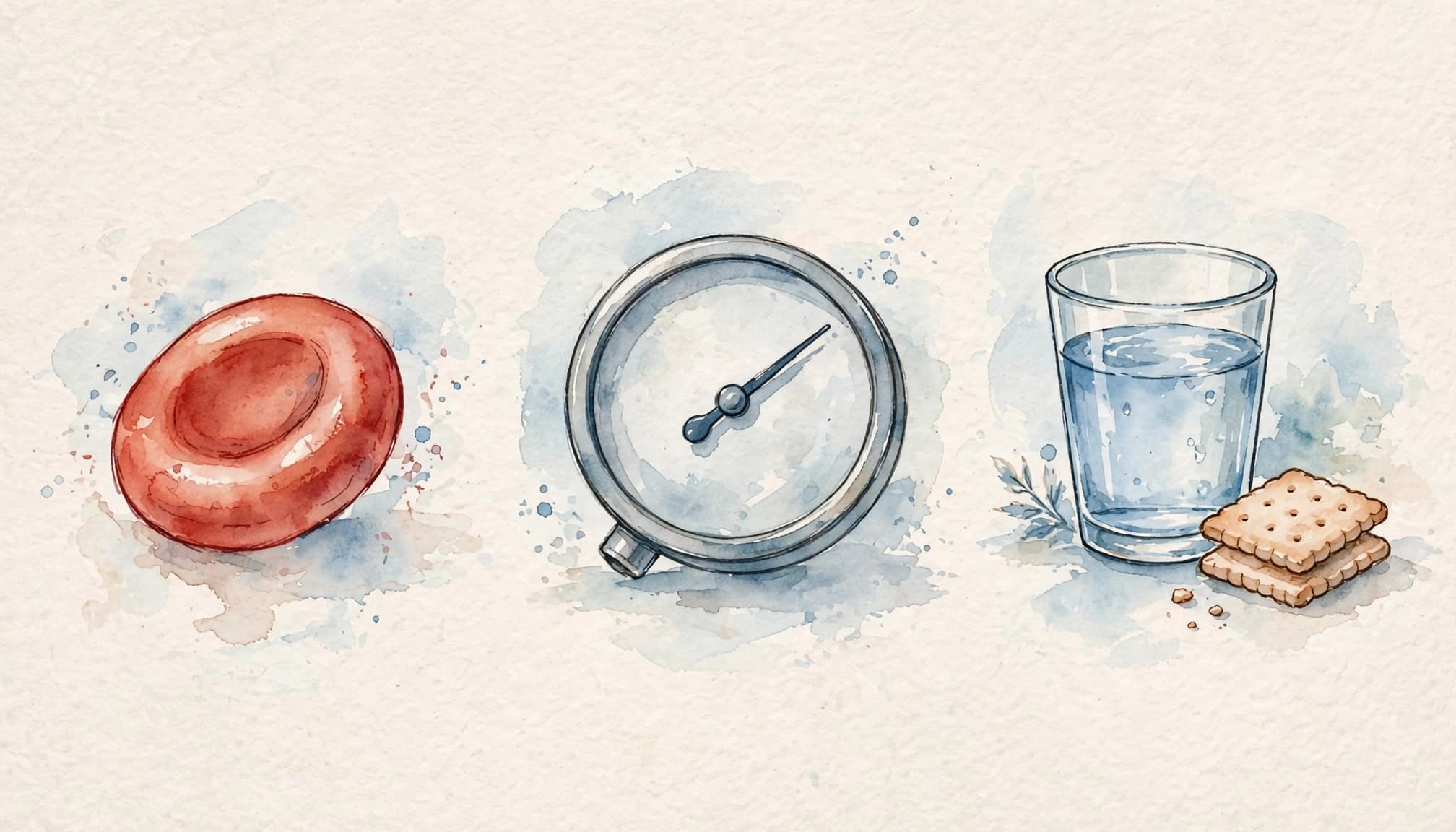
Fluid loss and low blood sugar
Vomiting, diarrhea, fever, and poor intake can leave you short of fluids. The NCI’s guidance on diarrhea during cancer care explains why fluid loss needs attention.
Low blood sugar can also make you feel lightheaded, especially if you take diabetes medicines but eat less than usual. Sweating, shaking, or sudden hunger may accompany it.
Blood pressure changes need the right response
Low blood pressure can cause faintness, particularly after standing. A high reading usually causes no symptoms, although a severe rise can cause dizziness and other warning signs.
When a pressure change causes dizziness, treating it often relieves the symptom. Your clinician may adjust medicines or address dehydration. Don’t change these medicines, your salt intake, or fluid limits yourself.
What to do when dizziness starts
Stop what you’re doing. Sit or lie down somewhere safe, and ask someone to stay nearby if you feel faint. Rest before trying to walk again.
Don’t climb stairs, shower alone, drive, or operate equipment while dizzy. Our guidance on planning a safe ride home can help when treatment affects your alertness or balance.
Practice changing positions slowly. After lying down, sit at the bed’s edge for about a minute before standing. The American Cancer Society recommends this approach in its advice on dizziness and preventing falls.
Avoid rapid head movements if they trigger symptoms. Keep pathways clear and use prescribed walking aids.
Take small, frequent sips if you can drink safely. Follow any fluid restrictions for heart or kidney disease. Keep an easy-to-tolerate snack nearby when poor intake contributes to lightheadedness. If you have diabetes, follow your low-blood-sugar plan.
Stop exercise when dizziness begins. There are days when caring for your body means allowing it to rest.
Water and a snack may help certain causes, but they won’t treat low red blood cell counts, a serious infection, or a stroke.
What to track for your oncology team
A brief record can make a difficult conversation easier. Use your Cancer Fighter’s Journal, a notebook, or a phone note. Record what you notice without trying to diagnose yourself.
These details help your team look for a pattern:
| What to record | Details to include |
|---|---|
| Timing | When it began, how long it lasted, and treatment dates |
| Sensation | Spinning, faintness, unsteadiness, or blurred vision |
| Triggers | Standing, stairs, head movement, meals, or medicine doses |
| Other symptoms | Fever, headache, breathlessness, bleeding, or vomiting |
| Daily effects | Falls, near-falls, missed meals, or trouble walking |
Add recent medicine changes and how much you can eat and drink. Include pressure or glucose readings if your team already asks you to measure them.
Tell them what helped and what didn’t. “I nearly fell walking to the bathroom” carries information that “a little dizzy” may hide.
Your health care team may review medicines, check blood counts and body salts, examine your balance, or measure your pressure in different positions to help diagnose and treat the cause.
When to call for dizziness
Get emergency help for warning signs
Call 911 or your local emergency number for dizziness with chest pain, severe trouble breathing, a seizure, or loss of consciousness.
Sudden weakness on one side, trouble speaking, new vision loss, or a sudden severe headache also needs emergency care. Seek immediate help if dizziness begins abruptly and you cannot stand or walk safely.
A serious fall, head injury, or heavy bleeding adds urgency. Don’t drive yourself.
If dizziness begins during an infusion, tell the nurse immediately. Trouble breathing, hives, swelling, or faintness may signal a serious reaction. Let staff assess you before you try to stand.
Contact your oncology team promptly
Call the same day for new, recurring, persistent, or worsening dizziness. Call sooner if you feel faint, struggle to drink, urinate much less, or develop marked weakness or a racing heartbeat.
During chemotherapy, call immediately for a temperature of 100.4 F (38 C) or higher, or your team’s lower threshold. Fever can signal infection.
Repeated vomiting or inability to keep fluids down needs urgent assessment. Severe symptoms require emergency care rather than waiting for a callback.
Keep your clinic’s after-hours number within reach. You don’t need to wait until the next appointment or until you fall.
Key Takeaways
- Dizziness has several possible causes, and more than one may contribute during treatment.
- Sit or lie down first, avoid driving, and report new or persistent symptoms.
- Sudden neurological changes, chest pain, severe breathing trouble, or loss of consciousness need emergency help.
Your oncology team’s individual instructions take priority over general educational guidance.
Frequently asked questions
How long does dizziness last after chemotherapy?
There isn’t one reliable timeline. A medicine’s effects, dehydration, anemia, and inner-ear problems follow different courses.
For example, MedlinePlus warns that irinotecan can cause dizziness or affect vision, particularly during the first 24 hours after a dose. That warning doesn’t establish a recovery period for every chemotherapy drug.
Don’t wait a set number of days before reporting symptoms. Persistent dizziness needs assessment, even when treatment has ended or you have entered remission.
Can dizziness be a symptom of cancer, including breast cancer?
Dizziness alone isn’t a typical early sign of breast cancer, and it doesn’t establish a cancer diagnosis. Many non-cancer conditions cause it.
Cancer can cause dizziness in some circumstances, including anemia or involvement of the brain. New headaches, weakness, vision changes, or difficulty walking need prompt assessment rather than assumptions about the cause.
Can my doctor recommend medicine for dizziness?
Yes. Your doctor or nurse can recommend OTC treatments or prescription medications when appropriate. The cause determines the choice.
Some vertigo medicines cause sleepiness and increase fall risk. They won’t correct dehydration, low blood counts, or a dangerous blood pressure problem.
Your team may instead adjust another medicine, treat nausea, replace fluids, or recommend balance therapy. An inner-ear condition may need a specific treatment. Ask before adding a remedy, even one you can buy without a prescription.
Give Yourself Permission to Ask for Help
A dizzy spell can make familiar ground feel uncertain. Protect your safety first, describe what changed, and let your care team help find the cause.
There is room for courage in that phone call and in accepting a steady arm. You deserve attention before a symptom becomes something you can no longer manage.
