
Cancer-related bone fractures can happen when a tumor weakens bone or treatment reduces bone strength. New bone pain, difficulty standing, or sudden back pain deserves attention, especially when you already know that cancer affects your bones.
You don’t have to prove your strength by pushing through pain. Safer movement begins with understanding which bones need protection and what your body can manage today. Let’s begin with the changes that deserve your care team’s attention.
Key Takeaways
- Report new, persistent bone pain, swelling, or difficulty using a limb to your oncology team promptly.
- Seek emergency care for suspected fractures or back pain with new weakness, numbness, or bladder or bowel changes.
- Ask for an individual plan that addresses bone strength, medicines, movement, and fall prevention.
How Does Cancer Weaken Bones?
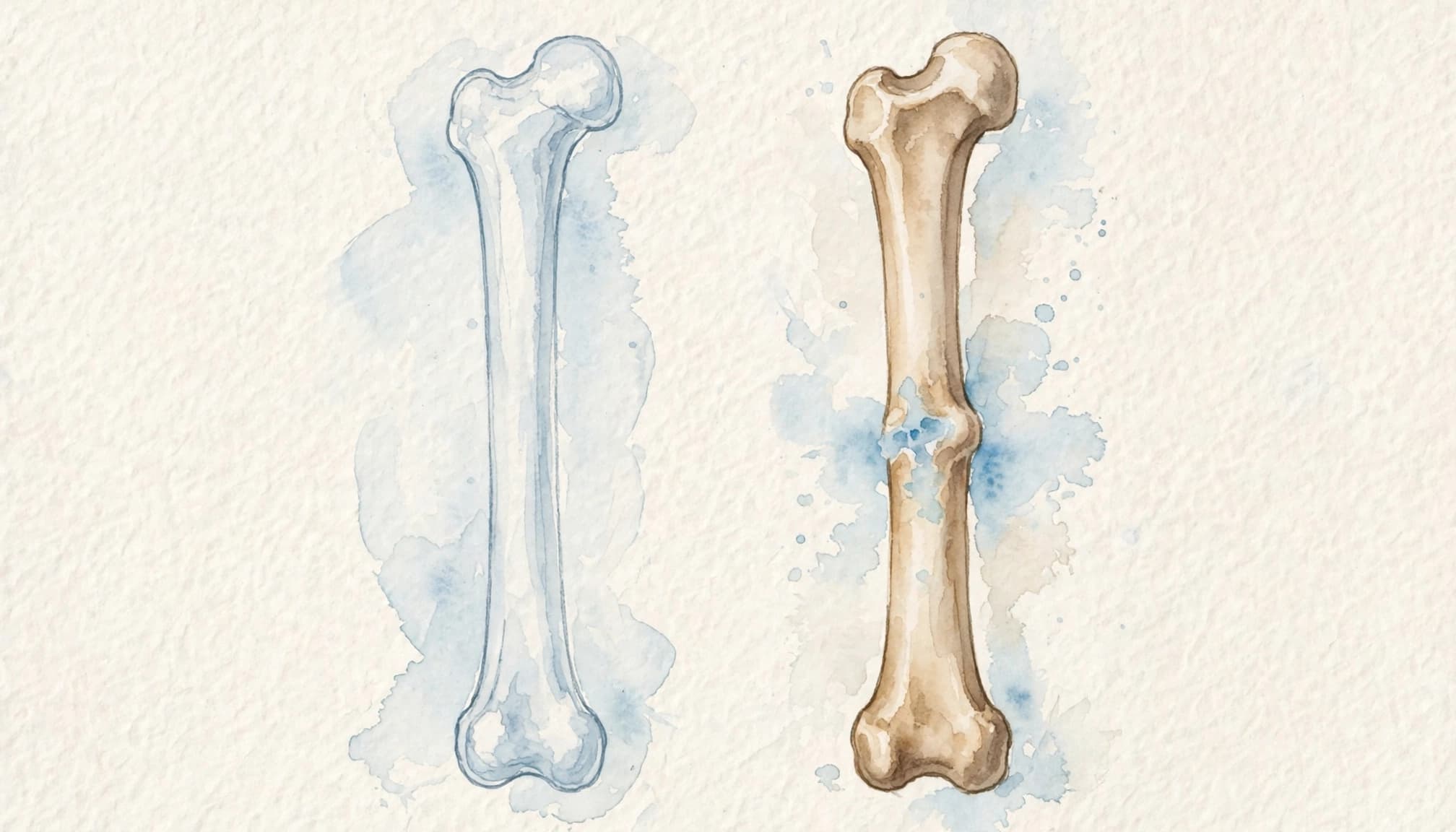
Tumors can damage a particular bone
Primary bone cancer starts in bone. Bone metastases occur when metastatic cancer spreads to bone from another organ, such as the breast or prostate. Multiple myeloma, a blood cancer, can also damage bone.
MD Anderson’s guide to bone cancer explains the different tumor types. Conventional chondrosarcoma accounts for about 80% of chondrosarcomas and usually affects people in their 50s and 60s. Symptoms include a lump, pain or swelling near the tumor, and difficulty moving a limb normally.
A weakened bone may break during an ordinary movement. Doctors call this a pathological fracture.
Treatment can reduce overall bone strength
Cancer treatment can also cause bone loss without a tumor inside the affected bone. Hormone changes, steroids, reduced activity, and some chemotherapy treatments contribute.
Osteoporosis means bones lose strength and break more easily. An insufficiency fracture happens when ordinary pressure exceeds a weakened bone’s strength.
These problems need different assessments. A bone-density scan alone can’t show whether a particular tumor makes walking unsafe.
Which Warning Signs Need Prompt Attention?
Report persistent pain or changes in movement
Tell your oncology team about new pain that persists, wakes you at night, or increases when you stand or walk. Mention swelling, a new lump, a limp, or difficulty lifting your arm.
New back pain also deserves prompt attention, particularly with known bone metastases. A spinal compression fracture occurs when a weakened spinal bone collapses. You may notice pain, loss of height, or a change in posture.
Pain doesn’t always mean cancer progression or a fracture. Your team still needs to identify its cause before you exercise through it.
Recognize an emergency
Seek emergency care for sudden severe pain with inability to stand or use a limb, an obvious deformity, or a suspected broken hip.
Back or neck pain with new leg weakness, numbness, difficulty walking, or bladder or bowel changes can indicate pressure on the spinal cord. Treat these symptoms as an emergency, even without a fall.
If you suspect a fracture, stop the activity. Don’t test the limb repeatedly or try to straighten it. Call for help rather than walking on a possibly broken bone.
How Much Does Cancer Increase Fracture Risk?
A Cureus review reports these fracture incidence estimates across study populations.
| Population | Reported fracture finding |
|---|---|
| People with cancer | About 6% experienced a major fracture over six years. |
| People with multiple myeloma | Fracture risk reached nine times that of comparison populations. |
| Men with prostate cancer | Fractures requiring hospitalization occurred about 2.4 times as often. |
These figures describe groups, not what will happen to you. Cancer type, treatment, age, previous fractures, and existing bone weakness all matter.
The review also reports associations between fractures and mortality during the following year: about 2.5-fold higher mortality after a major fracture and 3.5-fold after a hip fracture. These observational findings don’t prove that the fracture alone caused the deaths. They show why prevention and timely treatment deserve attention.
Your care team can place these numbers beside your own scans, symptoms, and goals.
Which Cancer Treatments Raise Fracture Risk?
Hormone treatments affect bone renewal
Androgen deprivation therapy, or ADT, lowers testosterone to treat prostate cancer. Aromatase inhibitors, including anastrozole and letrozole, lower estrogen. Both are forms of hormone therapy, but they affect bone renewal through different hormonal pathways.
A meta-analysis reported 39% higher overall fracture risk with ADT and 55% higher risk of fractures requiring hospitalization.
A breast cancer meta-analysis reported relative risks of 1.35 for osteoporotic fractures, 1.18 for hip fractures, and 1.84 for spinal fractures with aromatase inhibitors. These indicate relative increases, not personal fracture probabilities.
A review of treatment-related bone loss in breast cancer explains the hormonal effects. Tamoxifen can protect bone after menopause, but its effects differ before menopause.
Radiation risk depends on the treatment site
A review reported pelvic insufficiency fractures in 9.4% of patients after pelvic radiotherapy, with particular concern for women over 50 with gynecological or anal cancers.
Reports of stereotactic body radiation therapy, which delivers highly focused radiation, described vertebral fractures in 6% of patients at 27 Gy and 8.5% at 30 to 35 Gy. Gy measures radiation dose.
The review discussed a maximum point dose below 24 Gy in selected vertebral-fracture settings. This isn’t a universal treatment limit. Radiation specialists must balance tumor control with bone safety.
Steroids and newer treatments also matter
Chemotherapy’s effects on bone vary by regimen and treatment exposure. It can affect bone through hormone changes and reduced activity. Short-term or intermittent high-dose dexamethasone can increase fracture risk, especially in older adults and children.
Pantano and colleagues linked immune checkpoint inhibitors to increased osteoclast activity. Osteoclasts are cells that break down bone. Fracture concerns warrant attention, although human evidence remains limited.
Don’t stop cancer medicines yourself. Ask how your team will protect your bones during treatment.
Which Tests Help Your Team Assess Bone Safety?
Imaging examines painful or weakened areas
An X-ray often provides the first look at a painful bone. MRI gives more detail about marrow, surrounding tissue, and possible pressure on nerves or the spinal cord. CT can clarify damage to the bone’s outer structure.
Doctors sometimes need a biopsy, a small tissue sample, to establish the diagnosis. When a primary bone tumor seems possible, a specialist should plan the biopsy because its placement can affect surgery.
DXA and FRAX assess broader fracture risk
DXA uses low-dose X-rays to measure bone mineral density. In postmenopausal women and men aged 50 or older, clinicians commonly use T-scores.
A score between -1.0 and -2.5 indicates osteopenia, or low bone mass. A score of -2.5 or lower indicates osteoporosis. Younger adults generally need different interpretation.
A diagnosis of osteoporosis should be considered alongside cancer-specific risks and your fracture history.
The FRAX tool estimates the 10-year probability of hip and major osteoporotic fractures. It doesn’t fully capture every cancer-related risk. Include your chemotherapy and other treatment history when discussing fracture-risk assessment.
The RACGP’s guidance on aromatase inhibitor bone loss also recommends assessing risk factors and relevant blood tests.
A reassuring bone mineral density result doesn’t rule out fracture risk at a bone metastasis. Your team needs to assess the affected bone itself.
What Can Treatment Do to Protect Your Bones?
Bisphosphonates, such as zoledronic acid, and denosumab can reduce bone loss. Doctors also use these medicines to reduce skeletal complications in some people with bone metastases or multiple myeloma. People with osteoporosis may also benefit, but treatment depends on individual risks.
The International Osteoporosis Foundation’s guidance on aromatase inhibitor bone protection addresses treatment options. Bone-protective medicines remain underused among some women taking aromatase inhibitors and men receiving ADT.
Your team should consider kidney function, calcium levels, vitamin D, and dental health. Rare jaw complications make dental planning important. Tell your team if you take immune checkpoint inhibitors; evidence about their effects on bone remains limited. Don’t stop denosumab without a follow-on plan, because stopping can trigger rapid bone loss.
Some weakened bones need surgery with rods, plates, or other supports before they break. Radiation may relieve tumor-related pain, but pain relief doesn’t necessarily restore strength.
Ask who will coordinate your bone health decisions. Each finding needs a practical next step, such as medication, surgery, rehabilitation, or help at home.
How Can You Move More Safely?

Match movement to the affected bone
Ask your team which movements you can do, how much weight you can place through the affected limb, and whether you need a walking aid.
With fragile spinal bones, your team may restrict bending, twisting, or lifting. With a weakened thigh bone, even walking may require protection. General exercise advice can’t account for those differences.
Once your team clears movement, an oncology physical therapist can help you begin. Small, supported movements may suit you better than an exercise routine. Stop if pain increases, and report symptoms that worsen later.
Make ordinary tasks safer
Clear the route between your bed, bathroom, and kitchen. Remove loose rugs and cords, add night lighting, and keep frequently used items within easy reach.
Tell your team about dizziness, numb feet, falls, or near-falls. If you also live with Parkinson’s disease, ask clinicians to consider balance, medication timing, and cancer-related weakness together.
Picture a difficult afternoon. Can you reach your phone, water, and bathroom safely? Arrange help where the answer feels uncertain. There is courage in naming what you need before a fall forces the conversation.
Frequently Asked Questions
Can bone problems continue during remission?
Yes. Remission doesn’t automatically reverse treatment-related bone loss. Previous fractures, hormone changes, steroid exposure, and reduced activity may require ongoing attention.
Keep bone health in your follow-up plan. Our cancer education videos offer patients and loved ones another way to learn together between appointments.
What does a chondrosarcoma survival estimate mean?
For localized chondrosarcoma, five-year overall survival can exceed 80%. For stage I disease, estimates reach about 90% to 95%.
These figures describe groups, not an individual future. Tumor subtype, grade, location, and treatment affect outlook. They don’t apply to breast cancer that has spread to bone, which remains breast cancer and follows a different course.
Protect the Movements That Matter to You
Living with a life-threatening disease can make an ordinary walk or a comfortable night’s sleep feel especially precious. Bone safety deserves a place in the care that protects those moments.
Report new pain early. Ask for clear movement limits and help with the tasks that feel uncertain.
You don’t need to carry every decision alone. Let your team and the people who care about you help protect your next step.
