

If you searched “itching without rash cancer,” it can help to know that most itching comes from other causes. Dry skin, medicines, and common health conditions explain far more cases than cancer does.
When you’ve faced a life-threatening disease, even a small change can awaken a familiar fear. Persistent itching deserves attention, but the sensation alone can’t tell you its cause.
Start with what you can observe: where you itch, when it began, and what else has changed.
Key Takeaways
- Most itching doesn’t signal cancer, and itching alone doesn’t mean you’ll develop it.
- Itching that lasts six weeks or longer needs medical evaluation, sooner if it disrupts sleep or accompanies other symptoms.
- Report jaundice, unexplained weight loss, drenching night sweats, enlarged lymph nodes, or new lumps promptly.
Can Cancer Cause Itching Without a Rash?
Yes. Some cancers trigger itching through immune-system signals or changes inside the body, even when there is no visible rash.
Revival Research estimates that fewer than 2% of chronic unexplained itch cases involve cancer. That figure isn’t a universal rate for every patient or setting, and it can’t establish your personal risk.
Doctors call itching that lasts six weeks or longer chronic pruritus. You don’t need to endure it for six weeks before asking for help, especially during cancer treatment.

The useful question is broader than “Could this be cancer?” Ask what could explain the itching and what evaluation you need. That leaves room for both reassurance and careful attention.
Which Cancers Can Cause Itching?
Blood cancers have the clearest connection with unexplained itching. Some tumors also cause itch when they interfere with bile flow.
- Hodgkin and non-Hodgkin lymphomas can cause persistent itching. Estimates describe itching in up to 30% of people with Hodgkin lymphoma. Cutaneous T-cell lymphoma also causes itch, although it commonly produces visible patches or other skin changes.
- Leukemia can cause generalized itching, sometimes alongside fatigue, frequent infections, or unusual bruising.
- Polycythemia vera, a chronic blood cancer that produces too many red blood cells, frequently causes aquagenic pruritus. This means itching after contact with water, sometimes even when the skin looks normal.
- Liver cancer and pancreatic cancer, along with tumors affecting the bile duct, can block bile flow, a problem called cholestasis. Bile salts and bilirubin can accumulate, while related chemical changes trigger widespread itching and sometimes jaundice.
These associations don’t make itching a diagnosis. Most people with an itchy back or legs don’t have blood cancer.
Likewise, the Hodgkin lymphoma percentage describes people who already have lymphoma. It doesn’t describe the likelihood of lymphoma in someone who itches.
What Does Cancer-Related Itching Feel Like?
There isn’t a distinctive sensation that separates cancer-related itch from every other cause.
Widespread itch and an itchy spot differ
Cancer-related itching can affect much of the body, including the chest, back, lower legs, scalp, or genital area. It may come and go or remain constant.
An itchy skin lesion raises a different question. Basal cell carcinoma and squamous cell carcinoma can cause itch around a particular spot. The Skin Cancer Foundation describes itch more often with basal cell cancer and pain more often with squamous cell cancer.
Melanoma findings differ. MD Anderson reports itch in 22% of primary melanoma lesions, while the Skin Cancer Foundation describes melanoma itch as uncommon. Neither finding makes itching a reliable melanoma test. A persistent or changing spot needs examination.
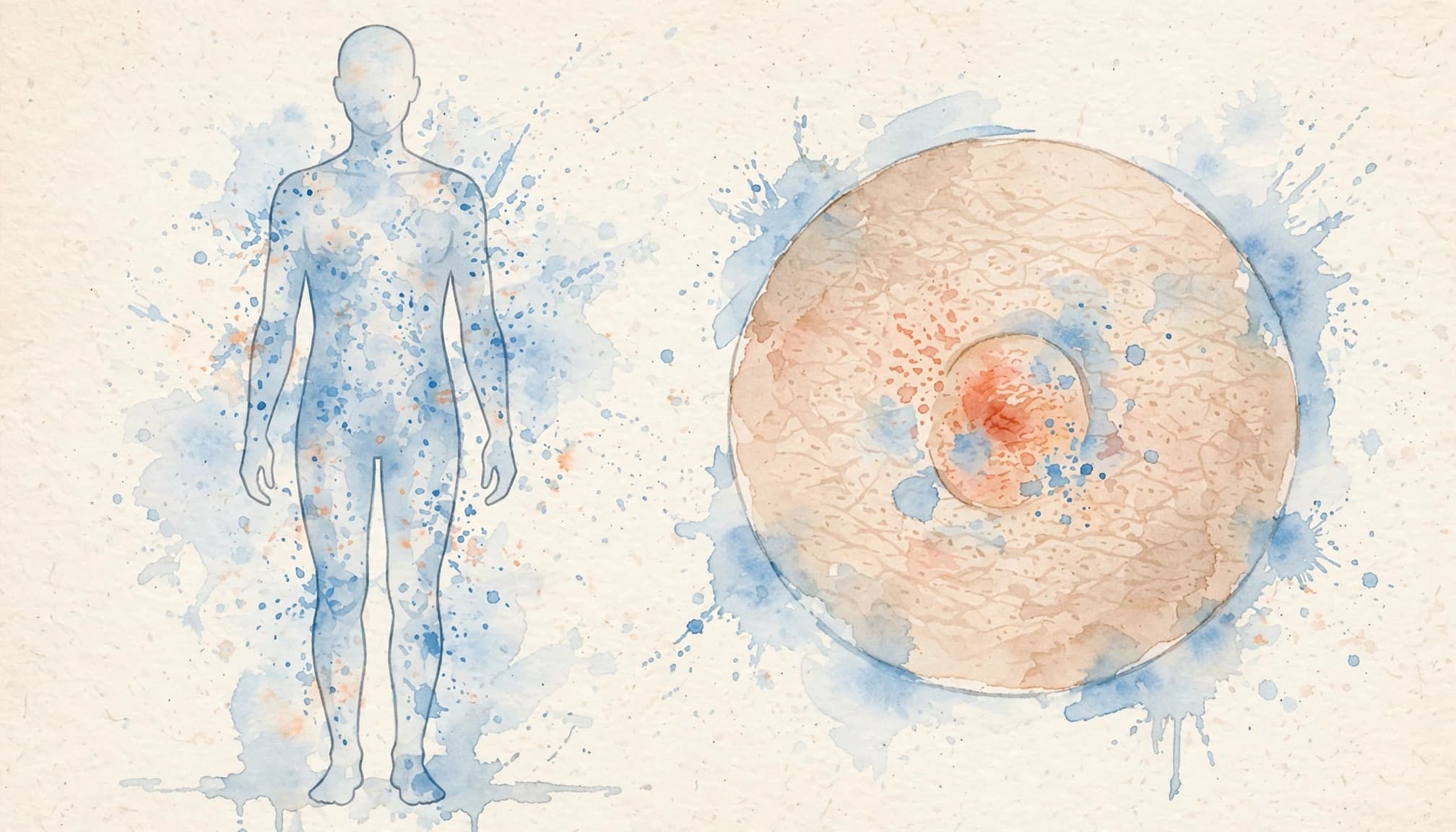
Why antihistamines may offer little relief
Mast cells can release histamine, an itch-triggering chemical. Cancer cells and immune cells can also release cytokines, chemical messengers that affect itch pathways.
Doctors use the term paraneoplastic pruritus for itch caused by the body’s response to a tumor. It can occur without visible skin changes and resist over-the-counter remedies.
Antihistamines help some people, but they don’t address every itch pathway.
Failure to improve with an antihistamine doesn’t identify cancer. Several non-cancer conditions also cause itching through other pathways.
What Else Can Cause Itching Without a Rash?
Our skin can look unchanged while dryness, medicines, or an internal condition causes discomfort. Sometimes scratching creates marks after the itching begins.
Common skin and internal causes
Dry skin, irritants, allergies, eczema, and insect bites account for much everyday itching. Some produce subtle changes that you may overlook.
Diabetes, chronic kidney failure, non-cancerous liver disease, thyroid disorders, and HIV infection can also cause persistent itch. Nerve-related conditions, including multiple sclerosis, sometimes produce itching without a rash.
Anxiety and depression can contribute to or intensify itching. That doesn’t make your discomfort imaginary or remove the need for evaluation.
Pregnancy can also cause itching. Contact your maternity team promptly for widespread itching, especially on the palms or soles, because pregnancy-related cholestasis needs assessment.
Cancer treatment and other medicines
Chemotherapy and immunotherapy can cause itchy skin, dryness, or rashes. Opioids, aspirin, and antibiotics can also trigger itching or drug reactions.
Cleveland Clinic explains treatment-related itching, including significant itch during immunotherapy.
Tell your team when symptoms began relative to a new medicine or dose change. Don’t stop prescribed treatment on your own. Our guidance on managing cancer treatment side effects reinforces the value of addressing discomfort early, before it interferes with rest and daily life.
When Should You Call Your Doctor?
You don’t have to decide whether the cause sounds serious before asking for help. Your care team can help make that judgment.
Arrange an evaluation for persistent symptoms
Book an appointment if itching lasts six weeks, keeps returning, spreads widely, or doesn’t improve with gentle skin care. Call sooner if it interrupts sleep or daily activities.
Report accompanying changes such as:
- Night sweats that soak clothing or bedding, unexplained fever, or unintentional weight loss.
- Persistent fatigue, enlarged lymph nodes, or a new visible lump.
- Yellow skin or eyes, dark urine, or pale stools.
- A changing, bleeding, crusting, or nonhealing skin spot.
Our discussion of cancer night sweats can help you describe soaking episodes alongside other symptoms.
Some changes need immediate attention
Seek emergency help for breathing trouble, throat tightness, faintness, or swelling of the lips or tongue. These can signal a severe allergic reaction.
Contact your team immediately for blistering or peeling skin, mouth sores with a new rash, or rapidly worsening symptoms after medication.
During chemotherapy, call immediately for a temperature of 100.4°F (38°C) or higher, unless your team gives different instructions. New jaundice also needs prompt medical advice. Don’t wait for the six-week threshold.
How Do Doctors Investigate Persistent Itching?
An evaluation begins with your history and a physical examination. Your doctor checks your skin and lymph nodes and asks about weight changes, sweating, fever, medications, and water-triggered symptoms.
MD Anderson describes an initial evaluation that may include a complete blood count and tests of liver, kidney, and thyroid function.
These tests look for several explanations, not cancer alone. The findings guide whether you need further blood tests, imaging, or a dermatologist’s assessment. Itching alone doesn’t automatically require a full-body scan.
Bring a short record of when the itch occurs, where it affects you, and whether bathing or medicines change it. Include all prescriptions, supplements, and nonprescription products.
If you already have cancer, explain how the symptom differs from your usual treatment effects. Our questions for your oncologist can help you prepare for that conversation.
What Can Ease the Itching While You Wait?
Keep showers short and lukewarm. Apply a fragrance-free cream or ointment after bathing, and use a cool compress when an area feels difficult to leave alone.
Loose cotton clothing and a cooler bedroom may reduce irritation. Avoid scented soaps, harsh detergents, and repeated scratching. Keep nails short to limit skin damage.
Ask your oncology team or pharmacist before adding an antihistamine. Some cause sleepiness, interact with other medicines, or increase fall risk. Steroid creams generally offer little help for unexplained itch when no skin inflammation exists.
Persistent itch may need prescription treatment that targets its cause. You deserve relief even while your doctor works toward an explanation. Exhaustion from sleepless nights matters, too.
Frequently Asked Questions
Can itching come before a cancer diagnosis?
Yes. Itching sometimes precedes the diagnosis of lymphoma or polycythemia vera. Most itching still has another explanation.
Doctors can’t tell which illness came first, or whether cancer exists, from the sensation alone. Duration, accompanying symptoms, examination findings, and blood tests carry more useful information than how intense the itch feels.
Does itching during remission mean cancer has returned?
No. Dry skin, medications, nerve changes, and unrelated illnesses can cause itching during remission.
Still, tell your oncology team about persistent or changing symptoms. Your cancer history helps guide the evaluation, but it doesn’t turn every new discomfort into evidence of recurrence. You can take a symptom seriously without deciding its meaning before the appointment.
A Clear Next Step Can Make Room for Reassurance
Most itching without a rash doesn’t come from cancer. Persistent symptoms still deserve a careful explanation and meaningful relief.
Notice the pattern, report accompanying changes, and call sooner when warning signs appear. There is courage in asking about a symptom that worries you, even when you fear the answer.
You don’t have to carry the discomfort and uncertainty without help.
