

The scan appointment may last an hour, but the worry can claim days before you arrive. Follow-up imaging can offer reassurance or raise questions, yet it cannot tell you everything about your health or future.
After treatment for a life-threatening disease, you may want certainty more than anything. Understanding what imaging shows, and where its limits begin, can help you meet the next appointment with clearer expectations.
Start with the question your care team wants the scan to answer.
What cancer follow-up scans are meant to do
Follow-up imaging has a purpose beyond checking a box on the calendar. Your oncologist considers your cancer type, stage, treatment history, and individual risk when choosing tests, including any surgery.
Surveillance and treatment assessment answer different questions
Surveillance means watching for cancer’s recurrence after treatment. During chemotherapy or maintenance treatment, a scan may instead check whether treatment continues to control the disease.
A post-treatment evaluation may serve a different purpose from imaging during treatment. Baseline staging can provide useful background for later comparisons, but it doesn’t set a universal scan schedule.
Being in the surveillance phase doesn’t automatically mean scans happen at fixed intervals. Depending on the cancer and clinical question, imaging may include an MRI. It may also monitor known or suspected metastases, though not everyone needs scans for this reason.
Ask, “What is this follow-up scan looking for?” That question can make an appointment feel less mysterious. It also helps you understand what the result might change.
Follow-up visits don’t always include imaging
The National Cancer Institute’s follow-up care guidance describes appointments generally occurring every three to four months during the first two to three years after treatment. That is a visit schedule, not a scan schedule.
A visit may focus on symptoms, an examination, recovery, or treatment effects. Your cancer type, risk of recurrence, and previous findings help determine imaging needs.
Remission doesn’t end follow-up care. It changes what your team watches and how often you need certain tests.
What CT and PET scans can show
A CT scan uses X-rays to create cross-sectional pictures inside your body. It helps doctors examine structures such as organs, lymph nodes, and areas that have changed in size or appearance.
A PET scan provides different information. A common PET scan uses radioactive tracers, often a sugar tracer. The scanner detects where these radioactive tracers collect, showing patterns of metabolic activity.
The NCI’s cancer imaging basics explains how PET tracks sugar distribution and how doctors combine PET with CT. PET-CT places information about metabolic activity alongside pictures of body structures. This can support staging, and a PET scan may help identify possible metastases. Findings need clinical interpretation and aren’t a diagnosis on their own.
Doctors may also consider scan results alongside other information when planning treatment, including surgery.
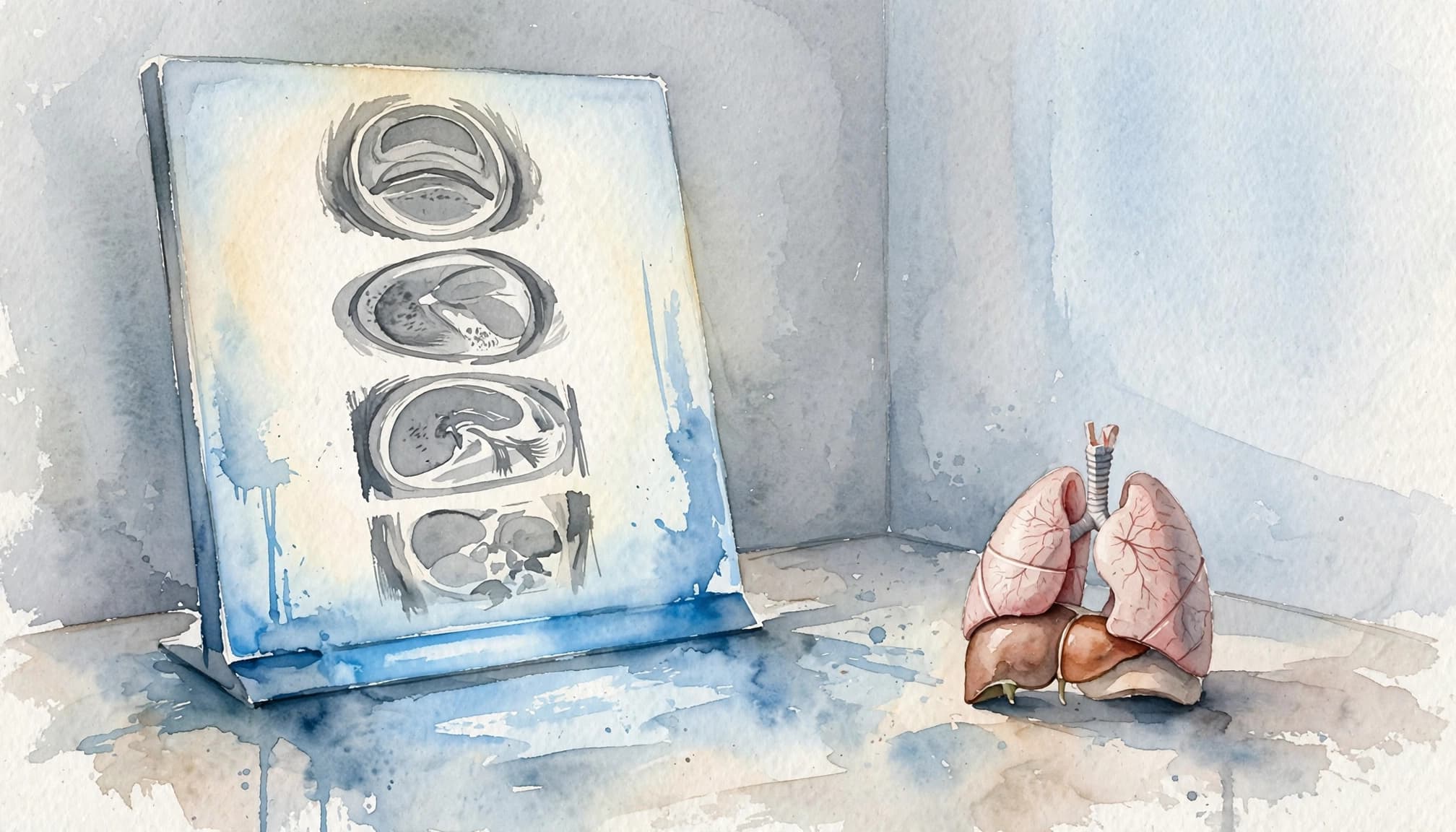
More activity doesn’t automatically mean cancer. Infection and inflammation can also increase sugar uptake. Some cancers show little uptake, and very small areas may escape detection. Scans can’t establish tumor aggressiveness on their own.
Your doctor therefore considers the location, appearance, previous images, symptoms, and treatment history together.
You may see an uptake measurement in a PET report. Don’t treat that number as a diagnosis. Ask how your team interprets it in your situation.
What a reassuring scan cannot promise
A reassuring result matters. You deserve room to feel relief without asking that result to guarantee every tomorrow.
Imaging cannot detect every cancer cell
Scans have limits. They may not show very small areas of disease, including some metastases, and their ability to detect disease varies.
“No evidence of disease” means the current evaluation found no detectable cancer. It doesn’t mean a scan has proved that recurrence can never happen, even if you’re in remission.
This distinction helps explain why your team continues follow-up after a clear scan. Surveillance combines information over time rather than asking one image to settle every uncertainty.
You can welcome today’s good news while keeping tomorrow’s appointment.
Your symptoms still belong in the conversation
A reassuring scan doesn’t explain every symptom or erase the need to report changes. Your body supplies information that imaging alone cannot provide.
Your team considers symptoms alongside imaging and treatment history, including surgery. Tell your team about new, persistent, or worsening symptoms. Ask which concerns need a prompt call and which can wait for your next visit.
When your team uses blood tests, ask how those results fit alongside imaging. Understanding what tumor marker results mean can help you avoid drawing conclusions from one number.
When a scan finds a lung or liver nodule
A small finding can occupy an enormous amount of emotional space. The word “nodule” may follow you through dinner, bedtime, and the next morning.
An unclear finding leaves a question open
A lung nodule is a small spot. The word describes a finding, not its cause. Size alone can’t tell you whether it’s cancer or harmless.
“Indeterminate” means the scan doesn’t provide enough information for a confident answer. It doesn’t confirm recurrence, and it doesn’t establish that everything is benign.
After treatment or surgery, scar tissue is one possible explanation, but the scan alone may not settle the question. Some incidental findings, such as liver cysts, may be benign findings, but the scan context and follow-up plan matter.
Your oncologist considers the spot’s appearance, location, and any change over time. Older scans can help. If you had imaging elsewhere, ask whether your current team has those actual images.
A sooner scan can help clarify change
Your team may recommend another scan after a shorter interval to see whether an uncertain area changes. Healing tissue, infection, or temporary inflammation sometimes settles over time.
The interval depends on the finding and your clinical situation. A sooner appointment alone doesn’t tell you what your doctor expects to find.
Repeat imaging or another test can be part of the diagnostic timeline for clarifying an uncertain result. Compassionate Voices’ guide to understanding indeterminate scan results explores this difficult waiting period.
Ask what change would lead your team to recommend another test, a biopsy, or continued observation.
That question gives the waiting period a medical purpose without pretending the uncertainty feels easy.
How often should you have a PET-CT scan?
There isn’t one PET-CT schedule for everyone after cancer treatment. More frequent imaging doesn’t automatically provide better care.
Your diagnosis, whether surgery was part of treatment, and whether you’re in remission may inform the plan. None sets a universal scan schedule.
The American Society of Hematology hosts Choosing Wisely guidance on routine PET-CT. For people without symptoms after initial treatment, it advises against a routine PET scan or PET-CT to monitor recurrence unless strong evidence shows imaging can change outcomes.
This guidance addresses routine monitoring in specific circumstances, not every cancer type or situation. A PET scan may still be ordered to investigate symptoms, clarify a finding, or assess ongoing treatment.
False alarms can lead to additional procedures, worry, and unnecessary treatment. CT and PET-CT also involve radiation exposure. Your team weighs those burdens against the information a test can provide.
An earlier scan may make sense when a new symptom or previous finding creates a question. A longer interval may fit another person’s diagnosis and recovery.
Ask your oncologist, “Why does this interval fit my cancer, and what would make us change it?”
The answer should connect the schedule to your care. Cancer follow-up scans should answer a useful question, rather than provide repeated testing solely for reassurance.
If cost, travel, or insurance approval threatens the appointment, tell your team early. Ask for help before you miss a recommended scan.
Prepare for the scan and the conversation afterward
Preparation can fit on one page. You don’t need to learn radiology before entering the clinic.
Keep your treatment summary and previous scan information available. The American Cancer Society recommends keeping records of your diagnosis, treatment, and follow-up care needs.
Bring a current medication list, including medicines for other conditions such as Parkinson’s disease. Tell the imaging team if pain, tremor, or difficulty lying still could affect the appointment. Follow their instructions about food, medicines, and preparation rather than changing anything on your own.
Write down the questions that matter most:
- What question will this scan answer, and how could the result change my care?
- How does this finding compare with my previous images?
- What is the diagnostic timeline for my result and next steps? When and how will you explain it, and whom should I contact if I don’t hear back?
- Which symptoms should prompt a call before my next appointment?
Before you leave, repeat the next step in your own words. Your clinician can correct anything that feels unclear.
A report in your patient portal may arrive before your doctor contacts you. Ask ahead of time how your team handles that gap. Medical language can sound alarming when you read it without context.
Make a plan for scanxiety, too
What does courage look like when your phone sits beside you and every notification feels urgent? Sometimes it looks like asking someone to stay nearby.

Give the waiting period a little structure
Before scan day, confirm when you can expect results. Choose one person who can accompany you, take notes, or join the follow-up call.
Keep one manageable activity for the hours afterward. A meal, a familiar television program, or a conversation may help the day hold more than waiting. Follow your team’s advice about activity and recovery.
When scanxiety makes you fear the worst, write down the prediction separately from what you know. An anxious thought can feel convincing without providing new medical information.
You don’t have to force cheerfulness. You can feel frightened and still keep a small part of your routine.
Ask for help when worry takes over daily life
Tell your care team when anxiety interferes with sleep, eating, work, or ordinary tasks. You can begin with, “The waiting is making it hard to get through my day.”
A counselor, oncology social worker, support group, chaplain, or trusted friend may help. These ways to manage cancer-related stress offer practical support between appointments.
Loved ones don’t need to promise a good result. A ride, a shared meal, or company during a phone call can make uncertainty less lonely.
Accepting that help doesn’t diminish your courage.
Key takeaways for your next scan
- Cancer follow-up scans provide information about detectable disease and changes over time, but they cannot guarantee that cancer will never return.
- A nodule or indeterminate finding needs interpretation. Ask about comparison images, the next step, and what would change the plan.
- Your follow-up schedule should fit your diagnosis and care goals. Include emotional support and clear communication about results in that plan.
Frequently Asked Questions
Does a clear follow-up scan mean the cancer is gone for good?
A clear scan means the current evaluation found no detectable cancer. It cannot guarantee that cancer will never return, so follow-up care may still be important.
How often should I have cancer follow-up scans?
There isn’t one schedule for everyone; your cancer type, treatment history, symptoms, and previous findings help guide the plan. Ask your oncologist why the interval fits your situation and what might change it.
Should I worry if my scan report mentions a nodule?
A nodule describes a finding, not its cause, and an indeterminate result doesn’t confirm cancer. Your team may compare older images or recommend another scan or test to clarify it.
What should I do if I haven’t heard about my scan results?
Ask your care team when and how they expect to share the results, and whom to contact if you don’t hear back. If new, persistent, or worsening symptoms arise while you wait, tell your team.
Leave room for life between appointments
A scan gives your team information for the next decision. Your symptoms, history, and questions help complete that picture.
You don’t have to turn uncertainty into confidence before you can live through the day. A clear next step can make room for rest, connection, and the ordinary things you care about.
The worry may last longer than the appointment. You deserve support during those hours, too.