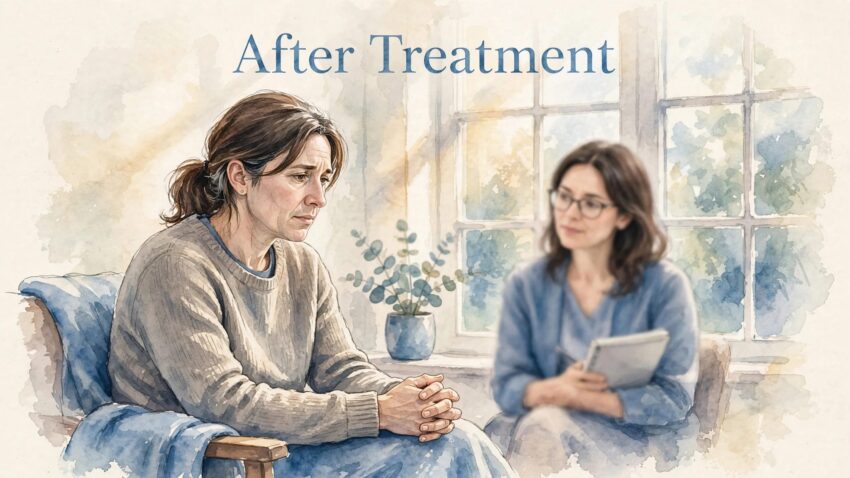
The last treatment can end, yet your body may still feel as if danger is close. A clear scan, the word remission, or a return to work doesn’t always bring the peace you expected.
cancer-related PTSD can show up during treatment, after treatment, or years later. It may involve signs linked to trauma without meaning you have a formal diagnosis. It isn’t weakness, and it doesn’t mean you aren’t grateful to be alive.
Your mind and body may continue responding to perceived danger after a cancer diagnosis, even when treatment has ended. That ongoing traumatic stress reflects what you went through, not a personal failure.
The National Cancer Institute’s survivorship guidance recognizes that emotional effects can continue after treatment. Recognizing what is happening can give you a place to begin.
Key Takeaways
- Cancer-related PTSD and traumatic stress can begin during treatment, soon afterward, or years later; remission does not always make the body feel safe.
- Intrusive memories, nightmares, avoidance, hypervigilance, sleep problems, and fear of recurrence may signal a need for support, especially when they disrupt daily life or medical follow-up.
- Symptoms can overlap with anxiety, grief, treatment effects, and ordinary post-treatment stress, so a qualified professional should assess duration, symptom patterns, and impairment rather than relying on self-diagnosis.
- Trauma-informed care may include therapy, medication when appropriate, grounding techniques, peer support, and practical help from trusted people and the health care team.
- Thoughts of suicide or self-harm, severe panic, substance use to cope, or feeling unable to stay safe require immediate professional help; in the U.S., call or text 988 or call 911 for immediate danger.
Why trauma can stay after cancer treatment
A cancer diagnosis asks you to live with uncertainty, pain, procedures, alarms, test results, and frightening medical decisions. Even when treatment ends, traumatic stress can return. A hospital smell, appointment reminder, or cough may pull you back into fear.
The National Cancer Institute explains that cancer-related PTSD and post-traumatic stress symptoms can arise during treatment, soon afterward, or years later. Its guide to cancer-related post-traumatic stress reminds survivors that these reactions have a real place in cancer care. Ongoing reactions can resemble post-traumatic stress disorder, but a qualified professional must assess whether diagnostic criteria are met.
Your body may not believe the danger has passed
Your mind can understand that you’re safe today. Your nervous system may still stay on alert, carrying traumatic stress after the immediate threat has passed.
That mismatch can feel lonely, and prior experiences and other psychological factors can influence how recovery feels. You may look fine to others while your heart races before a follow-up scan. You may wake at 3 a.m. replaying the day you heard the diagnosis.
Cancer is a life-threatening disease. It can leave a mark even when treatment did what it needed to do. Normal adjustment may take time, but reactions that persist or impair daily life deserve attention.
Remission can bring unexpected feelings
During treatment, you often have appointments, instructions, and people watching closely. When that structure falls away, fear can get louder.
Some people feel guilty for struggling after good news. Others feel less secure when they no longer see their oncology team every week. The emotional adjustments after cancer treatment can include anxiety, fear of recurrence, sadness, anger, and uncertainty. These feelings can create emotional distress, and persistent reactions may signal psychological distress rather than a passing adjustment.
Remission can coexist with fear, and post-treatment stress isn’t evidence that you’re ungrateful or that you’ve failed to recover. There is no prize for pretending you feel fine.
Signs of cancer-related PTSD to watch for
Post-traumatic stress symptoms exist on a spectrum after cancer treatment. Cancer-related PTSD is one possible response, but traumatic stress can look different from person to person. Cancer survivors may experience these symptoms with different intensity and frequency.
Some people have symptoms without meeting the full criteria for post-traumatic stress disorder. Don’t try to diagnose yourself from a checklist. Grief, anxiety, treatment effects, and ordinary post-treatment stress can overlap with these experiences. Still, symptoms deserve attention when they cause psychological distress or disrupt sleep, relationships, work, medical follow-up, or quality of life.
Memories that arrive without permission
You may have nightmares about treatment, intrusive thoughts, or memories of the diagnosis. These experiences can surface while you’re washing dishes, standing in a grocery store, or waiting for a text.
Some people have flashbacks. Others don’t see images, but feel the same terror in their chest. Your body may react as though the frightening moment is happening again. That reaction is traumatic stress, even without a visual flashback.
Avoidance that shrinks your life
Avoidance behaviors can look sensible at first. You may skip conversations about cancer. You may ignore calls from the clinic, miss appointments, delay scans, or avoid driving near the hospital.
It can also show up in smaller ways. You stop seeing friends because questions feel exhausting. You refuse to look at your scar. You push away thoughts about the future because they feel too dangerous.
Avoidance may bring short-term relief, but it can maintain fear over time by teaching the brain that reminders are unsafe.
Living on high alert
You may startle easily, lose focus, feel irritable, or scan every ache for signs that cancer is returning, driven by fear of recurrence. Sleep may become a battle. A normal headache can feel like an emergency.
Some survivors also feel numb or distant from people they love. Others carry shame, anger, grief, or self-blame. These feelings can exist alongside gratitude. Human beings can hold more than one truth at once.
When anxiety becomes something more
Fear before a scan or worry about a new symptom doesn’t automatically mean post-traumatic stress disorder. Cancer changes how you listen to your body. A little worry can be part of living after treatment.
The question is not, “Should I be over this by now?” The better question is, “Is this fear taking over my days, as it can with cancer-related PTSD?”
Notice how long it lasts and what it costs
Post-traumatic stress symptoms can involve several symptom clusters. They may continue for more than a month, cause serious psychological distress, or interfere with daily life. A month-long pattern is a general diagnostic consideration, not a self-diagnosis. Severe impairment or safety concerns warrant help sooner.
A qualified professional assesses symptom clusters, duration, impairment, and psychological factors before diagnosing post-traumatic stress disorder. Talk with your health care team if fear shows up most days, sleep keeps falling apart, or daily tasks become hard. Contact an oncologist, primary care clinician, psycho-oncology service, or mental health professional for an evaluation. Persistent symptoms may reflect traumatic stress and warrant trauma-informed care. The NCI notes that shock, helplessness, and fear after diagnosis can fuel post-traumatic stress reactions in its patient information on cancer-related distress.
Get urgent help for these warning signs
Reach out right away if you have thoughts of suicide or self-harm, or feel unable to stay safe. Seek help sooner if panic is severe, you use alcohol or drugs to cope, or you can’t function.
In the U.S., call or text 988. If there is immediate danger, call 911 or local emergency services. Crisis numbers and resources vary by country, so use local urgent services. Contact someone you trust while seeking urgent professional care.
You deserve immediate care. You do not need to prove that you are struggling enough.
Risk factors do not tell the whole story
No one chooses a trauma response. Two people can receive similar diagnoses and carry the experience differently. Risk factors don’t predict your future. They help your care team understand how medical experiences and life circumstances may shape traumatic stress and support needs.
The medical experience matters
Physical factors such as hospital stays, severe pain, surgery, complications, and treatment side effects can raise the emotional burden. Aggressive treatments may add to that burden, especially when recovery feels uncertain.
Recurrence or progression can renew a fear of recurrence that never had time to settle.
A person living with another serious illness, such as Parkinson’s disease, may carry years of medical stress into a new cancer diagnosis. That history deserves gentleness, not judgment.
Life outside the exam room matters too
Previous trauma, depression, anxiety, and coping history are psychological factors that can shape recovery. Financial strain, isolation, caregiving responsibilities, and limited access to mental health care can make recovery harder. Pressure to return to normal can increase psychological distress, while practical social support may help without replacing professional care.
Children, young adults, cancer survivors, and people who’ve faced discrimination may have added burdens that a quick screening form misses. Childhood cancer survivors may carry medical experiences into later settings or follow-up care, but that history doesn’t determine their response. Tell your health care team about money worries, family stress, cultural concerns, or past care experiences, because those details matter.
Family caregivers can struggle too, with fear, helplessness, and exhaustion while watching someone they love face cancer. Support should include family caregivers as well as patients when possible.
How to ask for help from your care team
You don’t have to arrive with the perfect words. You can start with one honest sentence: “Since treatment ended, I can’t stop reliving it,” or, “I am scared all the time, and it is getting worse.”
Your health care team may include your oncologist, nurse, primary care clinician, patient navigator, or social worker. Oncology, primary care, and survivorship professionals can help cancer survivors find the next person to call.
Screening opens the door to care
Many cancer centers use brief screening tools. These questionnaires may ask about mood, sleep, pain, relationships, work, practical needs, and finances. They can help identify psychological distress, but a high score does not diagnose PTSD. It tells the team to ask better questions.
Ask whether your center has a psycho-oncology program, oncology social worker, psychiatrist, or mental health therapist who understands cancer. You can also ask for a referral to a trauma-trained therapist. Cognitive behavioral therapy may be one option when appropriate.
For steady guidance on managing stress during long-term cancer treatment, remember that emotional support belongs beside medical treatment, not after it.
Untreated distress can make appointments, medications, or follow-up harder to manage. This can affect treatment adherence, and it isn’t a failure or lack of effort.
Bring someone when words feel hard
Ask a trusted person, including family caregivers, to come to an appointment, take notes, or help you speak up. Social support can make it easier to share concerns.
Before the visit, record triggers, symptom frequency, sleep impact, and avoidance. Note effects on work or relationships, plus coping mechanisms that help or worsen symptoms. Ask whether support groups could offer peer connection, if that feels comfortable. Tell your clinician if traumatic stress affects sleep, work, relationships, or daily routines.
Small details help. “I dread my scan for two weeks” tells your clinician more than “I get nervous sometimes.”
Treatment for cancer-related PTSD can help
Healing from cancer-related PTSD rarely means erasing every memory. With the right care, cancer survivors can sleep better and feel safer in their bodies. Treatment can ease psychological distress and traumatic stress while restoring quality of life.
Therapy gives fear somewhere to go
Cognitive behavioral therapy, often called CBT, helps you notice thoughts and habits that keep fear alive. It can help you face reminders gradually rather than avoiding them. Trauma-focused CBT, EMDR, cognitive processing therapy, and exposure-based approaches may also help. A trained clinician should tailor the methods and pace to your readiness and medical history.
The NCI describes CBT and mindfulness support for cancer survivors as useful approaches for anxiety and distress. A therapist can help you decide what fits.

Photo by Karola G
Relaxation techniques, such as paced breathing or grounding, may ease symptoms between sessions. They complement trauma-focused care rather than replace it.
Medication may be part of the plan
For severe PTSD symptoms, or PTSD alongside depression or anxiety, a prescriber may discuss medication. Selective serotonin reuptake inhibitors, called SSRIs, may reduce anxiety and constant alarm for some people.
Medication choices need care during and after cancer treatment. Your prescriber should determine whether medication is appropriate, check interactions with cancer medicines and supplements, and monitor side effects. Never start, stop, or change a psychiatric medicine without medical guidance.
Connection is not a small thing
Social support can give you a place where you don’t have to explain why a scan date changes your mood. Support groups for cancer survivors offer peer understanding, while other support groups include caregivers or address survivorship concerns. A friend can sit beside you while you wait; family caregivers can listen, accompany you to appointments, or seek support for themselves. Healthy coping mechanisms can support recovery, while avoidance or substance use may keep fear in place.
The Cancer Fighter’s Journal community offers encouragement for patients, survivors, caregivers, and anyone trying to put honest words to this experience. It can offer connection, but it isn’t a substitute for licensed medical or counseling care.
You don’t need forced positivity. You need places where the hard truth can be spoken, and where hope can still have a seat.
Frequently Asked Questions
What is cancer-related PTSD?
Cancer-related PTSD describes post-traumatic stress symptoms connected to the experience of cancer, its treatment, or ongoing medical uncertainty. These symptoms can occur without meeting the full criteria for post-traumatic stress disorder, which requires assessment by a qualified professional.
How do I know when post-treatment fear needs attention?
Fear before a scan or concern about a symptom can be a normal part of life after cancer. Consider seeking help when intrusive memories, avoidance, sleep problems, hypervigilance, or anxiety persist, cause significant distress, or interfere with relationships, work, daily routines, or follow-up care.
Who can help with cancer-related PTSD?
You can begin with an oncologist, primary care clinician, nurse, patient navigator, social worker, or survivorship professional. Ask about psycho-oncology services or a therapist trained in trauma-informed care and familiar with cancer experiences.
What treatments can help?
Treatment may include cognitive behavioral therapy, trauma-focused CBT, EMDR, cognitive processing therapy, exposure-based approaches, or medication when appropriate. Grounding, paced breathing, support groups, and trusted social support can complement professional care but should not replace it.
What should I do in a mental health crisis?
If you have thoughts of suicide or self-harm, feel unable to stay safe, or cannot function, seek urgent help and contact someone you trust. In the U.S., call or text 988; call 911 or local emergency services if there is immediate danger, and use local crisis resources in other countries.
A gentler way forward
Traumatic stress can make the past feel present. A routine appointment may feel like a storm cloud gathering overhead. Support, treatment, grounding, and healthy coping mechanisms can help these experiences feel more manageable.
Start with one clear act of courage: tell someone what’s happening. You are not failing at survivorship because you need help. Recovery doesn’t require constant positivity or forgetting what happened. You are caring for the part of you that fought hard to stay here, whether you’re a survivor or caregiver.