

A cancer-related cough can come from the tumor, treatment, infection, or another health condition. Call your cancer team about a new or worsening cough; sudden or severe breathing trouble needs emergency help.
When we face a life-threatening disease, another symptom can bring another worry, especially when it interrupts sleep or follows us through the day. You don’t need to know the cause before asking for help. Start with what has changed and how urgently your body needs attention.
Key Takeaways
- Report a new, persistent, or changing cough, including during remission.
- Track mucus, blood, temperature, breathing changes, treatment dates, and lost sleep.
- Seek emergency help for sudden or severe breathlessness, severe chest pain, confusion, or significant bleeding.
- Treatment starts with finding the cause. Suppressing every cough can interfere with clearing mucus.
When to Call About Cancer-Related Cough
Get emergency help for breathing distress
Call 911 in the United States, or your local emergency number, for sudden breathlessness or severe difficulty breathing. Severe chest pain, fainting, confusion, blue or gray lips, or coughing up a large amount of blood also require emergency care.
Don’t wait for a portal response. Don’t drive yourself when breathlessness or dizziness makes driving unsafe. A blood clot, serious infection, or another urgent problem can cause these symptoms.
Call your cancer team promptly
Call the same day for a new or worsening cough, new breathlessness, fever, wheezing, chest discomfort, or blood-streaked mucus. Report a cough that repeatedly interrupts sleep, meals, or ordinary activity.
During chemotherapy, call immediately for a temperature of 100.4°F (38°C) or higher. Follow your team’s written instructions if they give you a different threshold.
A new dry cough after chest radiation or during immunotherapy deserves prompt attention. Treatment-related lung inflammation can resemble infection, and symptoms alone can’t distinguish them.
What to Track Before You Call
Use a notebook, your Cancer Fighter’s Journal, or a phone note. A few clear details can help your team understand what your days and nights feel like.
Record these changes without delaying an urgent call. These notes help your care team compare symptoms and make a comprehensive assessment.
| What to track | Details to share |
|---|---|
| Beginning and duration | Start date, how long each spell lasts, frequency, timing, and whether symptoms are worsening or improving |
| Severity and triggers | How intense it feels, what brings it on, and what eases it |
| Cough type | Dry cough or mucus-producing cough |
| Mucus and blood | Amount, color, and any blood |
| Related symptoms | Note this symptom cluster, including temperature, breathlessness, wheezing, pain, or chills |
| Daily effects | Interrupted sleep, meals, walking, or conversation |
| Treatment and relief | Recent treatment dates and medicine changes, when symptoms began in relation to them, and whether they change during treatment |
Lost sleep and difficulty finishing a sentence matter as much as the number of coughing spells.
Our guidance on preparing for an oncology telehealth appointment can help you organize symptoms and questions. Urgent symptoms need a call rather than a scheduled visit.
What a Cancer-Related Cough Can Mean
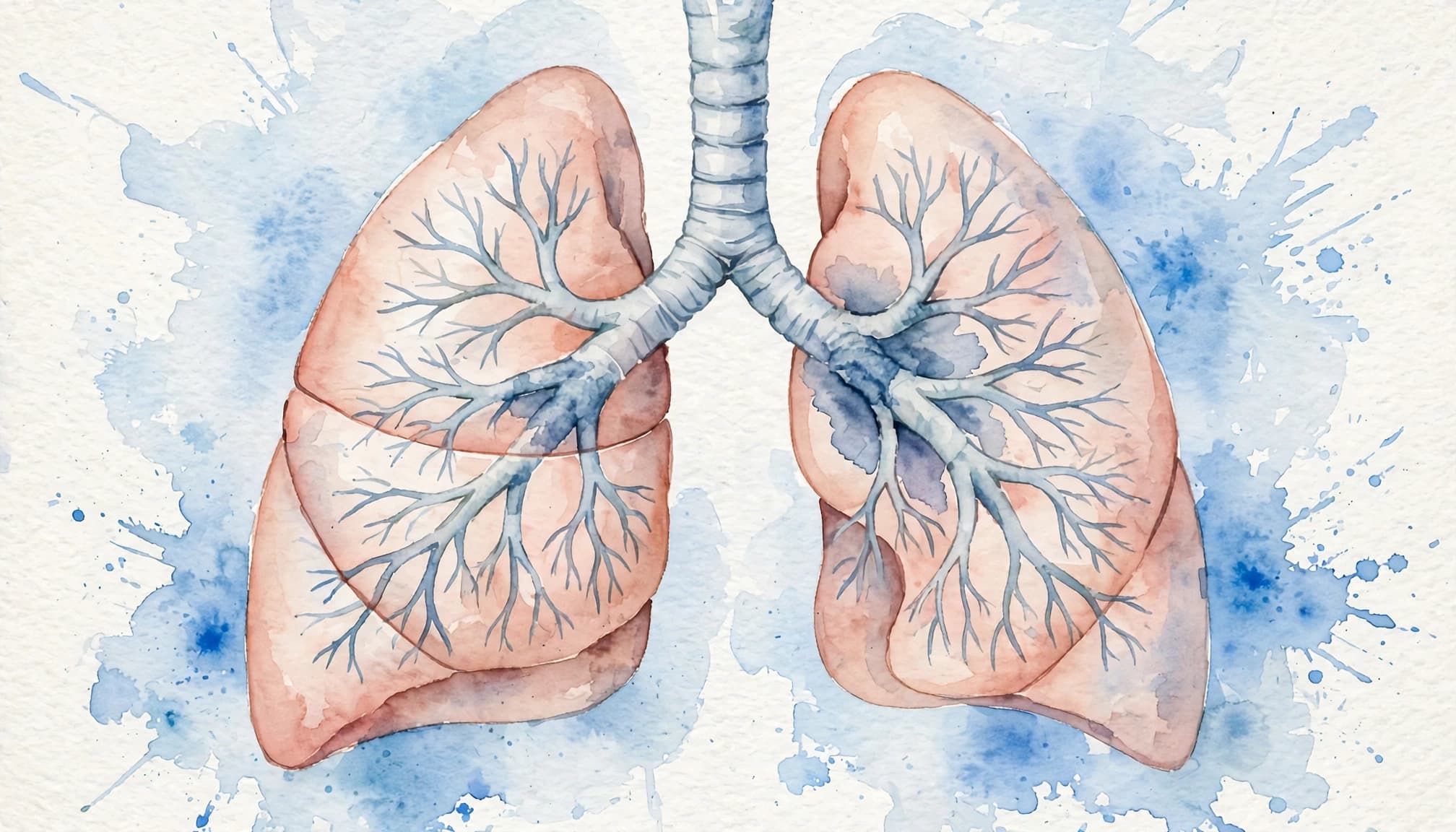
Lung cancer can irritate or narrow an airway. Cancer that spreads into the chest can also cause coughing. Yet a cough doesn’t prove that cancer has grown or returned. A cold, reflux, or another condition can cause a similar change.
The 2017 CHEST guideline describes a study of 223 lung-cancer outpatients: 57% reported cough. Among respondents who described their cough, 23% called it painful.
In another study of 450 US patients with advanced lung cancer, cough significantly predicted quality of life alongside appetite loss, pain, and breathlessness. What does another broken night ask of someone already carrying treatment fatigue? Your comfort belongs in the treatment conversation.
CHEST updated its 2006 guidance using a 2015 Cochrane systematic review of 17 trials, including randomized controlled trial research. Most trials had low-quality evidence and a high risk of bias.
The treatment steps below reflect that uncertainty. Grade 2C means a cautious recommendation based on low-quality evidence, rather than proof that an approach will help everyone.
Start With Assessment and Gentle Relief
1. Look for a treatable cause
The CHEST guideline recommends a comprehensive assessment before symptom treatment, based on expert consensus.
Your clinician looks for airway obstruction, infection, fluid around the lung (pleural effusion), acid reflux, a lung blood clot, or worsening chronic obstructive pulmonary disease (COPD) or heart failure. Chemotherapy, radiotherapy, and external-beam radiation are possible treatment-related causes for your clinician to consider.
Depending on your symptoms, assessment may include oxygen measurement, chest imaging, and blood tests. The ACR’s chronic cough imaging guidance describes when chest X-rays or CT may help.
Report coughing during meals or swallowing difficulty, especially if you also have Parkinson’s disease. Food or fluid entering the airway needs a different approach.
2. Add cough suppression exercises when appropriate
CHEST suggests cough suppression exercises alongside or instead of medication, Grade 2C. These include pursed-lip breathing, swallowing, small sips of water, breathing exercises, and counseling. Speech pathology can help you learn suitable techniques, and a speech-language pathologist can teach you how to use them.

These exercises may help an irritating dry cough. Don’t force water when swallowing feels unsafe.
A mucus-producing cough needs a different plan. Your clinician may use mucus-thinning medicines, called mucolytics, to help you clear secretions. A dry cough may benefit from suppression.
A cough that clears mucus has a useful job. Ask which coughing spells your team wants you to control and which help keep your airway clear.
Medicines for Cough That Persists
3. Try a soothing syrup before an opioid
For cough that persists despite cancer treatment, CHEST suggests a soothing cough syrup first, Grade 2C. Options include simple linctus, glycerin-based linctus, and butamirate linctus. Linctus means a thick cough syrup; demulcents are soothing agents that coat the throat. Availability and suitability of butamirate linctus vary, so check with your clinician.
If that approach doesn’t help, CHEST suggests an opioid medicine, also Grade 2C. Codeine or dextromethorphan may not suit everyone, so get your care team’s approval before using either. Your prescriber gradually adjusts the dose to balance relief against side effects.
Opioids can cause constipation, sleepiness, and slowed breathing. Don’t add a leftover prescription or increase a dose yourself. Bring every medicine and supplement into the discussion; our cancer medication safety guidance can help you prepare that list.
4. Discuss options when opioids don’t help
For cough that resists opioid treatment, CHEST suggests antitussives, including peripherally acting antitussive medicines that reduce signals outside the brain, Grade 2C. Examples include levodropropizine, moguisteine, levocloperastine, and sodium cromoglycate. Availability differs by country.
If these approaches fail, the guideline lists nebulized lidocaine or bupivacaine, local anesthetics delivered as a mist, and benzonatate. These suggestions rely on expert consensus rather than graded trial evidence.
These medicines need a clinician’s direction. Inhaled numbing medicines can interfere with protective swallowing reflexes.
Agree on what improvement should look like and when your team will review the treatment. The evidence doesn’t establish one reliable timetable for relief.
Specialist Options When Cough Continues
5. Consider local airway treatment only when appropriate
Endobronchial brachytherapy places radiation inside an airway. CHEST suggests it for localized disease within the airway when surgery, chemotherapy, and external-beam radiation don’t fit the situation, Grade 2C.
The guideline lists lowest-effective-dose schedules such as one 10 Gy session, two sessions of 7-8 Gy, or three sessions of 5 Gy. Gy measures radiation dose. A radiation specialist chooses the schedule.
Brachytherapy carries a significant risk of coughing up blood and other complications. A medication trial may offer a more appropriate starting point. Your oncologist can involve a radiation oncologist and airway specialist when the tumor’s location makes this option relevant.
6. Reserve individual drug trials for difficult cases
For cough that continues despite other approaches, CHEST describes randomized, single-person trials, sometimes called N-of-1 trials. A specialist compares treatment periods in one person to assess benefit and side effects.
The guideline names diazepam, gabapentin, carbamazepine, baclofen, amitriptyline, and thalidomide. The panel found no definitive evidence that these drugs relieve lung-cancer cough.
This suggestion rests on expert consensus. These medicines carry substantial risks and don’t belong in a self-treatment plan.
Palliative care can also help with persistent symptoms, sleep, and emotional strain alongside cancer treatment. You don’t have to wait until exhaustion takes over before requesting that support.
Frequently Asked Questions
Does the cough’s sound reveal its cause?
No. Cancer-related cough can sound dry or bring up mucus. A cold, smoking-related airway disease, reflux, and infection can sound similar. A change in your usual cough deserves assessment; its sound alone can’t establish the diagnosis.
At what stage does lung cancer cause coughing?
There isn’t a fixed stage. Some early lung cancers cause symptoms, while many cause none until they spread. Cough severity doesn’t measure cancer stage. Your clinician uses imaging and other findings to establish the stage.
What if I’m in remission or cough mainly at night?
A new persistent cough still deserves assessment during remission. It doesn’t automatically mean recurrence.
For nighttime cough, record whether lying down, meals, or mucus triggers it. Sitting more upright may ease reflux-related symptoms. Repeated awakenings deserve treatment attention, even when you can manage the cough during daylight hours.
Let Your Care Team Share the Burden
There is courage in noticing a change and making the call, even when you wish for a day without another medical concern. You don’t need to name the cause before you ask for help.
Keep a brief record, report changes promptly, and treat sudden or severe breathing trouble as an emergency. Your comfort and safety deserve attention throughout treatment and remission.
