
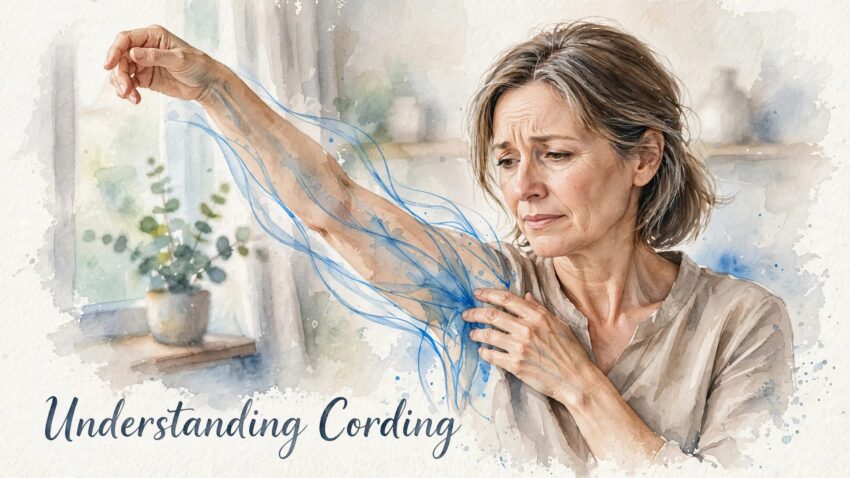
You reach for a sleeve or lift your arm to wash your hair, and a tight pull stops you. After breast surgery, that unfamiliar feeling may be axillary web syndrome, also called cording.
Breast cancer already asks you to face uncertainty, whether you’re in treatment or remission. These symptoms can add worry, but recovery support can help you understand what you’re experiencing and discuss next steps.
Begin by noticing what has changed, then share those changes with your care team.
Key Takeaways
- Axillary web syndrome, or cording, can cause tight, rope-like bands under the arm and make reaching painful.
- A clinician usually identifies it through a physical examination; new swelling, redness, or fever needs prompt attention.
- Clinician-guided physical therapy may support recovery, which varies. Don’t force a stretch or try to break a band yourself.
What Cording Means After Breast Surgery
Cording involves tight bands beneath the skin, usually near the armpit. You may see them, feel them, or notice their pull before recognizing them as cords; they aren’t necessarily scar tissue.
Researchers haven’t settled the exact cause of cording. Proposed tissue changes may involve lymphatic vessels, but your care team can help manage pain and movement without identifying them.
Why lymph node surgery matters
This condition often follows axillary surgery involving the lymph nodes under the arm. These small structures form part of the body’s drainage and immune systems.
A sentinel lymph node biopsy removes selected lymph nodes to check for breast cancer. An axillary lymph node dissection removes more nodes. Both procedures can precede this condition, although studies generally find it more often after the more extensive operation.
This describes a physical change after treatment or surgical intervention, not a problem caused by moving incorrectly or resting too much. It also doesn’t mean other postoperative complications are inevitable.
How common is it?
The 2025 review of axillary web syndrome reports widely differing rates. Estimates after the more extensive operation range between 5.2% and 72%.
That broad range reflects differences among studies, including when and how clinicians look for cords. It can’t predict your individual experience.
Studies also associate younger age and lower body mass index with this condition. These possible risk factors don’t explain every case, and people without those characteristics can still develop it.
Recognizing the Signs of Axillary Web Syndrome

What does the change feel like in your own day? Sometimes the first clue comes during an ordinary task.
The appearance and feeling of a cord
A cord may look like a narrow string beneath the skin. Some people notice several bands, often starting in the armpit and extending along the inner arm toward the elbow or farther down.
Raising your arm may make the cords easier to see or feel. You may notice pulling, tenderness, or painful cords along their path.
A cord can also be hard to see. Don’t dismiss persistent tightness just because you can’t find a visible band.
When symptoms appear and affect movement
Cording can develop at different points after breast cancer surgery, sometimes in the first weeks and sometimes months later.
Tightness may limit your range of motion when raising your arm, straightening your elbow, or reaching sideways. Shoulder abduction means lifting your arm out to the side. Dressing, reaching a cupboard, and finding a comfortable sleeping position can become harder.
Tell your team if limited range of motion makes it difficult to hold your arm in position for radiation therapy. Early rehabilitation may help you prepare without forcing painful movement.
How Your Care Team Checks Cording
A cord or new movement restriction after axillary surgery may be a sign of axillary web syndrome. Contact your surgeon, breast care nurse, or oncology team, and ask whether you need a physical therapy referral.
During a physical examination, the clinician checks your arm and underarm for bands. They assess range of motion, pain, wound healing, and swelling.
A physical therapists’ review of cording describes this clinical assessment. Clinicians don’t routinely need imaging to identify typical cases, but may order tests when another condition could explain your symptoms, including lymphedema or other postoperative complications following surgical intervention.
Give your team something concrete: when the tightness began, where you feel it, and which tasks it prevents. Keeping your cancer care team connected helps avoid conflicting advice; these steps for sharing updates across your care team can help.
Don’t assume every arm symptom comes from a cord:
- Call promptly about new swelling, warmth, redness, fever, or worsening pain. Your team may need to check for infection or a blood clot.
- Seek emergency care for chest pain or sudden shortness of breath.
You don’t need to decide the diagnosis before asking for help.
Physical Therapy and Recovery Support

Your therapist can help reduce pain and improve the movement you need each day. They should consider your surgery, healing, other treatments, and current energy, including your recovery after breast cancer surgery.
Gentle exercise and stretching
A systematic review of physical therapy supports exercise and stretching exercises to improve pain and shoulder movement. Studies differ in size and methods, so they don’t establish one routine for everyone.
Your therapist may teach supported arm movements, gentle stretching exercises, and gradual shoulder exercises. They can adapt your range of motion and shoulder abduction, or raising your arm out to the side, to avoid straining healing tissue.
Ask them to show you what a comfortable stretch should feel like. Stop and discuss an adjustment if you feel sharp pain, symptoms increase, or your function worsens afterward.
Hands-on treatment and pain relief
Some therapists use gentle manual therapy around tight tissue or healed scars. A cord isn’t always scar tissue. They may also consider manual lymphatic drainage, a light massage technique that supports fluid movement, if swelling needs attention.
These approaches may support recovery from cording, but they don’t guarantee a cord will disappear, and not everyone needs every technique.
Ask your team which pain medicines fit your treatment and health history. Adequate pain relief may make daily movement easier.
Don’t try to snap, puncture, or forcefully massage a cord. Your recovery plan should protect healing tissue while gradually improving movement.
A Safe Home Plan Between Appointments
Small movements deserve care, too. You don’t need an ambitious exercise goal to begin restoring an ordinary reach.
Follow your surgeon’s restrictions, especially after reconstruction or while you have drains. Ask your therapist for written physical therapy instructions, including how often to practice and when to stop.
They may teach a supported table slide: rest your forearm on a smooth surface and gently slide it forward. Stay within a comfortable range of motion and use only the technique your clinician approves. A general exercise video can’t account for your operation or wound healing. Don’t start manual therapy or manual lymphatic drainage on your own; follow your clinician’s guidance.
Mention numbness, balance problems, bone metastases, heart or lung disease, ports, and catheters before changing your activity. Ask your care team how radiation therapy or other treatment-related restrictions may affect what’s safe.
During chemotherapy, blood-count changes matter as well. Ask about restrictions when platelets fall, and check with your team before exercising with fever or an active infection. Guidance on safe exercise during chemotherapy can support that conversation.
Pay attention after movement, not only during it. If pain, swelling, or fatigue increases later, tell your therapist.
A family member can help with clothing, chores, or transport. Ask them to support your arm only as your clinician teaches. Rest belongs in the plan when symptoms or treatment make movement harder.
Recovery Takes Time, and Support Matters
Improvement may arrive in small ways: a less painful sleeve, an easier reach, a more comfortable night. Those changes matter even before the cord disappears, and daily comfort and function can affect your quality of life.
What to expect over time
Recovery from axillary web syndrome after breast cancer surgery can take weeks or months. Some people improve without treatment, while others need rehabilitation for persistent pain or restricted movement.
Research on cording remains limited, and the rehabilitation review in the Journal of Clinical Medicine describes varied treatments. No single recovery deadline applies to everyone.
Ask your therapist to track useful measures, such as shoulder movement, pain, and daily tasks. A visible cord alone doesn’t tell the whole story of your progress.
Asking for practical and emotional help
Treatment for a life-threatening disease can make another physical change feel exhausting. You may wonder how much more your body will ask of you.
Courage can include telling someone that you’re frightened, frustrated, or tired. It can include requesting a referral when an explanation doesn’t address your symptoms.
An oncology social worker can help with transport, financial pressures, and emotional support. These options for finding an oncology social worker offer a place to begin.
You deserve help with the practical burden as well as the painful arm.
Frequently Asked Questions About Cording
Does cording mean I have lymphedema?
Cording and lymphedema can occur together, but they aren’t the same condition. Lymphedema involves swelling related to problems with fluid drainage.
Cording alone doesn’t establish a diagnosis or prove you’ll develop lymphedema later. Tell your team about new heaviness, swelling, or tighter sleeves, rings, or watches. They can assess the change and recommend appropriate care.
Does a cord mean the cancer has returned?
A cord after breast cancer surgery doesn’t by itself mean the cancer has returned. Axillary web syndrome is a recognized complication of treatment.
Your clinician still needs to evaluate new or persistent changes rather than assume the cause. Report a new lump, worsening pain, or symptoms that don’t fit your recovery plan. Reassuring scans don’t remove the need to discuss symptoms.
Should I stop moving my arm?
Avoid complete inactivity unless your clinician directs it. Gentle, approved movement can help maintain function, but forceful stretching can worsen pain.
Ask for a clear plan that respects your surgical restrictions. If movement increases symptoms, pause that activity and contact your therapist or care team for guidance.
Moving Forward With Care
An ordinary reach can reveal cording, a sign of axillary web syndrome that deserves attention. Recognizing it and asking for individualized support can make recovery more manageable.
You don’t have to prove courage through pain. Report changes and protect healing tissue. Your care team can help you work toward comfortable daily movement and quality of life, one manageable step at a time.