
The first treatment appointment can make time behave strangely. One moment you are listening to instructions, and the next you are wondering how your life became a list of scans, medications, and waiting rooms.
Finding solace amid the chaos of beginning treatment does not mean pretending that everything is fine. It means finding one small place to stand when fear tries to pull you in every direction. If you need a place to begin, coping with the emotional impact of cancer can remind you that these feelings have company.
You don’t have to solve the whole road ahead today. Start with the next breath, the next question, and the next kind thing you can do for yourself.
Finding solace amid the chaos of beginning treatment
A diagnosis can bring fear, anger, sadness, numbness, relief, or all of them before lunch. There is no correct emotional response to cancer. Your mind is trying to make sense of a threat, while your body may already feel different.
Some days, you may want answers. Other days, you may not want to hear one more medical word. Neither response means you are weak. It means you are human.
Try to bring your focus closer. You may not know how every treatment will go. You can still prepare for tomorrow’s appointment, ask about one symptom, or rest for an hour without feeling guilty. The National Cancer Institute’s guidance on coping with cancer recognizes that fear, stress, anger, and sadness often come with cancer.
Name what you feel without judging yourself
Feelings often grow louder when they have nowhere to go. Give them a small opening. Write three sentences in a notebook. Sit in a quiet room and say the truth out loud. Tell someone, “I’m scared today,” without rushing to explain it away.
Some people need conversation. Others need silence, music, prayer, or a long look out the window. Your way of processing doesn’t have to resemble anyone else’s.
Still, watch for distress that settles in and will not lift. Ongoing sadness, anxiety, panic, or hopelessness that lasts more than two weeks deserves a direct conversation with your cancer care team.
Let the next hour be enough
Cancer can make the future feel like a dark hallway with no visible end. When your mind races there, return to what sits within reach.
Ask yourself: What do I need in this next hour? Water? A shower? A phone call? A few minutes with no one asking anything of me?
You do not have to carry every possible outcome at once. The next small step is still a step.
That is not denial. It is a way to keep fear from taking every inch of the room.
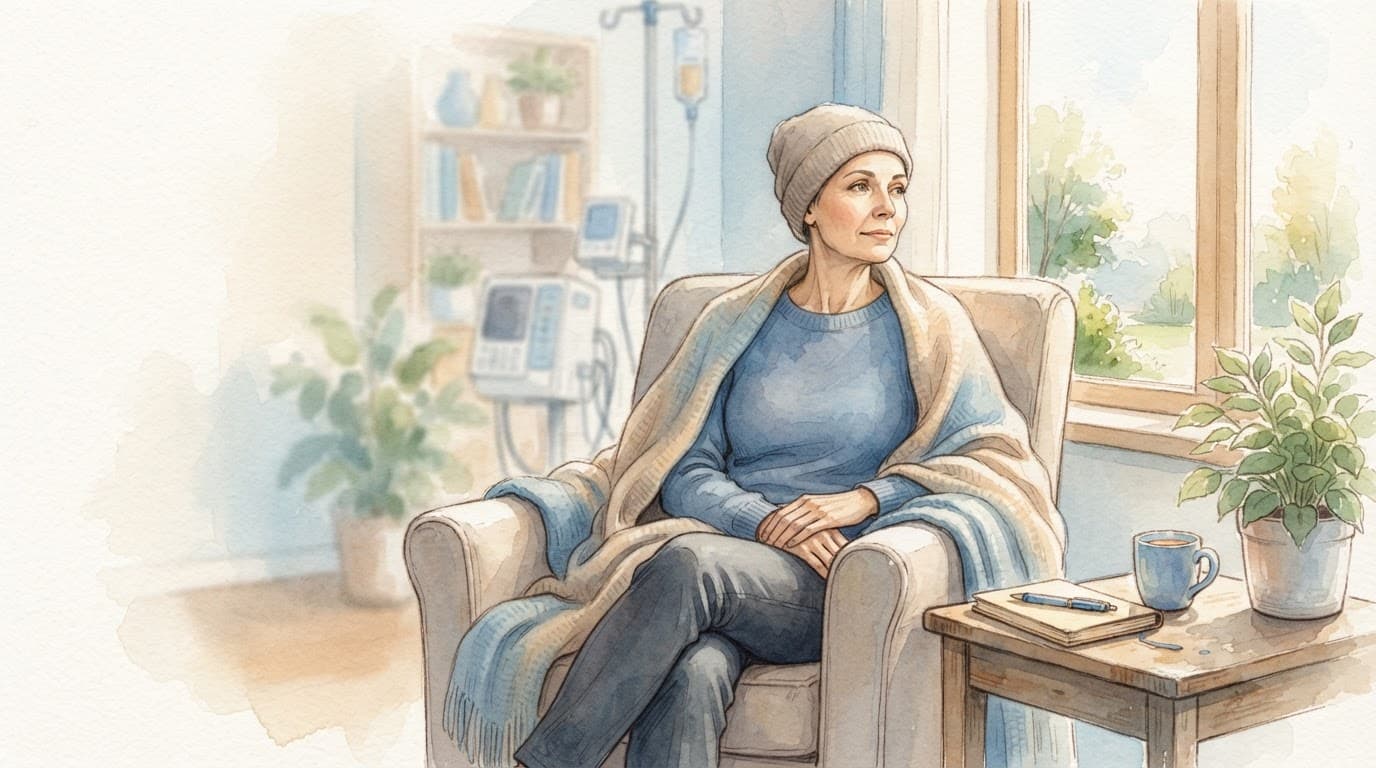
Calm your body when fear takes over
Fear does not stay in the mind. It can tighten your chest, knot your stomach, steal your sleep, and make a simple phone call feel impossible. A calming practice will not erase cancer. It can give your body a brief signal that you are safe in this moment.
Try slow breathing. Breathe in gently through your nose, pause, then let the air leave even more slowly. You can also look around and name five things you see, four things you can feel, three things you hear, two things you smell, and one thing you taste.
Choose grounding that feels natural
Meditation works for some people. Others prefer guided imagery, a favorite song, a warm cup of tea, or sitting outside where they can hear birds and feel the air move.
A gentle walk may help, if your care team says it is safe for you. Nature does not demand that you explain yourself. Sometimes a patch of sunlight on the floor can hold your attention long enough for the panic to soften.
The American Cancer Society’s counseling and support resources can help you find more support if stress feels too large to manage alone.
Keep comfort simple
You do not need a perfect routine or a quiet house. Put a soft blanket where you rest. Save a calming playlist for treatment days. Keep lip balm, water, a snack, or a photo that makes you feel connected in your bag.
Small comforts are not small when your world feels unfamiliar.
Create a calmer treatment routine one day at a time
Treatment may change your energy, appetite, sleep, and ability to make plans. A routine can help, but it should bend when you need it to bend. The goal is not to keep busy until you collapse. The goal is to make room for care, rest, and pieces of your life that still feel like yours.
Start with a few anchors. Wake up around the same time if you can. Eat something gentle before an appointment. Choose one task that matters and let the rest wait.
Prepare for appointments with a simple notebook
Bring a small notebook, paper folder, or notes app to each visit. Write down symptoms, medication questions, side effects, emotional concerns, and dates for your next tests or appointments.
You can ask a trusted person to come with you. Ask your clinician if you may take notes or record instructions. When your head feels full, written answers can be a handrail.
Consider asking:
- What side effects should I expect, and which ones need a call right away?
- Who do I contact after hours if I feel sick or frightened?
- What can help with pain, nausea, sleep, or exhaustion?
- Who can I talk to if worry starts to interfere with daily life?
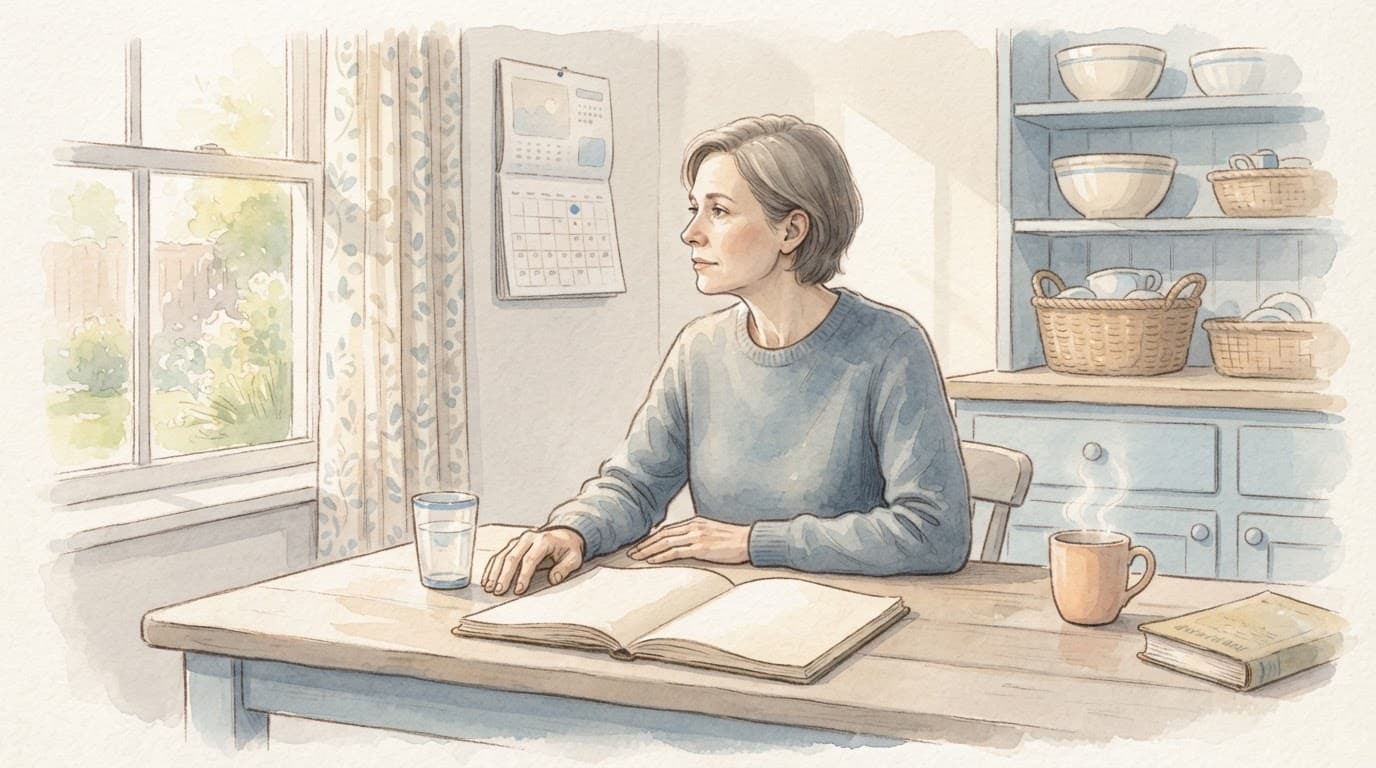
Make room for changes
A plan can comfort you, but your body gets a vote. If treatment leaves you tired, trade a long visit for a brief call. If your appetite changes, keep easy foods nearby. If you need an afternoon in bed, take it.
Rest is not lost time. It is part of your care.
Keep small pieces of normal life within reach
Cancer can make ordinary life feel far away. Familiar moments help close that distance. Read a few pages of a book you love. Watch a show that makes you laugh. Sit on the porch. Fold laundry slowly. Text a friend about something that has nothing to do with cancer.
You may not feel like yourself every day, but you are still yourself. Illness is part of your life right now. It is not the whole story.
Plan for the hard waits
Waiting for scans, test results, or a call from the doctor can bring a special kind of fear. Do not leave those days empty if emptiness makes your thoughts louder.
Ask someone to join you for coffee, bring dinner, or sit nearby while you wait. The American Cancer Society’s programs and services can also point patients and caregivers toward practical help, including transportation and other support.
Look for moments of goodness during cancer treatment, even on the days that hurt. A good moment does not cancel the hard one. Both can be true.
Let other people carry part of the weight
Many people say, “Let me know if you need anything.” The offer can feel kind, yet impossible to answer when you are tired and overwhelmed. Try making one clear request instead.
You might say, “Can you drive me to treatment Tuesday?” Or, “Would you bring soup on Thursday?” Perhaps you need someone to sit with your children, pick up prescriptions, walk the dog, or listen without trying to fix anything.
Letting people help is not a failure of courage. It is courage with the door open. Letting others help during treatment gives the people who love you a real way to show up.
Ask your care team about emotional support
Your oncologist, nurse, and hospital social worker can connect you with counseling, support groups, financial guidance, transportation help, and classes that teach stress relief. Your team may also check in about your mood and practical concerns at important visits.
These conversations matter. Fear about money, caregiving, work, pain, relationships, and survival can weigh as heavily as a medical symptom.
Programs such as Dana-Farber’s adult psychosocial care show how counseling and social-work support can address anxiety, depression, and stress during treatment. If you live in New York or New Jersey, CancerCare’s free oncology counseling may also be available.
Know when comfort needs professional help
Cancer brings hard days. Crying after a diagnosis, worrying before a scan, or feeling angry about what is happening can be normal. But some feelings need more than a breathing exercise or a brave face.
Tell your oncologist, nurse, primary care clinician, counselor, or a trusted loved one if you feel hopeless most days, cannot manage ordinary tasks, cannot sleep or eat for a long stretch, feel constant panic, or lose interest in nearly everything.
Treat thoughts of self-harm as an emergency
If you have thoughts of harming yourself, tell someone directly. You deserve immediate care, not silence.
If you are in immediate danger in the United States, call 911 or go to the nearest emergency department. You can also call, text, or chat 988 to reach the 988 Suicide & Crisis Lifeline, any time of day or night.
There is no prize for carrying this alone. Asking for urgent help protects your life.
A Gentle Way Forward
Solace may look like one full breath before an appointment. It may be one honest question, one friend at your side, or one hour of real rest.
You do not need to figure out the entire treatment journey today. Choose one manageable action, stay close to your care team, and ask for help when the weight becomes too heavy.
Small acts of care can become steady ground beneath your feet.

Leave a Reply
You must be logged in to post a comment.